
Reseller guide
Start reselling liquidation pallets: your first purchase
Start with a purchase you can pay for, receive, check, store, and sell without using cash you need for bills. Liquidation means selling stock a business is clearing out, often in bulk: unused goods, customer returns, or damaged items. A pallet is a batch of goods on a flat shipping base, and its price is only part of your cost, so work through these steps before you commit.
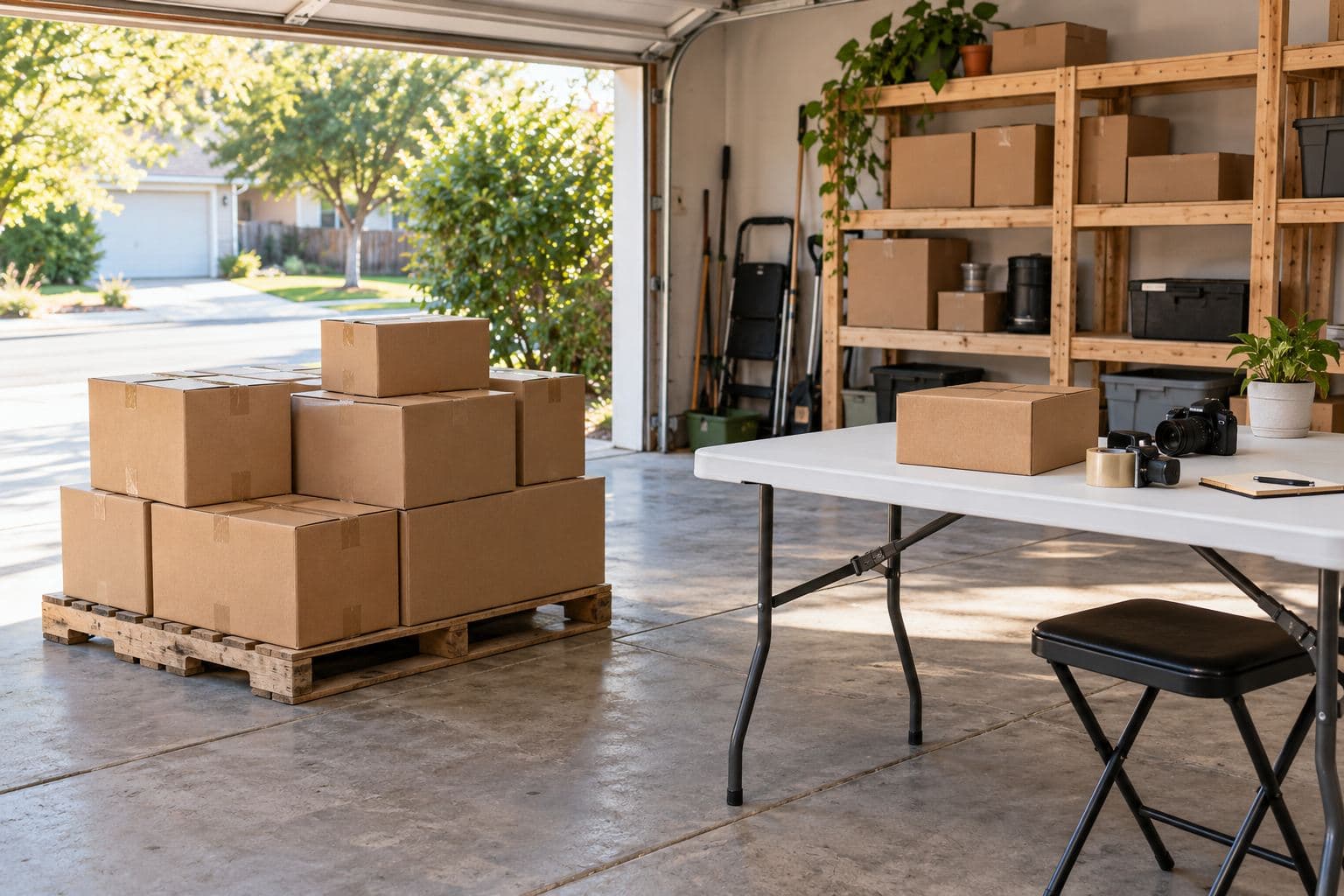
1. Understand what you're buying
#Customer returns are goods shoppers sent back; overstock is excess stock. Check either for missing parts, damaged boxes, wear, or a mismatch between box and item. The Amazon auction FAQ lists returns, overstock, and warehouse-damaged stock, with details set by each offer.
A lot is the group of goods sold in one transaction. A manifest is the seller's list of those goods. It may show item names, model numbers, counts, or condition, but the fields vary. Read the manifest and condition guide before treating a listed count as a count of complete products. Keep the plain-word glossary handy as you read seller pages.
A condition grade is a seller's label for the state of the goods. Read its full meaning. Product condition and box condition are separate fields in Amazon's published grades. A new-looking box still needs to be opened and checked before you describe its contents.
Set a cash limit that allows for goods staying unsold, needing paid help, or needing lawful disposal. You can't budget for a single outcome from the words “return pallet.” Don't count future sales as cash you already have.
2. Choose work you can handle
#Pick goods you can name, check safely, and describe clearly. Spotting a missing bowl lid takes different skills from checking whether a fridge is safe. Think through getting the goods, checking them, and handing them to buyers, including what happens when a check fails.
Walk through your space before you shop. Leave room to open cartons, sort parts, take photos, pack sales, and keep unsold goods. Mark a separate place for goods with safety concerns. Keep paths and exits clear, and avoid unstable stacks; OSHA's warehouse guidance explains storage and handling hazards in workplaces.
Set a time limit alongside your spending limit. Track time spent on research, checks, photos, listings, buyer messages, and packing, then use what this purchase shows you to judge the next one. Don't plan around fixed hours per pallet.
The pallet-type hub helps you read descriptions. Use the guide that matches the goods you're considering:
| Goods or wording in the offer | Read before buying |
|---|---|
| Kitchen, bedding, decor, and storage goods | Home goods; this is a product group, separate from the HomeGoods store brand |
| Phones, speakers, and other devices | Electronics |
| Clothing, sizes, and tags | Apparel |
| Tools, parts, and home repair goods | Tools and home improvement |
| Cosmetics and personal-care goods | Health and beauty |
| Exercise and outdoor goods | Sporting goods and Bass Pro-origin offers |
| Small or large household machines | Appliances |
| Boxed or assembled furniture | Furniture and stacked furniture, where pieces arrive stacked or wrapped together |
| “Generics,” meaning unbranded goods or mixed product groups, depending on the seller | Generic merchandise |
| Case pack, meaning repeated units of the same item | Case packs |
| Clear wrap or “premium,” a seller's own quality claim | Clear-wrap pallets |
| Mystery or unmanifested, meaning no item list is supplied | Mystery pallets |
Retailer-origin wording tells you where goods are said to have come from; check their state and current seller separately. The Walmart and Target guides explain those offers. General merchandise means a mix of product groups; see Target general merchandise for that wording.
Other labels describe size or handling. “Mediums” is seller shorthand for a size group; read the separate Amazon mediums and Walmart mediums guides. “Monster” is a seller's name for tall mixed pallets, covered in Amazon monsters. High piece count means an offer with many units, with the count set by the seller; see Amazon high-piece-count goods. A truckload is a shipment booked for a whole trailer, not a fixed pallet count.
A 3PL, or third-party logistics firm, handles stock or shipping for another business. The 3PL guide explains that business role and how it differs from a condition grade.
3. Choose a buying format
#You can buy a single pallet, bid in an auction under the seller's rules, or choose individual goods from a bin store's open bins. Each route gives you different chances to inspect and different amounts of stock you'll need to handle.
Start with the single-pallet supplier guide. Then compare local auctions and bin stores with online marketplaces. Online bidding may still mean local pickup, so check the goods' location as well as the website.
For retailer auctions, read B-Stock's buying workflow and the Amazon buying routes. As of October 2026, the policy details in this guide reflect the linked pages. The Amazon US auction FAQ says buyers cannot inspect goods before bidding. Don't book a trip based on a general claim that warehouse stock can be viewed. Use the rules for your exact purchase.
Before paying, check the seller's identity and payment details through a contact route you find yourself. Check unfamiliar firms and resist pressure to pay, as the FTC's small-business scam guidance advises. Follow the supplier-check guide and save the offer, photos, manifest, terms, and invoice together.
4. Set a total spending limit
#Landed cost is what you pay to buy the goods and bring them to your chosen place. Freight means transport for bulky goods such as pallets. A buyer's premium is an auction charge added to your bid. Add those charges, any purchase tax, and other inbound costs before choosing your bid ceiling.
Made-up example: your purchase-and-arrival limit is $600. The quote includes $100 freight and a $50 flat buyer charge, with no purchase tax due here. That leaves $450 for the goods: $600 − $100 − $50 = $450. With a percentage charge, recalculate the total at each possible bid.
Keep cash for repairs, packing, sales fees, returns, and disposal apart from that $600. Without the freight quote, you don't yet know how much room you have for the goods.
Use the landed-cost guide and pallet profit calculator to check the arithmetic. A retail reference total is a seller's retail-price figure for the stock. An asking price is a price someone advertises. A current bid is still part of an open auction. None is money you have received.
5. Check paperwork and resale terms
#A resale certificate is a document used to support tax treatment for goods bought to resell. State registration is the separate process of signing up with a state's tax agency. Check which applies to you before bidding, using the resale certificate and sales tax guide. California's rule is one example where a permit number alone isn't a proper resale certificate.
Read the purchase contract for resale limits too. The Amazon purchase terms restrict references to Amazon in the buyer's resale ads. The Target purchase contract also limits use of Target's identity in sales promotion. Editorial guides can discuss origin; your own ads must follow the agreement you accepted. Keep required safety and product ID labels intact.
“As-is” is a sale term whose effect comes from the agreement; it isn't a test result. Read what relief the seller allows for shortages or misdescribed goods. Write down who receives a complaint, its deadline, and what proof is needed before the shipment arrives.
This guide is not legal, tax or financial advice. Ask the state agency or a qualified adviser about rules that depend on your business and location.
6. Plan receipt before payment
#Measure the packed pallet, doorways, and the route into storage. Confirm the total weight and who provides handling gear. A liftgate is a truck platform that moves freight between trailer height and the ground. A pallet jack lifts a pallet slightly so it can roll on a suitable surface. You still need a safe way to get the pallet out of the trailer.
The freight shipping guide covers quote details and delivery records. ABF's home-delivery guide describes curbside service, with indoor help as a separate service. Confirm your booked delivery point and the plan from there to storage.
If you're picking up, check permission, payment release, vehicle capacity, and help at the seller's site. Plan for all your bids winning; you could have more pallets than you meant to receive.
On arrival, count the pallets or cartons you can see, photograph the wrapping, and note visible damage on the delivery receipt. A bill of lading, or BOL, is the shipment document with freight details and transport terms. Keep a copy with the receipt. Use the unload checklist and receiving and storage guide as you open the stock.
7. Identify, check, and sort the goods
#Give each item a simple ID linking it to the pallet, and match parts and cartons before counting a complete item. Keep customer names and addresses out of photos and ads. An LPN, or License Plate Number, is an Amazon unit-tracking code; the LPN pallet guide and return-label guide explain its limits.
Check the model against the CPSC recall search and the maker's notices. CPSC is the US Consumer Product Safety Commission. A recall is a safety notice with steps set by the maker or regulator. CPSC's seller guidance says recalled products cannot be offered for sale. Set them apart and follow the stated remedy.
Only test what you can test safely. Don't test swollen or damaged batteries, damaged cords, gas appliances, or anything recalled. Ask the manufacturer or a qualified professional where needed. For cosmetics, bedding, and food-contact goods, check the product's rules for cleaning and required health treatments; never plan to resell opened or used personal-care goods.

Use the inspection and testing guide to record what you checked. If you only checked power, write “Powers on; other functions untested.” Keep goods with missing parts or unresolved safety issues out of the group ready to list.
8. Price and list each cleared item
#Confirm the model, included parts, and state of the item before comparing prices. Completed transactions show past purchases; active listings show asking prices. eBay Product research can help you look at past sales. Compare close matches and use the item pricing guide to include your costs.
Open box is a platform condition label, with rules that vary by category and site. In the October 2026 check, eBay's condition table describes the relevant grade as an “unused item with no signs of wear.” Whatnot's electronics rules allow light demo use but require “no functional defects.” Read the full rules before choosing a label. Untested means you haven't confirmed function; choose the sales-site condition from the item's facts.
Use your own clear photos of the item, parts, and defects. State what is missing and which functions remain unchecked. The listing-text tool gives you a starting draft to review and post yourself.
Choose a sales route you can support: local sales, eBay, or Whatnot. Check each site's fees and product rules. For parcels after the sale, see packing and shipping. For local pickup, set a clear hold policy and plan for no-shows. Meet in public or a police-station exchange zone where available; allow inspection at handover, take payment before the item leaves, and record the sale after both payment and handover.
9. Review the first pallet before buying more
#Keep purchase charges, item sales, fees, shipping, and refunds linked. For buyer cases and returned stock, see returns and refunds. A payout is what a platform sends you after deductions. Reconcile it, meaning match it to your sale records, so fees and refunds stay in your totals. The IRS recordkeeping guide calls for clear records with receipts and other supporting papers.
Count what remains: listed stock, goods waiting for parts, unsafe goods, and items discarded or kept for yourself. Note the cash still tied up and the shelf space used. A purchase with unsold stock has unfinished work, even if some items have sold.
Record which tasks took more time than you allowed and what you paid others to do. Use those records to decide whether to change product groups, reduce volume, or pause purchases while you clear stock. The next pallet may differ from the first, so keep each purchase's results separate.
Keep the pallet tied to its items
#When goods from one pallet move into several sales, you need to keep their costs and remaining stock straight. A notebook or spreadsheet works. PalletPro splits a pallet's purchase cost plus sales tax evenly across its sellable units and lets you record sales with their fees and shipping. Keep freight and other costs in your records too; see the app.
Sources
#- Amazon US auction FAQ - Amazon Liquidation Auctions / B-Stock (checked October 1, 2026)
- Product and packaging conditions - Amazon Liquidation Auctions / B-Stock (checked October 1, 2026)
- Warehousing hazards and solutions - OSHA (checked October 1, 2026)
- Scams and your small business - FTC, July 2023 guide (checked October 1, 2026)
- Regulation 1668: Sales for resale - California Department of Tax and Fee Administration (checked October 1, 2026)
- Amazon US terms of purchase - Amazon, January 29, 2026 (checked October 1, 2026)
- Target purchase contract - Target, revised November 11, 2025; also displays March 15, 2021 (checked October 1, 2026)
- Preparing for an ABF Freight delivery at your home - ArcBest, August 20, 2025 (checked October 1, 2026)
- Recalls and product safety warnings - CPSC (checked October 1, 2026)
- Online sellers safety guide FAQs - CPSC (checked October 1, 2026)
- Product research - eBay (checked October 1, 2026)
- Item condition ID and name values - eBay Developers Program (checked October 1, 2026)
- Electronics condition definitions - Whatnot, February 26, 2026 (checked October 1, 2026)
- What kind of records should I keep? - IRS (checked October 1, 2026)
Updated
More guides
- Are liquidation pallets profitable after expenses?
Check a pallet's profit with actual sales, fees, shipping, supplies, unsold stock and your time. Follow a made-up example and keep costs visible.
- Liquidation pallet and resale glossary
Plain definitions of liquidation grades, manifests, freight, costs and resale terms, with sources and links to the guides that explain each topic.