
Reseller guide
Handle reseller returns and refunds step by step
When a buyer asks for a return or refund, open the purchase's official help flow, check the reason and deadline, and save the sale records. A return brings goods back; a refund sends money back. They can happen together or separately. Inspect returned goods before offering them again, and link the money and stock changes to the original sale.

Start with the case and the requested outcome
#A case is the platform's record of a buyer problem, with messages, evidence, options and dates. An order records the buyer's purchase. Stock is goods held for sale; a unit is one piece. Open the case even if you've spoken elsewhere. The glossary explains more resale terms.
Check the buyer's reason: wrong item, missing part, damage, a fault or a change of mind. Save the listing, the sale page with photos and description, plus the order and packing evidence. Keep tracking, the shipping company's record of the package's journey. Ask for clear photos when they'll help.
A full refund reverses the agreed full amount; a partial refund reverses part, often while the buyer keeps the goods. A replacement sends another unit. A refund without a return brings back no stock. Use the platform's allowed options and save the agreement in the case.
These steps cover US buyer returns. For your first sales, follow the first-pallet steps. Check your purchase contract for supplier disputes. Local law and other countries' rules can change your duties. This is not legal, tax or financial advice.
eBay: the buyer's reason changes your options
#For listing and sale rules, see selling on eBay.
As of October 2026, eBay gives sellers three business days to respond to a return request. Its refund instruction says "within 2 business days" after you agree to refund or receive the return. A business day follows the platform's working-day rules. Check the dates displayed in your case and allow time to inspect the parcel. eBay's seller return page explains the steps.
A no-returns policy can govern change-of-mind requests. You generally still need to accept covered wrong, damaged or misdescribed goods, meaning items that differ from the listing. Check the buyer's reason and case options under eBay's reason-based rules.
For a covered wrong, damaged or misdescribed item, the seller covers return postage and a full refund includes original shipping. For a change of mind, shipping responsibility follows the listing policy. Use the official label process and save its charge. eBay's return-shipping guidance covers that distinction.
If a buyer says their refund hasn't reached the bank, check whether the platform processed it before sending another payment. Turn off any option to put the item back on sale while it needs inspection.
Check eBay deduction rules before using them
#Restocking means putting a return back in sale stock. A restocking fee charges for accepting a return. Changed-condition deductions have separate rules; you can't add a flat charge to every return.
eBay's protections cover qualifying Top Rated sellers, a platform performance level, offering returns of at least 30 days. This route requires a US or Canadian seller, an eBay.com listing and no Very High rating in any service metric. A separate route covers sellers above its Below Standard level on listings with free returns. Eligible sellers can deduct up to 50% for actual loss caused by use, damage or alteration. Check your account, listing and case options against the seller protections.
Photograph and describe what changed, including missing accessories or new damage. Report the buyer through the return request and refund within two business days of receiving the item. A routine handling charge isn't a changed-condition loss. If eBay steps in, you lose the deduction option. A fee credit reverses a fee charge, but credits are conditional. eBay doesn't issue seller fee credits when you deduct because an item came back used or damaged. Check fee-credit rules before counting a fee as recovered.
Whatnot: keep the support clocks separate
#For show and sale rules, see selling on Whatnot.
Whatnot's Buyer Protection page, updated September 10, says: "Refund requests must be submitted within 14 days of delivery, or 30 days from the purchase date, whichever comes first." Most sales are final, but covered missing, damaged or misdescribed orders still have protection. Read the buyer rules.
Shorter delivery windows apply to some categories. Coins and money, sports cards, sneakers and streetwear, trading card games and luxury goods use seven days; plants, meat and seafood, and specialty food use two days. Both still have the 30-day purchase limit, whichever comes first. Suspected inauthentic goods have a separate 30-day-from-receipt rule. Inauthentic means not the genuine product claimed. Check the category and any special case instructions.
The seller support page updated September 22 describes the US rollout and requires a response within two business days. Time frames "exclude the weekend and national holidays." Reply inside the Customer Support request; a direct message doesn't count. Follow seller support guidance.
Whatnot's pages conflict. The newer seller page gives buyers ten business days to drop off a return for an accepted full refund. That page gives five business days to drop off a return when the buyer declines a partial refund. The older buyer support page, updated December 1, 2025, says five business days. Follow the date in your case and ask Whatnot support to clarify a mismatch.
After return delivery, the seller page gives 48 business hours to confirm or dispute the items. Keep that wording when you set your reminder; two calendar days can give you the wrong date. A billback is money taken from your seller balance to cover a refund. The page gives 14 calendar days from that charge to submit an appeal in the app.
Save the billback's order reference, date and amount. Refund responsibility depends on evidence; reimbursing a buyer alone doesn't decide seller fault. Keep photos, messages and shipment proof for review under Whatnot's seller protection policy.
Facebook: identify who took the payment
#Facebook rules depend on how the buyer paid. A direct cash or payment-app sale has no Facebook payout or Facebook refund process to rely on. Save the return policy you disclosed and the agreed outcome. A separate payment provider may have its own dispute rules.
For a checkout order, follow the help and dates shown on that order. Don't apply a deadline you read elsewhere.
Save the checkout order's help instructions and use its case. Send any refund through the actual payment route and link it to the original sale.
Set local terms before taking payment
#Show buyers your return terms and any fee before payment, and keep a copy. Writing as is doesn't remove every merchant duty or excuse a false description. Implied warranties are legal promises that can apply without a written promise. The FTC warranty guide covers used-goods merchants and state rules.
New York is one state example. Its refund-policy statute, requires covered stores and online retailers to disclose policy terms and restocking fees. A violation can require cash refund or credit at the buyer's choice within 30 days of purchase, when the goods have not been used or damaged by the buyer and the buyer can verify the purchase date as the law requires.
New York's general consumer guidance says no refund form is required, while the statute gives a conditional remedy for violations. Read those conditions and check your own state's consumer authority. For handover and payment, see the local-selling guide.
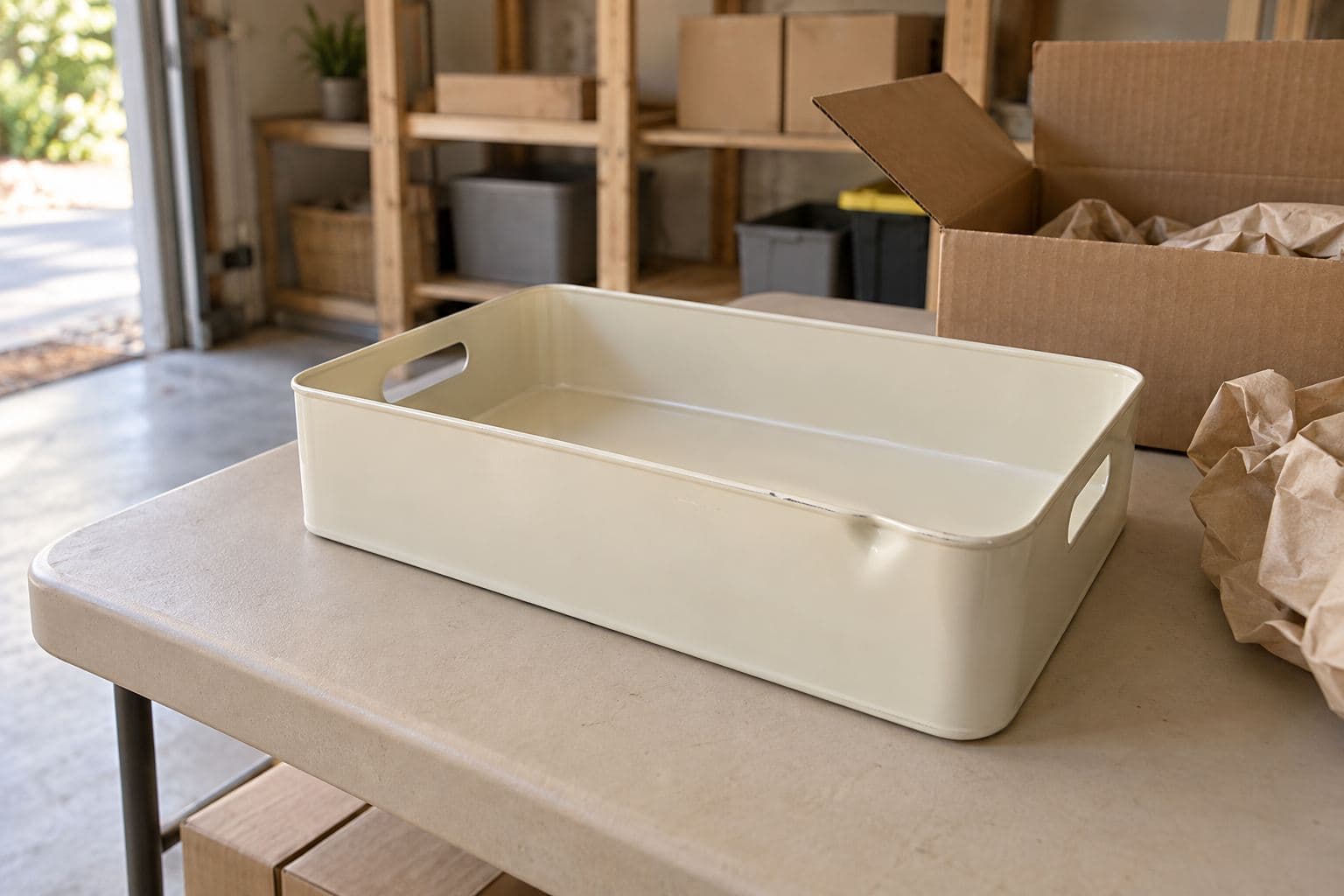
Inspect the returned unit before relisting
#Keep the parcel apart from cleared stock. Photograph the box and unpacking, match the item to your notes, and count units and accessories. Note new marks or missing pieces without guessing the cause.
Only test what you can test safely. Don't test swollen or damaged batteries, damaged cords, gas appliances or recalled goods. Check the CPSC recall search and manufacturer before deciding the next step. CPSC guidance prohibits recalled-product sales.
Write each check's limits: "Powers on; other functions untested" describes a partial check. Update photos and condition before relisting, using the inspection guide. For unsafe contents or transit damage, see the packing and shipping guide. A carrier claim asks the shipping company to pay for a covered problem. Keep it apart from the buyer's refund deadline.
Add a return event to the original sale
#Keep the sale history and add a linked return record. Note item, purchase, order and case references; request, received and refund dates; and the reason. Include returned quantity, photos, item and shipping refunds, fee credits, return postage, any billback and the unit's next step.
Made-up example: you ship three units and refund one $30 unit. The buyer returns one unit. Restore only that one unit to the inspection queue, and reduce receipts by $30. If return postage costs $8 and a $3 fee credit posts, the extra money reduction is $30 + $8 - $3 = $35. A no-return refund would restore zero units.
A replacement uses another unit; a partial refund without a return leaves stock unchanged. Match the later platform debit, a deduction, to the refund already entered so you don't count it twice. The bookkeeping guide traces it into a payout, the money the platform transfers to you.
Keep the item record beside the return evidence
#A refunded payment can leave you with no usable item, so keep condition notes tied to the sale. A notebook or spreadsheet works. PalletPro stores each item's condition and lets you record sale price, fees and shipping. Keep the buyer case and detailed return evidence alongside those records. See the app
Sources
#- How to handle a return request as a seller - eBay (checked October 1, 2026)
- Return shipping for sellers - eBay (checked October 1, 2026)
- Seller protections - eBay (checked October 1, 2026)
- Fee credits - eBay (checked October 1, 2026)
- Whatnot Buyer Protection - Whatnot, September 10, 2026 (checked October 1, 2026)
- Seller Provided Support for Sellers - Whatnot, September 22, 2026 (checked October 1, 2026)
- Seller Provided Support for Buyers - Whatnot, December 1, 2025 (checked October 1, 2026)
- Seller protection and refund responsibility - Whatnot, August 26, 2026 (checked October 1, 2026)
- Businessperson's Guide to Federal Warranty Law - FTC (checked October 1, 2026)
- General Business Law section 218-a - New York State Senate, August 8, 2025 revision (checked October 1, 2026)
- Refunds, Rebates, and Rainchecks - New York Department of State (checked October 1, 2026)
- Recall search - CPSC (checked October 1, 2026)
- Online seller safety FAQs - CPSC (checked October 1, 2026)
Updated
More guides
- Make an exit plan for slow resale inventory
Review slow resale stock, test a price change, compare bundles and local sales, and plan safe donation or disposal while keeping costs and counts clear.
- Pack and ship resale items with the right parcel size
Pack resale goods, measure the closed parcel, check battery restrictions, and compare carrier rules. Keep shipping records for costs and damage claims.
- Reseller bookkeeping: match sales to payouts
Match eBay, Whatnot, Facebook and cash sales to fees, refunds and bank deposits. Keep source records and work through a made-up payout example.
- Selling liquidation items locally: listing and pickup
Prepare liquidation items for local listings, show their condition, manage holds and no-shows, arrange safer pickups, and record payment after handover.