
Reseller guide
Pack and ship resale items with the right parcel size
Check whether you can ship the contents, pack them safely, then weigh and measure the closed parcel before buying postage. A parcel is the package sent to your buyer; size can affect the bill as much as weight. Compare eligible services for the same package and destination. Keep the paid label, the postage and routing record, with shipment proof and the sale.
Check the contents before quoting shipping
#A carrier is the company that ships your parcel, such as USPS, UPS or FedEx. A service is the option you book, with its own routes, size limits and rules. This guide covers US parcels after a sale. For your first batch, follow the first-pallet steps. Freight is transport of pallets or truckloads; use the freight guide for incoming goods and the glossary for more shipping terms.
Check the item, accessories and condition before choosing a service. Toys, tools and vacuums can contain lithium batteries even if the listing doesn't call them electronics. Alcohol-based perfume and hand sanitizer can have shipping limits too. Hazardous materials, or hazmat, can pose a danger in transport. USPS preparation guidance distinguishes banned contents from goods allowed under set rules.
Only test what you can test safely. Never test swollen or damaged batteries, damaged cords, gas appliances or recalled goods. Check the CPSC recall search and manufacturer. If safety or contents are unclear, pause the sale and get guidance before shipping.
These steps aren't hazardous-goods training or legal, tax or financial advice. Follow carrier rules and local law, even when using a marketplace label.
Choose a box that protects the item
#Use a sound carton strong enough for the packed weight. Check reused boxes for crushed corners, tears and weak seams; remove or cover old marks and labels. USPS-branded Priority Mail packaging needs the matching paid service. Covering the print won't allow Ground Advantage use. See USPS packaging rules.
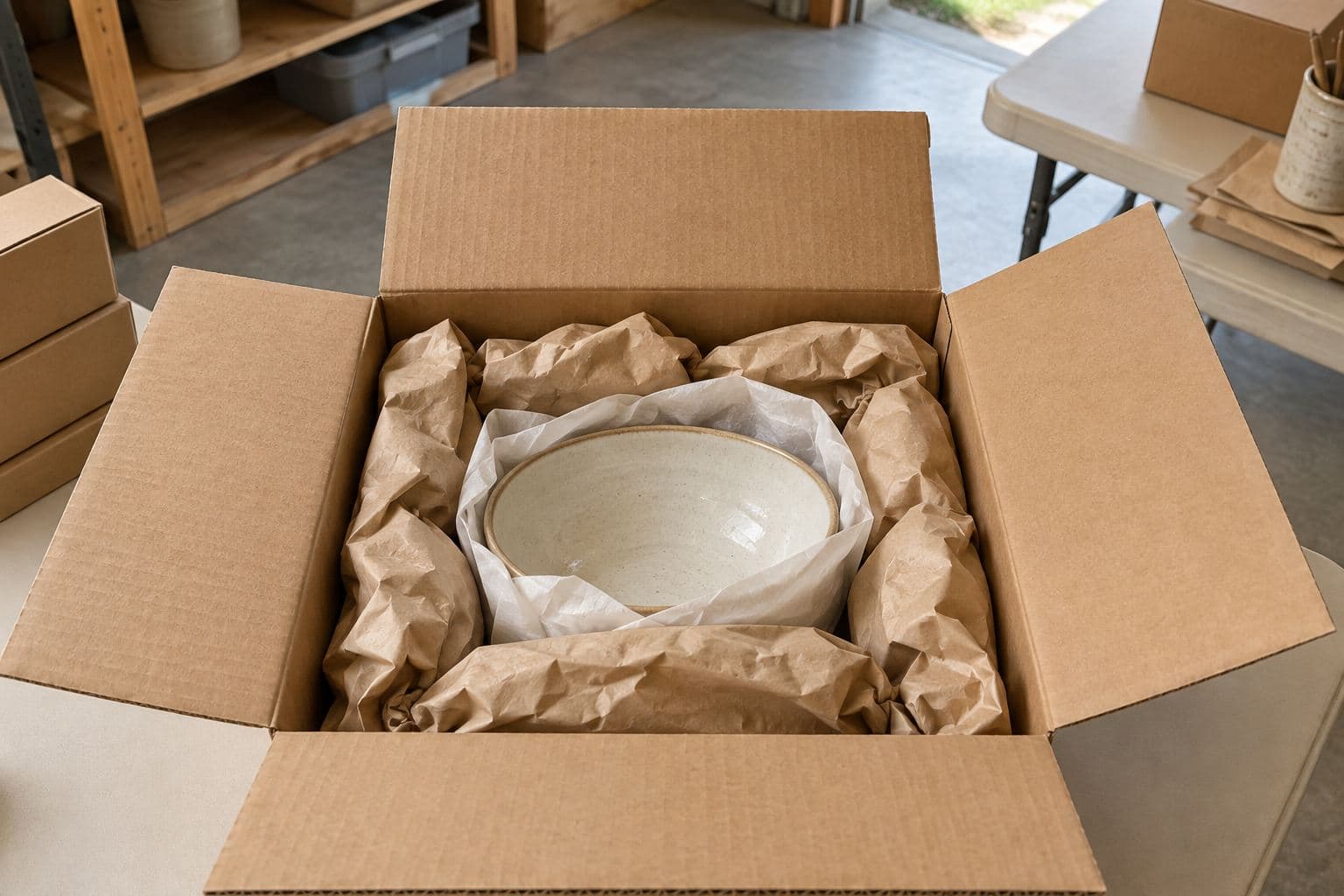
Pack accessories so they can't hit the main item. Wrap fragile pieces separately and fill gaps to keep them still. Void fill is material that fills empty space. Seal seams with shipping tape suited to the carton under UPS packing guidance.
Electronics can need antistatic protection, material that helps stop static electricity from harming parts. UPS warns about static from some foam filler. Use packing suited to the product; check a return's retail box before using it for parcel shipping.
For glass, computers or awkward shapes, check the FedEx packing guide. Cushioning needs vary by product. If your supplies won't let you pack safely, get packing help or choose a suitable local handover.
Weigh and measure the sealed package
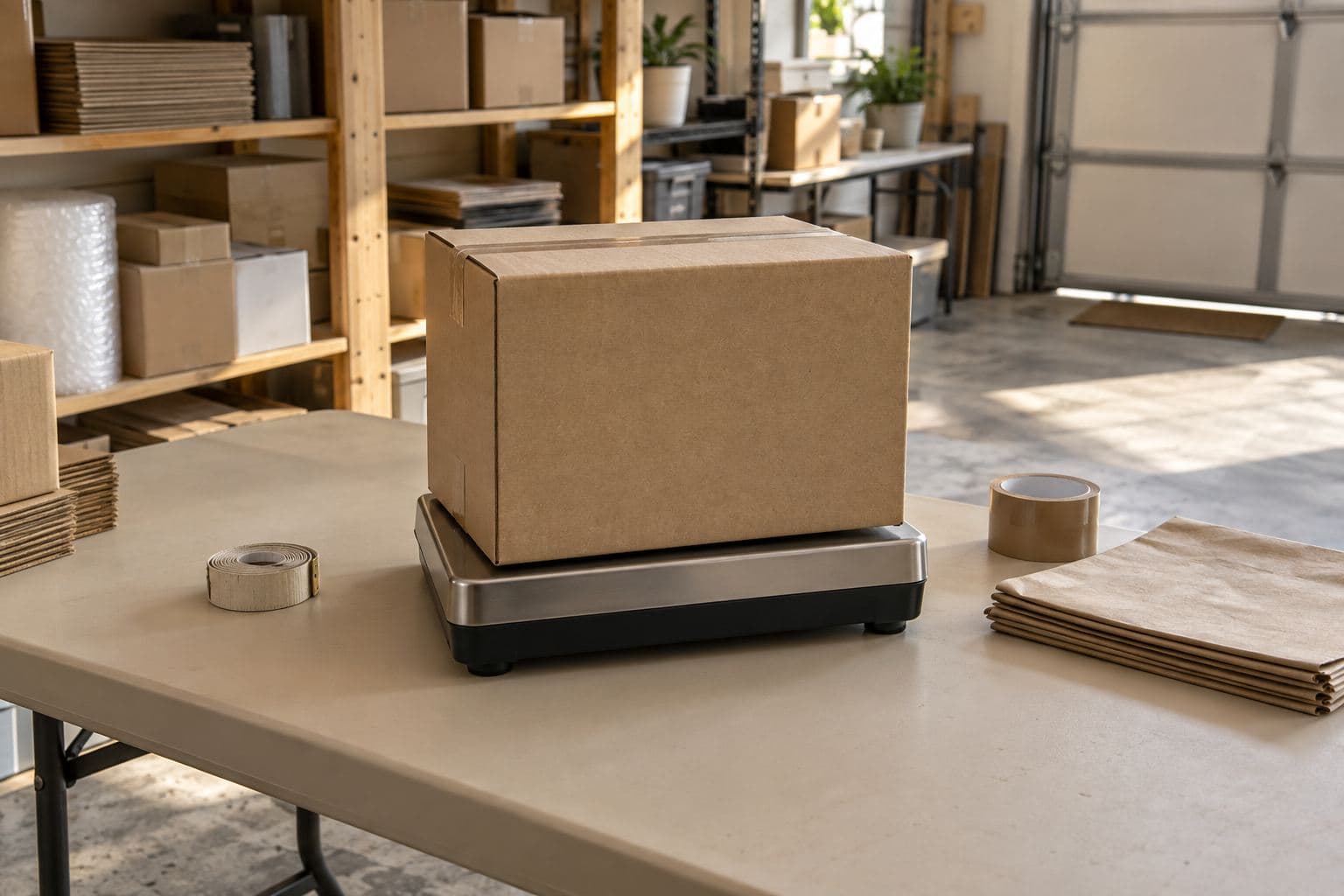
#Weigh the item, accessories, carton, wrap and tape together. Measure the outside at its longest points, including bulges. Length is the longest side. Keep width, height, destination and service in your notes.
Dimensional weight is a pricing weight based on parcel space; billable weight is what the carrier uses to set the charge. A large, light parcel may use dimensional weight. A divisor is the number used to turn box volume into that weight. Cubic inches measure volume; multiply the three sides in inches. A zone is a route-based pricing area. Commercial and retail rates are ways of buying postage; marketplace labels may have different terms from counter purchases.
As of October 2026, the published dimensional rules below apply to the stated rate types. Check your label system's rules. Limited Overland Routes is a USPS rate for eligible Alaska routes without an overland connection; check destinations. Daily and Retail are UPS rate categories; use the one on your quote.
| Carrier rule | What to check |
|---|---|
| USPS Ground Advantage, rectangular parcels | Above 1,728 cubic inches, use length × width × height divided by 139. Round each side upward to whole inches and the result upward to pounds; compare with actual weight. If dimensional weight exceeds 70 pounds, use the 70-pound price; size limits still apply. Zones 1–9 apply, with the stated retail Limited Overland Routes rule. Retail rules, commercial rules |
| UPS | The help page lists 139 for Daily Rates and 166 for Retail Rates. Its main instructions say round sides up, while its questions section says nearest whole inch. Check the booked rate system or agreement before using fractional sizes. UPS size and weight rules |
| FedEx | Its US guidance uses length × width × height divided by 139 and states its own measurement rule. Confirm the service and account terms in the actual quote. FedEx dimensional guidance |
The USPS clauses above were revised July 12, 2026. Don't use an older 166-divisor rule for them.
See how box size changes the weight calculation
#Made-up example: a rectangular carton measures 20 × 14 × 10 inches. Its volume is 2,800 cubic inches. Under the cited USPS rectangular rule, 2,800 divided by 139 is about 20.14, rounded upward to 21 dimensional pounds.
If sound packing allows an 18 × 12 × 10-inch carton, the volume is 2,160 cubic inches. Divide by 139 to get about 15.54, rounded upward to 16 dimensional pounds. Actual packed weight can still control. These figures show arithmetic, not a postage quote or permission to cut cushioning.
Keep your original measurements. USPS has separate rules for nonrectangular parcels. Size or handling needs can trigger extra charges even if a box meets the weight limit.
Handle batteries under the exact carrier rules
#Check battery type, condition, count, energy rating and whether it's installed or packed separately. Watt-hours are an energy rating used for some battery limits; use the maker's data. If you can't confirm it, ask the manufacturer and carrier before booking.
USPS treats used devices containing or packed with lithium batteries separately from new-in-original-packaging or manufacturer-certified devices. Covered used devices can't travel by domestic air or international mail. They require the address-side markings "Restricted Electronic Device" and "Surface Transportation Only." Surface means transport by ground or water. Packaging, battery marks, quantity limits and protection against accidental activation still apply. Publication 52, section 349 gives the rules.
USPS prohibits damaged, defective or recalled batteries unless its named authority approves them. Keep swollen, leaking or suspect batteries out of ordinary parcels. Contact the manufacturer and an accepted handling route; don't ship one as an ordinary used item.
UPS's battery shipping rules require preapproval, a special service agreement and compliant transport-permit preparation for its damaged-battery program, with geographic limits. It isn't an ordinary drop-off service. Don't apply USPS's used-device rule to UPS.
FedEx battery guidance prohibits recalled or defective batteries under the stated rules and limits where regulated battery parcels can be accepted. Ask its dangerous-goods team about the exact service and contents. A nearby retail partner may not accept them. See the electronics guide for checks before listing.
Compare the same parcel across eligible services
#Quote each service with the same confirmed weight, size and address. Count postage, packing and extra charges. A surcharge is an added charge for things such as size or special handling. Compare the full total you'd pay. Use those costs when weighing slow-stock exit plans.
Check marketplace service rules and shipping deadlines. Use eBay selling rules for that channel. Save the quote date and route; measure again if you change the box or add accessories. For Whatnot orders, see Whatnot selling rules. Check the precise route for remote, overseas, military and territorial destinations, which can have separate rules.
Before printing the label, check the service, address and parcel details. Save its charge and later weight or size adjustments for the profit review.
Keep proof from packing to acceptance
#Photograph the item, accessories and packing stages. Keep final dimensions, weight, label, order and acceptance receipt. Acceptance means the carrier has taken custody. Follow tracking, its record of the parcel's journey, and save the proof the service asks for.
Insurance is coverage subject to terms. A declared amount is what you state for carrier liability, the amount it could be responsible for paying. Check the conditions for loss payments and packing rules; a photo helps show your work but doesn't settle whether the packing complied.
Treat buyer refunds and carrier claims separately
#When a buyer reports damage, ask for photos and have them keep the goods, box and all cushioning. A claim asks the carrier to pay for a covered shipment problem. Open the buyer case while checking the claim route, and meet the platform refund deadline during carrier review.
These US filing deadlines for damage or missing contents start at different events:
| Carrier | Filing clock | Evidence to keep |
|---|---|---|
| USPS insured domestic mail | File immediately for damage or missing contents, no later than 60 days after mailing | Mailing receipt, insurance proof, proof of claimed amount, goods and packing; inspection may be required. USPS claims |
| UPS | Start within 60 days of scheduled delivery for the stated lost or damaged package claims | Tracking, invoice (the purchase bill), goods, packing and requested photos. UPS claims |
| FedEx | US damage or missing contents: within 60 calendar days of shipment; international: 21 calendar days after shipment | Shipment proof, support for the amount, photos and original packing and contents. FedEx claims |
Loss deadlines and service exclusions can differ. USPS Ground Advantage lost-parcel claims generally use 15–60 days after mailing. Check the label terms and who may file. The shipper of record is the party recorded as shipping under that account; a platform or label provider may control the claim route.
Link the claim to the sale and refund. Record reimbursement when received and don't file a duplicate through another route. Use the returns guide for buyer deadlines and bookkeeping guide for later charges.
Keep actual shipping costs beside the sale
#Postage adjustments and packing supplies can change a sale's result after the item leaves. A notebook or spreadsheet works. PalletPro lets you enter fees and shipping when recording a sale; paid tiers let you record supply expenses and link expenses to pallets. Keep the label and carrier records alongside those entries. See the app
Sources
#- Preparing and sending a domestic package - USPS (checked October 1, 2026)
- Recall search - CPSC (checked October 1, 2026)
- Packing shipments - UPS (checked October 1, 2026)
- Packing tips and guides - FedEx (checked October 1, 2026)
- DMM 133: retail Ground Advantage prices and eligibility - USPS, dimensional clauses revised July 12, 2026 (checked October 1, 2026)
- DMM 283: commercial Ground Advantage prices and eligibility - USPS, dimensional clauses revised July 12, 2026 (checked October 1, 2026)
- Shipping dimensions and weight - UPS (checked October 1, 2026)
- Dimensional weight - FedEx (checked October 1, 2026)
- Publication 52, section 349 - USPS (checked October 1, 2026)
- Shipping batteries - UPS (checked October 1, 2026)
- Shipping wet, dry and lithium batteries - FedEx (checked October 1, 2026)
- Domestic insurance claims - USPS (checked October 1, 2026)
- Filing a claim - UPS (checked October 1, 2026)
- Filing a claim - FedEx (checked October 1, 2026)
Updated
More guides
- Reseller bookkeeping: match sales to payouts
Match eBay, Whatnot, Facebook and cash sales to fees, refunds and bank deposits. Keep source records and work through a made-up payout example.
- Selling liquidation items locally: listing and pickup
Prepare liquidation items for local listings, show their condition, manage holds and no-shows, arrange safer pickups, and record payment after handover.
- Selling liquidation items on eBay: condition and costs
List liquidation returns on eBay using verified condition, comparable sales, current fees and shipping costs, with a clear plan for packing and returns.
- Selling liquidation items on Whatnot: prep and fees
Prepare liquidation items for Whatnot, choose supported conditions, calculate current seller fees, set auction starts, and pack orders within the deadline.