
Reseller guide
Selling liquidation items on eBay: condition and costs
To sell liquidation items on eBay, check each unit's identity and research past sales in similar condition. Work out fees on eBay's fee base (the amount the fee applies to), then subtract postage, packing and acquisition cost (the purchase cost assigned to the unit). As of October 2026, you must address covered damaged or wrongly described items under eBay's returns rules, even with a no-returns setting.
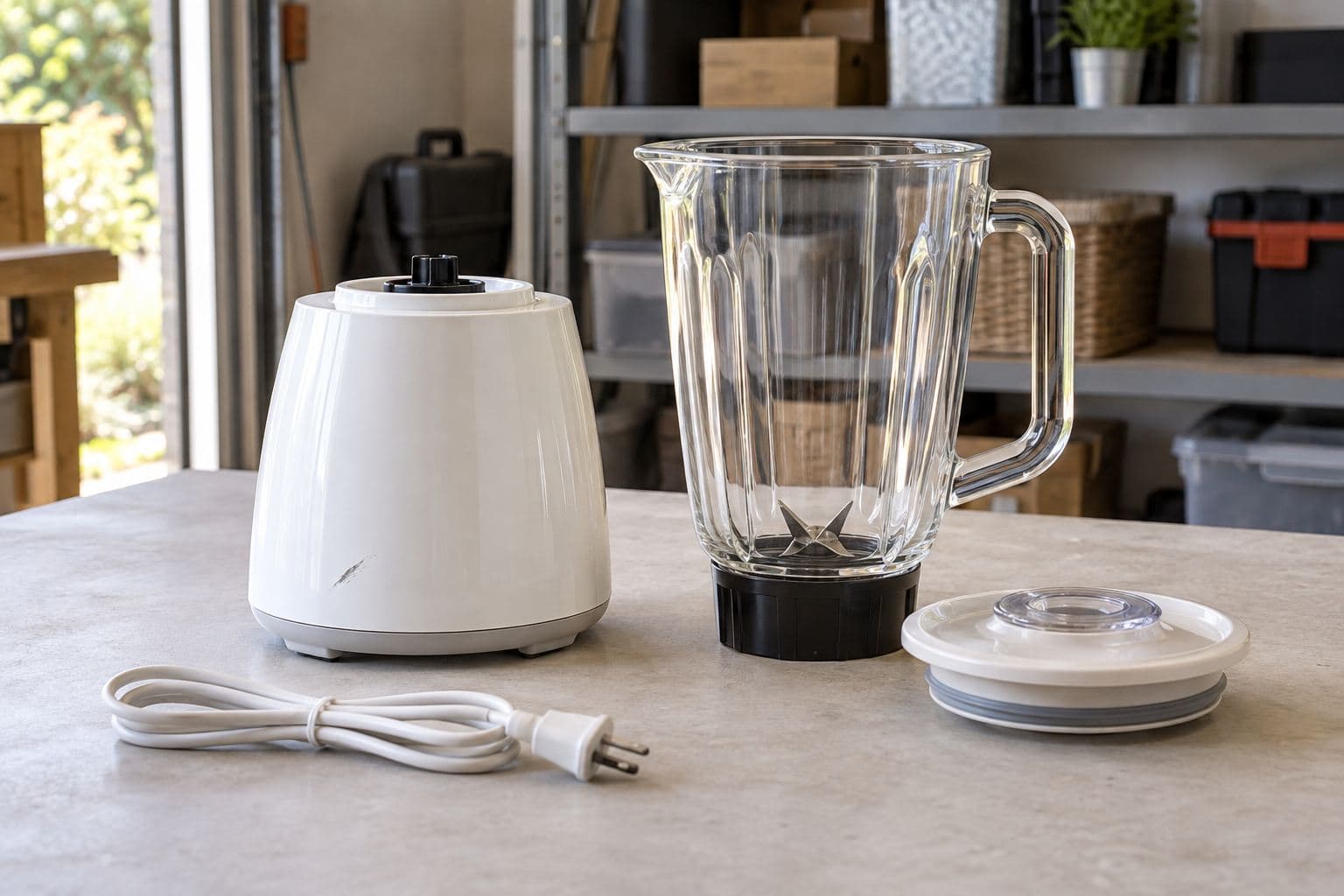
Confirm the item before researching a price
#Compare the product's model, size, part number or other ID with the carton and maker's details. Returns can have the wrong box or parts. Check item specifics (your listing's product details) against the item itself.
Keep its ID through checks, photos and storage. A shelf position and short ID can lead to the exact unit when ordered. The same model may have different faults or missing parts.
Before listing, check the CPSC recalls search and maker's safety notices. Currently, eBay's product safety policy prohibits recalled, banned, unsafe and specified noncompliant products. Check restrictions even if an item works, especially children's goods and safety gear. Confirm their identity and missing parts.
Only test what you can test safely. Don't test swollen or damaged batteries, damaged cords, gas appliances or anything recalled. Set them aside and follow CPSC and maker guidance. Record safe checks, results and unknowns with the inspection and testing guide. Cleaning and turning it on leave other functions unchecked.
Remove past customers' stored data before listing, following maker instructions and your source contract. Check account locks too: Apple's Activation Lock guidance explains that an erased iPhone or iPad can remain linked to its past owner. Only promise uses you've checked. Check category rules for goods where hygiene matters.
Research completed sales in comparable condition
#Currently, eBay Product Research gives up to three years of sales data, with condition and location filters. Search the confirmed model, then narrow by relevant dates, included parts and shipping terms. Compare versions separately.
An active listing shows an asking price. Check whether an ended listing led to a sale; a current bid is still just a bid. A sold result records a past sale; your price remains unknown.
Check each sale: a whole appliance with original attachments or just a base, a bundle or one unit. Buyer-paid shipping changes the buyer's total and what you receive. Note where each match fits or differs.
If there's no close match, note the doubt. Widen your search with care to a similar type or version. Keep sealed-item sale prices apart from partly checked returns. See the pricing guide.
Choose the category's condition, then explain the unit
#Currently, eBay's item condition by category defines grades by category. For Electronics and Home & Garden, Open box begins: “The item is in excellent, new condition with no wear.” It needs original accessories; original packaging may be missing or unsealed. Used requires an item that's “fully operational and functions as intended.” For parts or not working covers faulty items and missing key parts.
Read your category's definition. Business & Industrial's New—open box allows testing or demo use; that grade won't fit every opened return. Supplier grades describe stock condition and need a separate check. See manifests and condition grades for more on grades and manifests (supplier item lists).
“Untested” marks what you don't know; choose an eBay condition you can support. For a partial check, write “Powers on; other functions untested,” and name missing parts and faults. Claim full working order in the title, item specifics or text only if your checks support it.
Take photos of the unit, included parts and each fault; say where and how badly it's damaged. Check terms before claiming a warranty that passes to the buyer. Refurbished is a program-specific grade for restored goods; check eligibility beyond basic tests.
Read the title, condition field, item specifics and text together. They should agree: a missing charger in the text can't fix a title promising a complete set. Keep those promises when picking and packing.
Calculate the fees
#The US selling-fee page, checked October 1, 2026, quotes “13.6% on total amount of the sale up to $7,500 calculated per item” for most categories without a Store subscription. It charges 2.35% on the portion above $7,500. The order fee is $0.30 at $10 or less, or $0.40 above $10. The fee base includes item price, buyer-paid shipping, handling and sales tax, with stated exceptions.
You get 250 zero-insertion-fee listings (no listing charge) monthly, with exclusions, then pay $0.35 per listing for most categories. Check your category and seller setup. Upgrades, ads and performance charges affect costs too. The currency-conversion increase takes effect October 14, 2026, after this guide's October 1 check date.
Example with made-up numbers: assume the applicable 13.6% rate, a $50 item, $10 buyer-paid shipping and $4 buyer sales tax. The fee base is $64; $64 × 13.6% + $0.40 rounds to $9.10.
With $10 postage, $2 packing and $15 assigned purchase cost, $50 + $10 − $9.10 − $10 − $2 − $15 = $23.90 remains before other expenses and taxes on the business result. The buyer's $4 sales tax enters the fee base, not revenue. This isn't a shipping quote or sale forecast.
Allow for prep costs and possible refunds. If postage changes after packing, redo the math before taking an offer. The pallet profit calculator covers purchase math; keep selling costs alongside it.
Plan the package before publishing
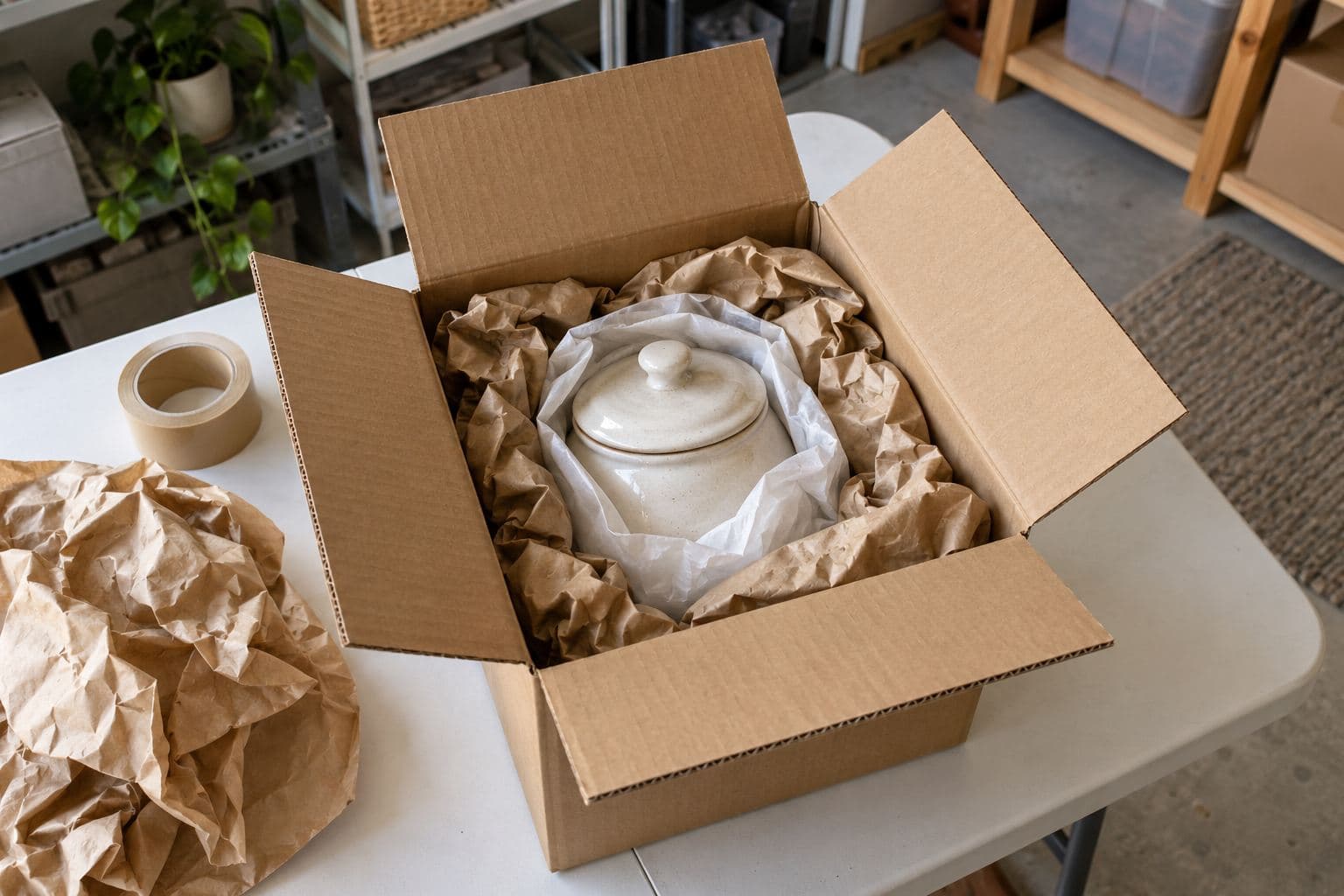
#Choose a box and padding before setting shipping terms. Weigh and measure the packed parcel with its parts and padding. Protect handles, loose parts and glass as needed, keeping the item from moving against the box or other parts.
A worn retail carton may work inside a protective outer box; check whether it can travel alone. Take photos of contents and packing, though a carrier claim or buyer dispute may still go against you.
Currently, USPS Publication 52, section 349 bans US air shipping and mail abroad for used, damaged or faulty devices containing or packed with lithium batteries. Stated exceptions cover new devices in original packaging or maker-certified new or refurbished devices. Damaged, faulty or recalled batteries have separate rules. Check all carrier rules for your battery, destination, service and required markings, even with a marketplace grade or postage label.
If safe shipping won't work, consider local pickup for an item you're otherwise allowed to sell. Recall and safety rules still apply.
Respond to returns and recheck returned stock
#Currently, eBay's return-request guidance requires covered returns “even if you have a no returns policy.” Damaged, faulty, wrong or wrongly described items generally need a remedy, with seller-paid return shipping. Change-of-mind requests depend on your stated policy.
Respond to and resolve a request within three business days; refund within two business days after the return arrives. Follow the case's steps and deadlines through eBay. Keep the buyer's explanation, listing and photos together.
Match returns and parts to your records; recheck before listing. Check automatic relisting when refunding so an unchecked return stays off sale. Record refunds and extra postage separately. You may need revised condition notes or disposal.
Check the source contract and keep actual proceeds
#Match sales to bank deposits with the bookkeeping guide.
Check your purchase contract and platform rules. Currently, the cited Amazon purchase contract limits Amazon references in resale activity. The Target contract restricts retailer identification, channels and markings. Using retailer names in a guide gives no right to use them in ads.
Save proof of purchases, sale amounts, charges and refunds under the IRS recordkeeping guidance. Confirm state sales-tax and resale-certificate rules even if the marketplace collects tax. Resale certificates are paperwork for qualifying resale purchases. This guide is not legal, tax or financial advice.
Keeping sale costs beside the item
#Fees and shipping can make your payout, the money sent to your bank, differ from the order amount. A notebook or spreadsheet works for keeping both with stock. PalletPro lets you mark an item sold with its actual sale price, fees and shipping; pallet purchase cost plus sales tax is split evenly across sellable units. Keep other buying and running costs too. See the app
Sources
#- Recalls & Product Safety Warnings - US Consumer Product Safety Commission (checked October 1, 2026).
- Product safety policy - eBay Help (checked October 1, 2026).
- Activation Lock for iPhone and iPad - Apple Support, April 29, 2026 (checked October 1, 2026).
- Product research - eBay Help (checked October 1, 2026).
- Item condition by category - eBay Help (checked October 1, 2026).
- Selling fees - eBay Help; announces an October 14, 2026 currency-conversion change (checked October 1, 2026).
- 349 Class 9 Hazardous Materials - US Postal Service, Publication 52 (checked October 1, 2026).
- How to handle a return request as a seller - eBay Help (checked October 1, 2026).
- Amazon US Terms of Purchase - Amazon.com Services, LLC / B-Stock, updated January 29, 2026 (checked October 1, 2026).
- Target Terms of Purchase - Target / B-Stock, revised November 11, 2025; also displays March 15, 2021 (checked October 1, 2026).
- What kind of records should I keep? - Internal Revenue Service (checked October 1, 2026).
Updated
More guides
- Selling liquidation items on Whatnot: prep and fees
Prepare liquidation items for Whatnot, choose supported conditions, calculate current seller fees, set auction starts, and pack orders within the deadline.
- Handle reseller returns and refunds step by step
Handle buyer returns on eBay, Whatnot and local sales. Check case deadlines, inspect returned goods, and record refunds and stock changes.
- Make an exit plan for slow resale inventory
Review slow resale stock, test a price change, compare bundles and local sales, and plan safe donation or disposal while keeping costs and counts clear.
- Pack and ship resale items with the right parcel size
Pack resale goods, measure the closed parcel, check battery restrictions, and compare carrier rules. Keep shipping records for costs and damage claims.