
Reseller guide
How to read liquidation manifests and condition grades
A manifest is the seller's list of what's in a liquidation purchase. Read it with the listing and purchase terms, checking its fields, counts and condition definitions. Keep seller claims apart from what you confirm on arrival.
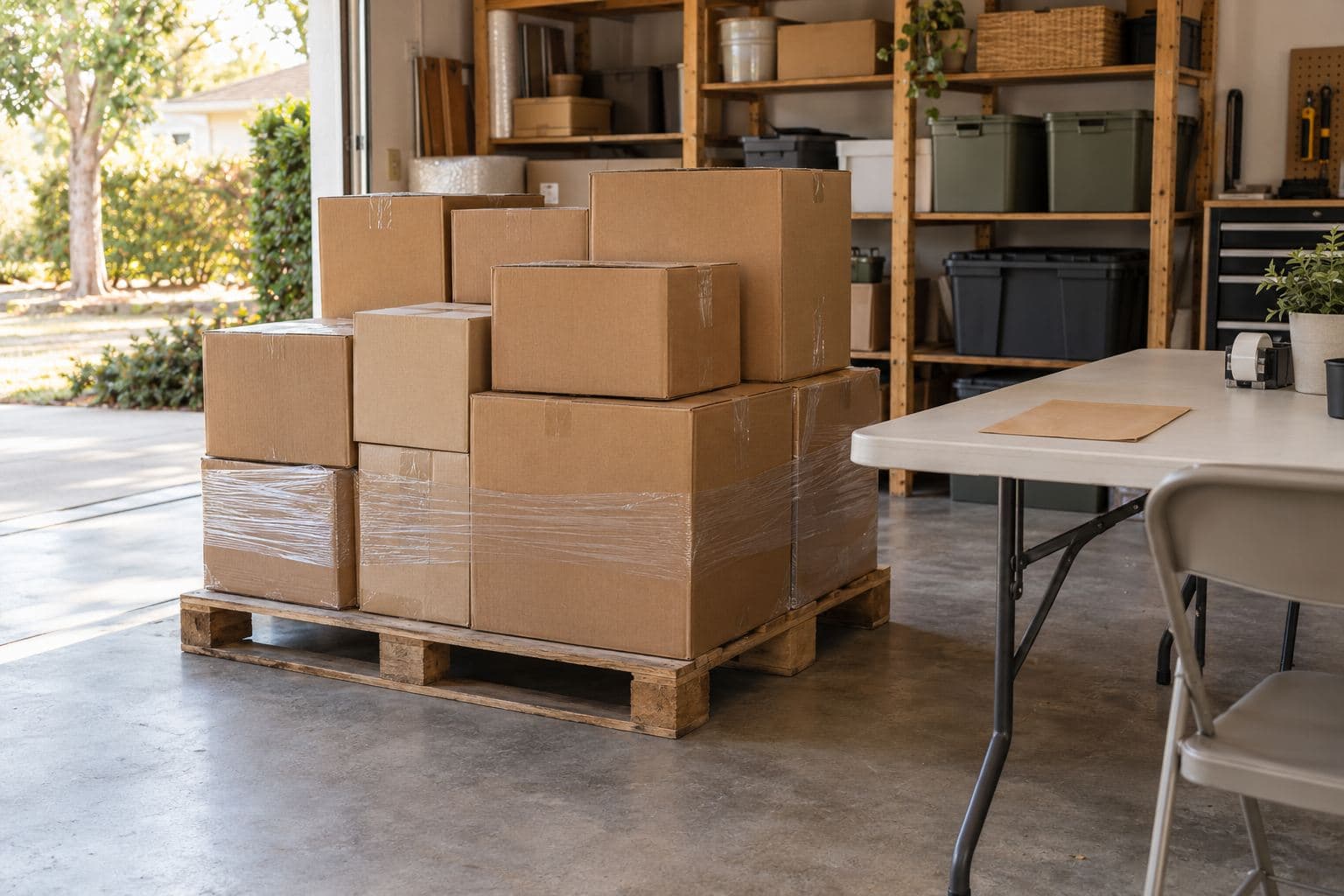
Read the manifest as a supplier record
#Check whether each unit was tested, even when the manifest lists products, counts and condition. As of October 2026, one liquidator's guidance, updated April 27, 2023, lists models, serial numbers, UPCs (product barcodes) and whether items work. For unmanifested goods, which have no item list, it says you can't get a condition check for each item in advance. Read the file for your purchase. Liquidator manifest guidance.
Match the manifest to the listing ID. Save the file, listing, photos and condition page before bidding; note the date and currency. If it changes, keep both files and ask which applies. Those records may still contain wrong details.
Look for an exact model, included parts and a stated test. Broad categories, box descriptions and unexplained condition codes leave gaps. A row marked "kitchen appliance" leaves you to find the model. A blank test field means you don't know yet.
Check what the quantity counts
#Does the count mean single products, sets sold together, packs inside cartons or outer cartons? A case pack holds repeated units of one item. Amazon describes single units, cases of repeated units and pallets of cases. Check how your seller counts them. Amazon's case-pack explanation.
Made-up manifest example: These products, IDs, counts and the layout are fictional.
| Fictional item reference | Description | Count supplied | Counting unit | Individual retail units | Seller's stated check |
|---|---|---|---|---|---|
| A-101 | Plain storage basket | 4 | Carton of 6 baskets | 24 | None stated |
| A-102 | Ceramic bowl set | 3 | Retail set of 4 bowls | 3 sets | Visual check only |
| A-103 | Small desk lamp | 5 | Individual lamp | 5 | None stated |
The math is 4 × 6 = 24 baskets, plus 3 bowl sets and 5 lamps: 32 retail units if you keep each bowl set together. The supplied-count column adds up to 12 packs, sets and single items. If you plan to sell loose bowls, you'll need a different count for that plan.
Use the same unit to compare purchases and check arrivals. Mark incomplete sets so loose parts aren't counted as complete units. See the case-pack guide for repeated products and the landed-cost guide for splitting buying and delivery costs across units.
Use each seller's own condition wording
#Condition grades describe the state of goods. These sources don't share one scale. Read each seller's terms and date, and ask about unexplained letters or short forms. These excerpts were checked October 1, 2026. Shelf pulls are goods taken off store shelves; see this seller's wording below.
| Source and scope | Term | Seller's wording | What to clarify |
|---|---|---|---|
| Amazon US marketplace condition page, currently | New | "Unsold merchandise with no signs of use." | Whether the specific listing states this product condition |
| Same page | Like new | "Unsold merchandise with minimal signs of handling." | What handling marks and packaging are disclosed |
| Same page | Mixed | "Can include products of any quality, including salvage." | Whether individual rows have narrower descriptions |
| Liquidation marketplace buyer FAQ, currently | Shelf pulls | "were never sold" | Handling wear, stickers and missing packaging |
| Same FAQ | Salvage | "defective for reasons concerning their functionality, appearance or both" | The known defects, parts and restrictions |
Sources: Amazon US condition definitions, Liquidation marketplace buyer FAQ.
The cited marketplace FAQ calls goods a customer brought or sent back "returns." Their packaging, included parts and condition can vary. That label tells you the seller's claim about return history. Ask for each item's test result too, and keep origin, condition and packaging in separate notes.
Ask what "A grade" means before calling goods "new." Does it cover looks, function, completeness or a mix? Repeating the grade leaves the same gap. The glossary explains trade words; your purchase agreement sets your order's terms.
Separate the box from the product
#Amazon currently lists product condition apart from packaging condition. Its choices for packaging include original, open box, damaged and non-original packaging. Check the item inside an open box to judge its condition. Amazon US condition definitions.
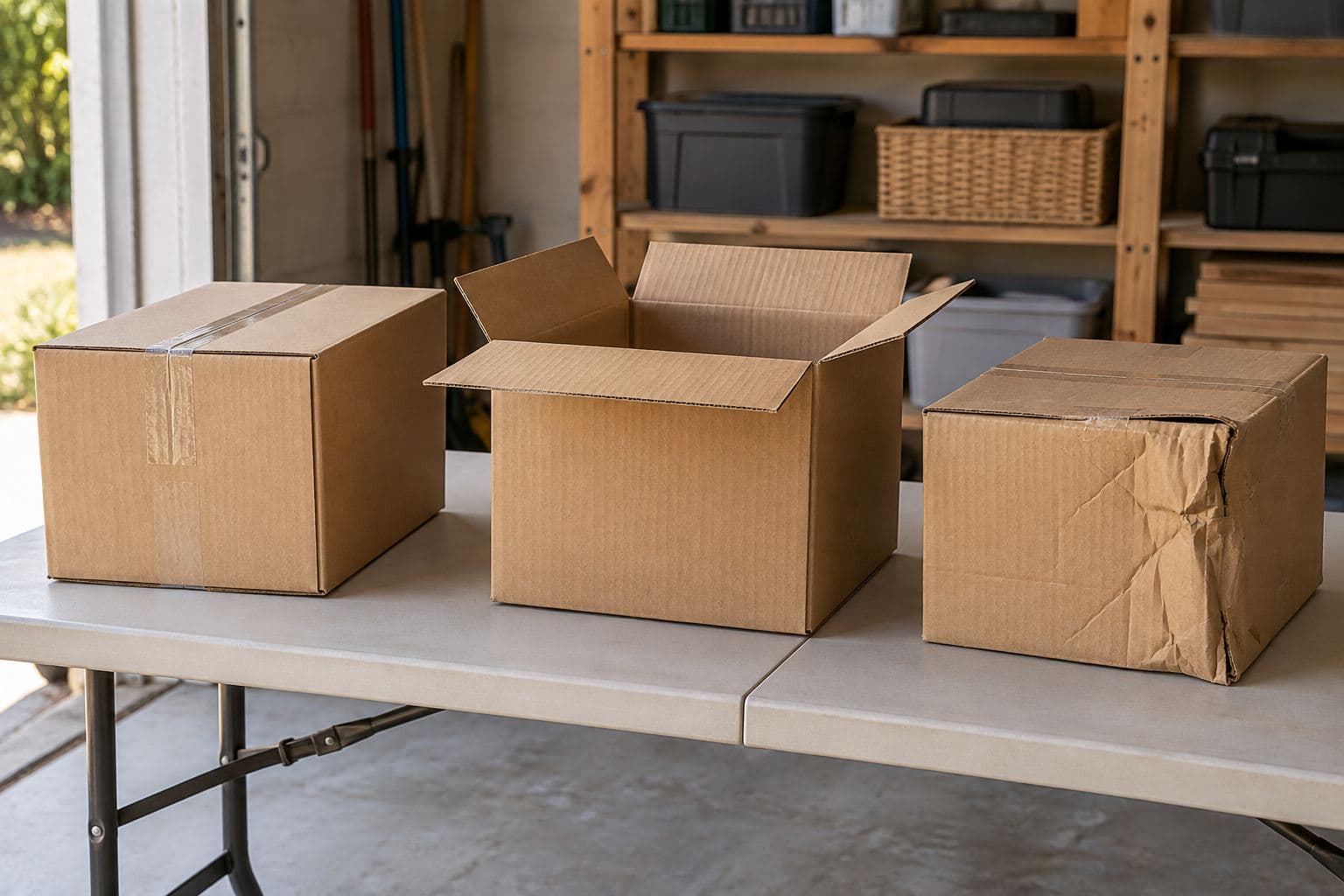
Made-up inspection example: A plain carton's corner is crushed, but the storage basket inside has no visible damage. Record both. Don't turn "carton crushed" into "product damaged," or use this basket to judge other cartons.
Match the actual item's model or other ID to the manifest and box. Take photos of swapped items or missing parts while you can still link each box to its contents. For tracking stickers, use the return-label guide.
Ask what untested, retail ready and processed mean
#One marketplace's May 13, 2025 condition-code article says, "Unless otherwise noted, we do not inspect or test these items." Its current returns guidance makes the listing's own test details key. It calls some checked or tested goods "retail ready." "Processed" means some higher-price goods may have been removed. Neither label gives a test report for each unit. Liquidation marketplace condition-code explanation.
Ask what was checked, by whom, and whether it covered every unit or a sample. "Powers on" leaves other functions unchecked. Write "Powers on; other functions untested," with those limits in your listing. See the inspection and testing guide.
Choose a resale site's condition label from its full category rules and your own evidence. Don't map "untested" straight to a label. eBay's current supported open-box wording includes "unused item with no signs of wear." Whatnot's electronics rules allow items "lightly used for demo or testing purposes," with no functional defects and the original accessories. eBay condition definitions, Whatnot electronics definitions.
Read retail reference figures separately
#A retail reference total is a separate field for the seller's stated retail prices. B-Stock Supply currently says these figures are unverified. Photos may show stock, sample or actual goods, so ask which show your purchase. Keep reference prices apart from future sale receipts: an asking price or current bid isn't a completed sale. B-Stock Supply FAQ.
Use pricing pallet items after finding the model and checking the item. First resolve counts and buying costs. Check unknown models, missing parts and unclear freight (goods transport) charges, regardless of the retail total.
Compare arrival evidence with the saved terms
#Keep a separate arrival-check copy with the count received, actual item ID, parts, damage and photo reference. Record how the shipment arrived before sorting removes that evidence.
Amazon's current purchase contract gives five days from delivery to inspect and report discrepancies (items that don't match the order) in writing. B-Stock's table says five business days. Get written clarification before buying and plan to check the goods promptly. Don't assume you have the longer period or an automatic right to a refund. Amazon US purchase contract, section 5.4, B-Stock dispute-policy table.
Only test what you can test safely. Don't test swollen or damaged batteries, damaged cords, gas appliances or recalled products. Check the CPSC recalls search and the manufacturer using the actual model; set aside items you can't clear. A broad manifest description may leave you unable to identify a recall. CPSC, the US Consumer Product Safety Commission, explains the rules on reselling recalled goods and approved fixes. CPSC resale safety FAQ. This guide is not legal, tax or financial advice.
Keeping inspection results with each unit
#For similar units in different states, a notebook or spreadsheet works to keep condition and test notes apart. PalletPro prepares listing text from a template you can copy and post yourself. Include partial-check limits in your notes and buyer-facing description; see the app.
Sources
#- Manifest and item-condition guidance - Direct Liquidation, April 27, 2023 (checked October 1, 2026)
- Case packs and package hierarchy - Amazon, February 27, 2025 (checked October 1, 2026)
- Amazon US condition definitions - Amazon Liquidation Auctions / B-Stock, date not shown (checked October 1, 2026)
- Buyer FAQ - Liquidation.com, date not shown (checked October 1, 2026)
- Understanding Liquidation.com condition codes - Liquidation.com Team, May 13, 2025 (checked October 1, 2026)
- Item condition definitions - eBay Developers Program, date not shown (checked October 1, 2026)
- Electronics condition definitions - Whatnot, February 26, 2026 (checked October 1, 2026)
- Supply buyer FAQ - B-Stock Supply, date not shown (checked October 1, 2026)
- Amazon US purchase contract - Amazon.com Services, LLC, January 29, 2026 (checked October 1, 2026)
- Dispute-policy table - B-Stock, date not shown (checked October 1, 2026)
- Recalls search - US Consumer Product Safety Commission, current database (checked October 1, 2026)
- Buying and selling products online - US Consumer Product Safety Commission, date not shown (checked October 1, 2026)
Updated
More guides
- Liquidation pallet freight: booking, delivery, and claims
Book pallet freight with the right equipment and access details. Understand LTL, liftgates, delivery notes, damage notice, and freight claim steps.
- Resale certificates and sales tax for liquidation buyers
Understand resale forms, sales tax permits, state rules, and records before buying liquidation goods. Find official guidance for your purchase.
- How to calculate a liquidation pallet's landed cost
Add the pallet price, purchase fees, applicable sales tax, transport and other costs, then divide across sellable units with clear hypothetical math.
- How to check a liquidation supplier before buying
Check a liquidation seller's identity, inventory evidence, purchase terms, payment protection, complaint records and delivery obligations before buying.