
Reseller guide
Mystery pallets: what you can't check before buying
A mystery or unmanifested liquidation pallet is a bulk batch without a full contents list before buying. You can't check each product's identity, count, condition or sale rules in advance. You could lose all you pay and still face disposal costs. Set a firm spending limit and plan for stock you can't list, even if some items are visible.
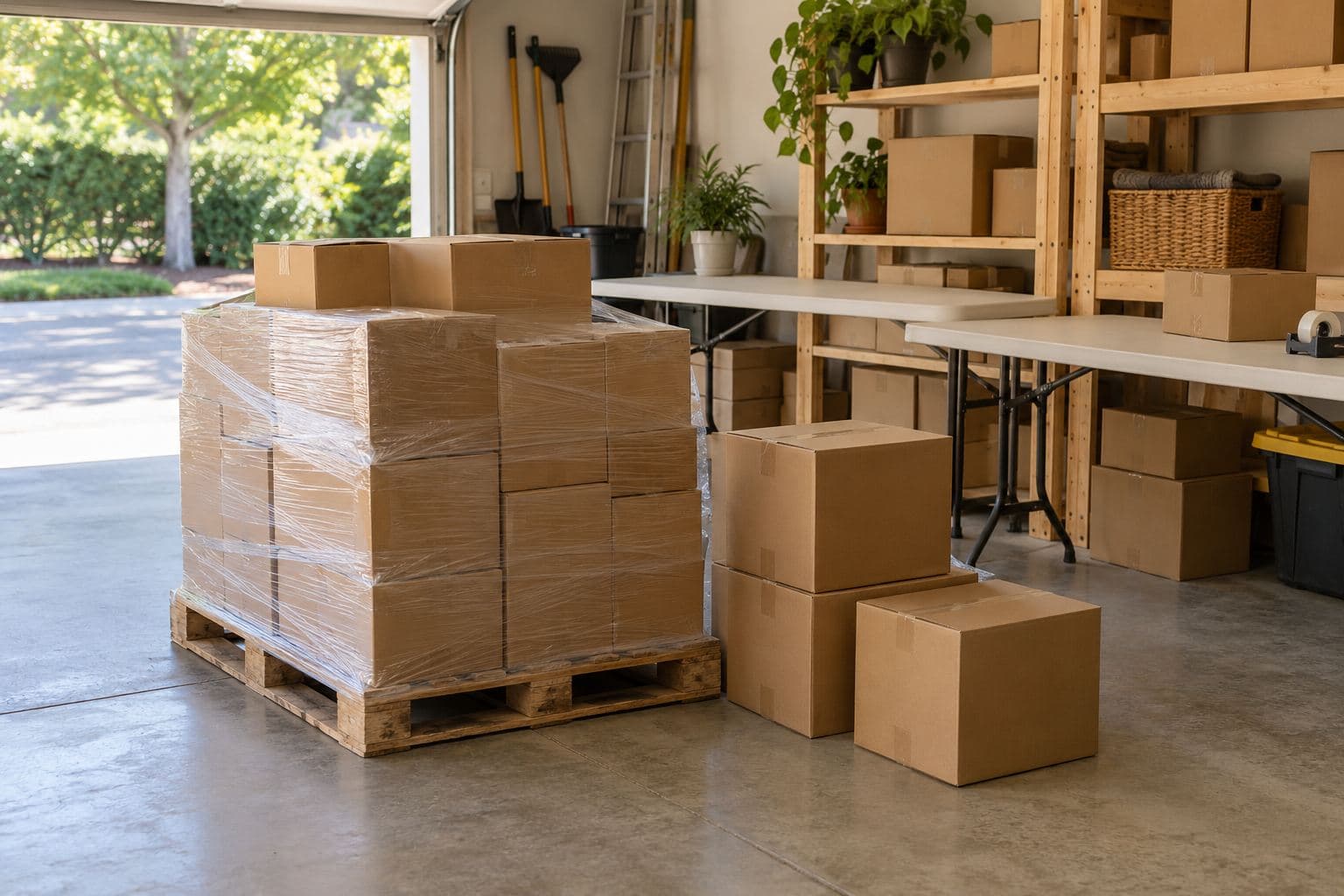
What mystery and unmanifested mean
#Liquidation means stock cleared out in bulk. A pallet is the platform used to move goods, or the batch packed on it. A manifest is an item-by-item stock list; unmanifested means it lacks that list. Mystery means some or all contents are undisclosed. See the glossary for more trade terms.
As of October 2026, one liquidator, a seller of bulk clearance stock, says “item-specific condition verification isn't possible” for this stock. See its auction guidance. Another labels its shoe pallet “Unmanifested” but gives broad shoe and season details. Check how much each offer tells you.
Neither term gives a shared condition grade, a seller's label for the state of the goods. A pallet may lack a list but have a stated category, or contain unchecked goods. Untested means no stated function test was done, so working condition is unknown. See manifests and grades for list fields and limits.
Ask whether a full list ever existed or just isn't supplied. The label alone doesn't show fraud or an untouched batch. You'll need to identify unknown goods before describing them to your own buyer.
What usually arrives
#There's no standard mystery-pallet mix. Even offers for one category may omit sizes, models and counts. The shoe offer describes mixed seasons and mostly women's shoes, but its photos show past batches. Ask for evidence of your purchase's contents.
For mixed goods, ask for categories and written exclusions: goods the seller says it won't include. Ask about food, clothes, cosmetics, medicine, chemicals, batteries and recalled goods, those under a safety notice. Read your pallet's terms separately from other program pages.
Ask what sorting happened before sale. Processed stock has had some handling or selection. One marketplace removes selected higher-priced goods from its processed pallet stock. It calls its truckload stock, a batch shipped in a full trailer, raw or unprocessed: offered as received. This describes its own program. Ask each seller what was removed and by whom; the terms aren't shared grades. Processing explained.
Questions to ask before you bid
#Keep the seller's replies with the exact offer:
- What broad categories are included, and what is excluded in writing?
- Does the count refer to pallets, shipping cartons or consumer units?
- Does any list or count exist, even if it is incomplete?
- What sorting or testing happened before this seller received the stock?
- Do photos show this lot, meaning the group offered in this sale?
- Can you inspect it or view a sample, and who chooses the sample?
- Is the pallet you inspect the one reserved for your purchase?
- What are the fees, freight charges and claim terms?
- What happens if contents breach an exclusion or differ from written terms?
A buyer's premium is an extra auction charge on the goods price. Freight means carrier transport of the pallet. Get both before setting your bid limit. A current bid is an offer to pay; an asking price is the amount requested. You'll still need the final delivered cost.
Ask for dated photos of the actual lot. For a sample carton, note where it came from and who chose it. Record every item, including broken and incomplete goods. The sample shows those contents; don't use it to predict a working percentage for the whole pallet.
When you can't inspect, keep that gap in your buying decision. Use the supplier-checking guide to review the business and contract. Check name-use limits in resale ads, sales tax and any resale certificate, the state form for qualifying resale purchases. This guide is not legal, tax or financial advice.
What to check on arrival
#Save the offer, photos and replies before they change. Photograph the wrapped pallet and count cartons as you open them. Record the advertised and received counts separately. You'll need a product count too.
List the goods you receive. Give each item or repeated group a record number, and copy any maker, model, size, printed dates and codes from the product. Check box contents before trusting labels.
Keep separate groups for identified goods ready for checks, goods awaiting answers and goods needing disposal. These are work groups, not seller grades. Note why each item is held so an unknown charger or sealed cosmetic stays out of sale stock.
For a mismatch, record facts against the purchase terms and keep item, box and count photos. Follow the claim deadline. Uncertainty alone doesn't prove a contract breach.
What to test first
#Only test what you can test safely. Identify each product and check the CPSC recall search before any function test. Search by maker and model, then read the notice for exact scope. Keep recalled goods out of sale and follow CPSC and maker instructions. Seller safety FAQ.
Never test swollen or damaged batteries, damaged cords, gas appliances or anything recalled. Follow the inspection and testing guide, then check each type. Tools need parts and battery checks; apparel needs size, pair and wear checks. Health and beauty goods need seals, dates and product-rule checks. Keep cosmetic containers sealed while reading their packaging. Never resell opened or used personal-care items.
Hold unknown items. Describe individual listings and lots from your actual stock; a lot is a group sold together. Identify the contents before offering them to your buyer.
Check the current marketplace rules for your sale format:
| Format | What the rules say |
|---|---|
| Whatnot seller-unknown goods | Its general rules prohibit goods unknown to the seller, including unclaimed or unopened parcels, in sales and giveaways. Restricted items. |
| Whatnot pallets | The listing needs a manifest with item types, quantities and conditions. Bundles have their own description rules. A bundle is several goods sold together. Wholesale policy. |
| Whatnot Surprise Sets | This format splits known stock among buyers who don't know which listed item they'll receive. It requires a detailed checklist. Single surprise pallets or bundles need an accurate contents description without prize claims. Surprise policy. |
| Whatnot professionally sealed surprise goods | Qualifying products on its identified-product list have a narrow exception. An ordinary unopened liquidation carton doesn't qualify just because it is sealed. Sealed-product policy. |
| eBay mystery boxes or grab bags | These can be listed with general contents details. You can't single out items for their monetary or collector appeal unless every purchase includes them. Contests, raffles and random drawings are barred. Chance listings policy. |
The Whatnot sealed-product page announces a December 7, 2026 change, which isn't yet in effect. Recheck linked rules before choosing a format. Goods must still meet product safety and sale rules.
Space, handling and moving it
#Leave room for open cartons and goods held for research. Before buying, confirm size, weight, delivery access and who moves the pallet from the truck. Use the receiving and storage guide to plan.
Sort one carton at a time to keep parts together. Set unknown chemicals and damaged batteries apart from routine handling and seek suitable guidance. Plan business disposal for rejects. For safe, accurately described local lots, use the local-selling guide for inspection, payment and pickup.
How the cost works
#Made-up example: Goods cost $600, freight $200, and fees, tax and other buying costs $200. After opening and checks, you can list 20 units. This doesn't predict likely contents.
| Step | Arithmetic |
|---|---|
| Buying cost | $600 + $200 + $200 = $1,000 |
| Cost per sellable unit | $1,000 / 20 = $50 |
| If only 10 units qualify | $1,000 / 10 = $100 |
| Break-even with $200 in further costs | $1,000 + $200 = $1,200 in buyer payments |
Break-even means payments cover the costs included here. Add packing, fees, shipping you pay, repair and disposal, plus your time if you give it a dollar cost. Compare made-up counts with the pallet profit calculator. With no sellable units, you have none to spread the buying cost across.
Building records from the goods you receive
#A notebook or spreadsheet works for a stock list created after opening boxes. PalletPro lets you add items to a pallet and splits that pallet's purchase cost plus tax evenly across its sellable units. Keep the supplier's advertised count in your own records beside your received and checked counts. See the app
How this guide was written
#This guide was compiled from the public sources listed below. Checked on October 1, 2026. PalletPro doesn't sell pallets and isn't affiliated with any retailer, liquidator or marketplace named here.
Sources
#- How can I tell exactly what condition each item in an auction is in? - Direct Liquidation, April 27, 2023 (checked October 1, 2026).
- Assorted In Box TGT Shoes - Via Trading (checked October 1, 2026).
- Processed vs Unprocessed Inventory: what is the difference and what does it mean for my business? - Liquidation.com, February 10, 2026 (checked October 1, 2026).
- Recalls & Product Safety Warnings - US Consumer Product Safety Commission (checked October 1, 2026).
- Online Sellers Safety Guide FAQs - US Consumer Product Safety Commission (checked October 1, 2026).
- Prohibited or Restricted Items on Whatnot - Whatnot, August 17, 2026 (checked October 1, 2026).
- Whatnot Wholesale Category Policy - Whatnot, June 27, 2025 (checked October 1, 2026).
- Surprise Sets Policy - Whatnot, June 22, 2026 (checked October 1, 2026).
- Professionally Sealed Surprise Products - Whatnot, October 1, 2026 (checked October 1, 2026).
- Chance listings policy - eBay (checked October 1, 2026).
Updated
More guides
- Pallet types: read the offer and choose a guide
Read pallet offers by source, size, goods and condition, then choose a guide for the checks, space and costs to plan before buying.
- Sporting goods liquidation pallets: sets and safety
Check sporting goods pallets for complete sets, sizes, bike assembly and protective-equipment history before planning storage, transport and resale.
- Stacked furniture truckloads: parts, space and handling
Check stacked furniture liquidation truckloads for complete pieces, matching cartons and hardware. Plan safe heavy-item handling, storage and pickup.
- Target general merchandise pallets: raw and processed
Understand Target GM pallets, raw versus processed assortments and changing exclusions before checking condition, missing parts and resale restrictions.