
Reseller guide
Sporting goods liquidation pallets: sets and safety
Sporting goods describes a pallet's product mix. Check its condition grade, the label for the state of the goods, separately. Check sizes, count set pieces and plan skilled equipment checks. Judge protective gear by model and history. Get the manifest, an item list with counts, and resale rules before choosing stock for your space and channels.
What sporting goods means in seller programs
#As of October 2026, a sporting-goods program page uses “Shelf Pulls, Online Returns, and Customer Returns” for Delta. Alpha uses “Shelf Pulls and Customer Returns.” Shelf pulls are goods removed from store shelves; returns are goods buyers sent back. These are one seller's source and condition labels, not shared grades.
The page doesn't name either program's retailer. Leave that source unknown rather than guessing from Alpha or Delta. For retailer-source claims, see the Bass Pro pallet guide.
“Sporting goods” is your starting point. Check each item's model, size, condition and parts. Check for adult sizes, assembly, prior use and ordinary parcel-shipping needs.
What usually arrives depends on the assortment
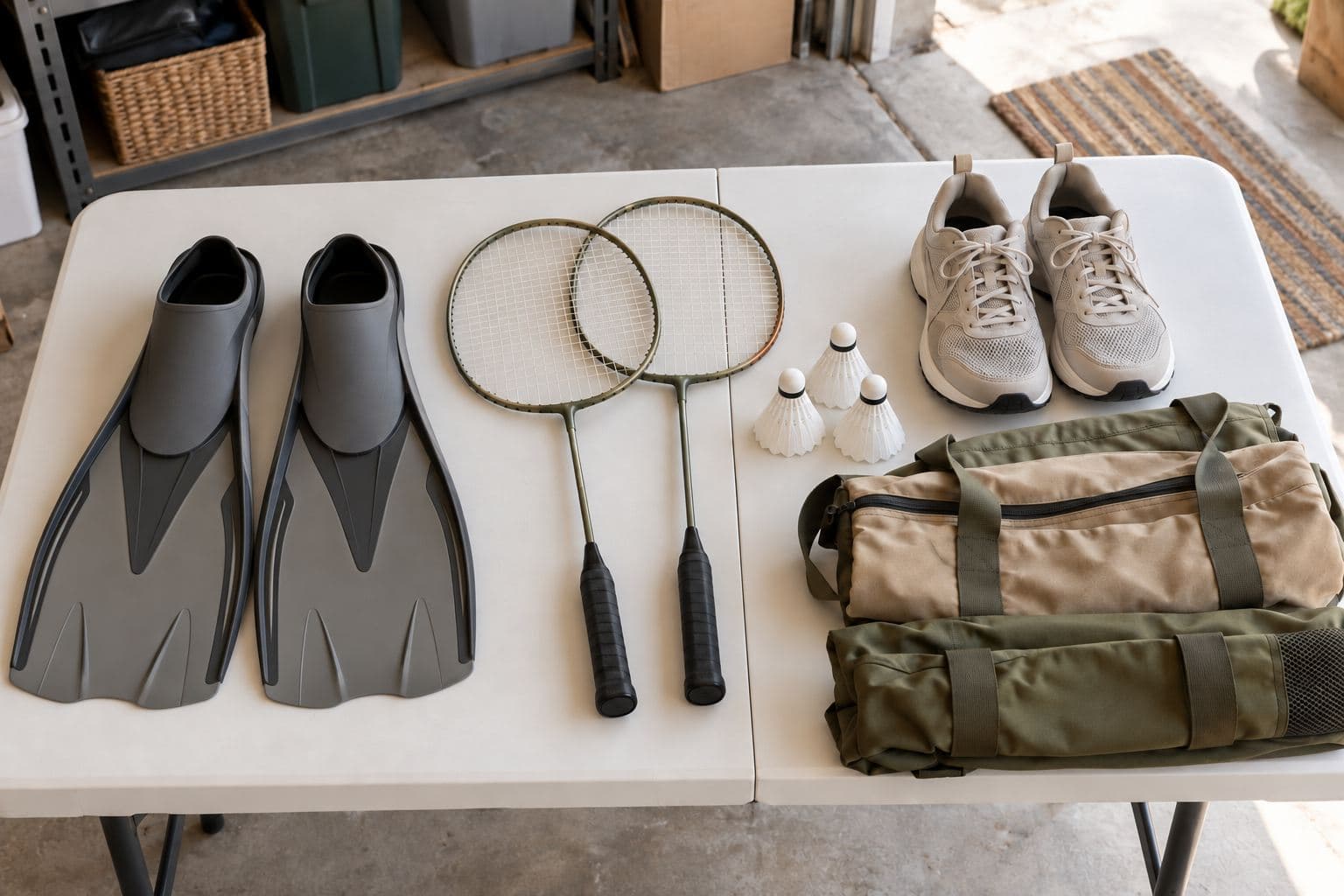
#The seller lists team sports, camping, workout gear, racquet sports, swimming, fishing and apparel. Alpha includes balls, game sets, swim fins, bike racks, kayaks, bikes, racquets and helmets. Check each shipment's mix beyond that advertised list.
Plan intake from the manifest. Count fabric accessories apart from protective gear. Pairs need matching pieces, games need listed parts, and machines need their own parts and instructions. Check whether counts mean loose pieces or complete resale sets.
Use these checks for the goods on your manifest:
| Inventory group | What to confirm |
|---|---|
| Apparel and footwear | Actual size, matched pairs, signs of use and care instructions |
| Games and accessory sets | Required pieces, included pieces and missing parts |
| Bikes and exercise equipment | Exact model, state of assembly, hardware and skilled inspection needs |
| Helmets and protective gear | Intended sport, markings, dates, history and manufacturer guidance |
| Battery-powered equipment | Battery ID, visible condition and separate transport rules |
Questions to ask before you bid
#Get sizes and models on the manifest, along with whether counts mean pieces, pairs or whole sets. Ask which product each loose accessory belongs to. Photos of the actual stock should link the offered pallet to that list.
For bulky goods, get size, weight and state of assembly. Read instructions and parts lists before pricing missing hardware. Ask who assembled display or returned gear and what they checked afterward. A visual check differs from a mechanical check for that model.
For helmets and protective gear, ask when they were made, which safety-standard marks they bear and any known impact history. Get recertification records, proof of repeat safety-standard checks, where they apply. Mark missing history as unknown. Check for use even in sealed-looking boxes or on clean shells.
The seller lists online-sale and shipping limits for Alpha but gives no details. Get the source agreement before choosing a channel. Ask about retailer names in ads, location limits, warranties, claim deadlines, sales tax and resale certificates, tax forms for goods bought to resell. This guide is not legal, tax or financial advice.
Ask whether sorting split up incomplete sets or removed restricted goods. Did inspection include function checks? Use manifest and condition-grade guidance to keep claims clear. Check for safety review even of selected stock.
What to check on arrival
#Take intact-pallet and packaging photos, then match goods to the saved manifest. Record damage and shortages by the claim deadline. Keep each model's accessories together and count complete pairs and sets before sellable units.
For clothing and shoes, check size marks, stains, wear, odors and matching pieces. Follow the maker's care steps for each fabric or item. Record signs of prior use. Clean gear may still fail to protect the wearer.
Search the CPSC recall database by product ID and check the maker's notices. CPSC resale guidance bans offering recalled goods. Hold them apart and follow the notice before deciding what to do with them. If a manufacturer-confirmed completed remedy, the required fix, permits resale, keep proof and disclose the fix.
Helmets need more than a check for visible flaws. CPSC's bicycle-helmet guidance covers 16 CFR 1203 and warns that impact damage may be hidden. The required warning says to return an impacted helmet to the maker or destroy and replace it. A working buckle and clean padding give no proof of impact protection.
Other sports have their own rules. NOCSAE's recertification guidance says the maker's time between checks may apply even to unused helmets. Missing that interval can end the helmet's certification, its proof of meeting the standard. NOCSAE strongly recommends recertification but doesn't require it in its standards. Follow the maker's guidance; this isn't one law for all used protective gear.
What to test first
#Only test what you can test safely. Don't test swollen or damaged batteries, damaged cords, gas appliances or anything recalled. Use inspecting and testing liquidation returns to record each check and its limits.
For bikes, check the model, required parts and assembly instructions before function. CPSC bicycle guidance covers assembly, brakes, steering, structural strength and other rules. Get competent assembly and inspection where needed. Don't improvise safety repairs or substitute a part you can't identify.
For exercise gear, check for missing hardware and read the maker's inspection steps before use. Moving parts or electrical faults may need a qualified check. Test a powered machine's controls, stops and moving parts only when safe, even if its display lights up. Record what you checked and what remains untested.
CPSC's online-seller FAQ gives resellers different testing and certification duties from makers and importers. Resellers still need close safety checks and recall searches; this isn't an instruction to repeat destructive factory tests on returns. Marketplaces may ask for more paperwork. Routine intake checks can't certify protective gear with unknown history.
Space, handling and moving it
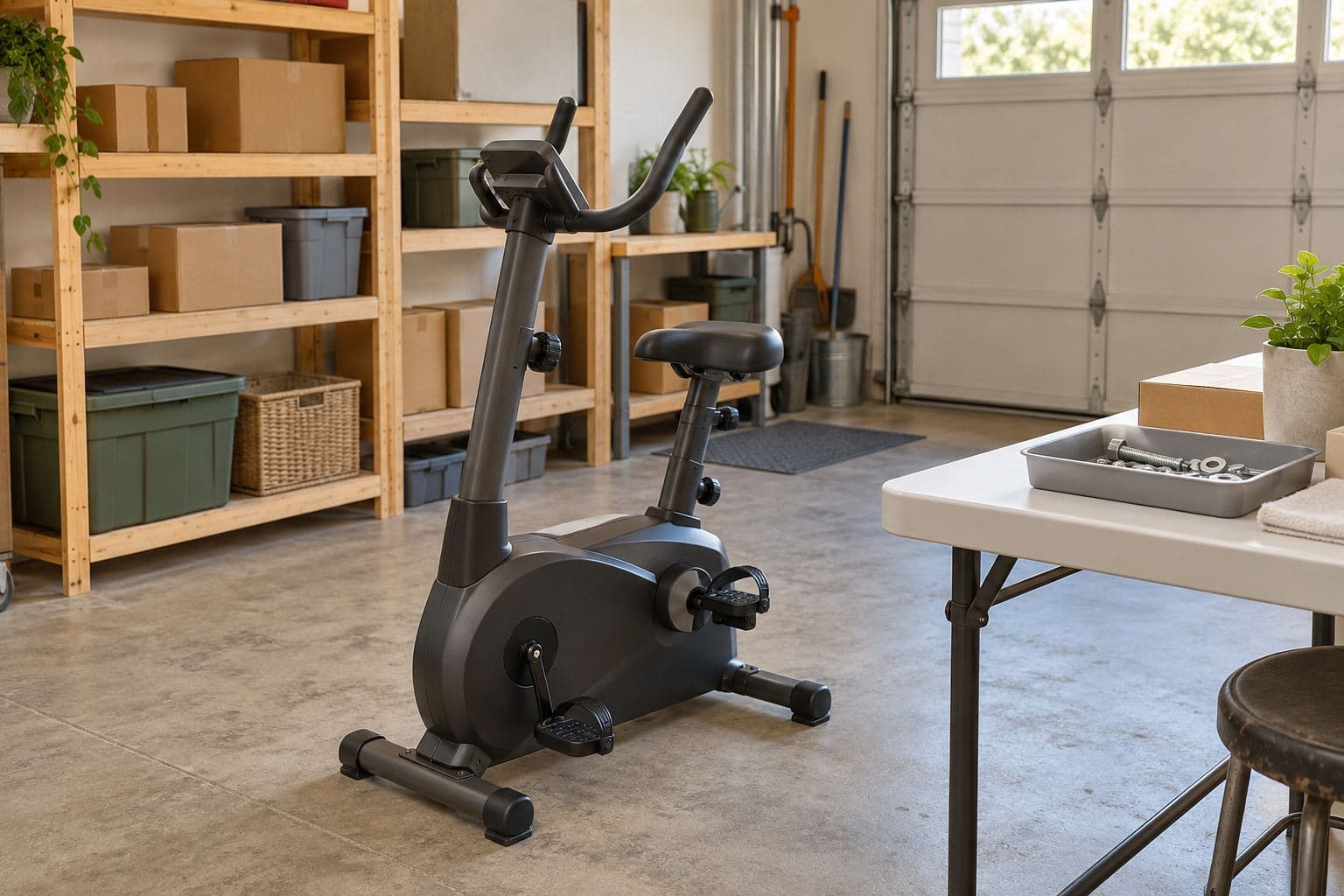
#Measure gear as you'll store and move it. An assembled machine's floor space, doorway clearance and transport weight may differ from its box dimensions. Check a safe route before pickup. Use suitable equipment and competent help for heavy or awkward goods.
Leave space for hardware and goods awaiting a decision, with the receiving aisle clear. OSHA's warehousing guidance covers stable storage and clear access. The receiving and storage guide helps you leave room for checks.
Check battery transport separately, even for a mechanically sound bike. PHMSA's lithium-battery guidance points to shipping rules based on battery type and condition. For hunting goods, bows or fuel, use the restricted-category checks in the Bass Pro guide.
Bulky stock may need local handover. Check access and handling before delivery work. Use the local selling guide for buyer inspection and recording completed sales.
How the cost works
#Use the quote for your goods and freight, their transport cost. Keep a seller's retail reference total apart from your later receipts; an asking price isn't a completed sale. Add parts and specialist-check costs as they arise, with their own entries in your records.
Made-up example: goods cost $600, purchase tax is $40, freight is $160 and parts plus inspection cost $200. After matching pairs and sets, you have 20 sellable units.
| Calculation | Result |
|---|---|
| Stated buying and prep costs: $600 + $40 + $160 + $200 | $1,000 |
| Cost per sellable unit: $1,000 ÷ 20 | $50 |
| Extra selling and delivery costs, assumed | $200 |
| Receipts needed to cover these costs: $1,000 + $200 | $1,200 |
| Average receipt if all 20 units sell: $1,200 ÷ 20 | $60 |
This break-even, the receipts needed to cover costs, leaves out labor and other unstated costs. Count complete pairs as units, and leave protective gear awaiting a decision out. Use the pallet profit calculator, and keep prep and delivery costs in view.
Keeping repeated sizes and sets straight
#Some units stay in stock after others sell. A notebook or spreadsheet works. In PalletPro, a case pack, repeated units of one item, stays one item with a quantity. Record sales of some units now and the rest later. Keep sizes and incomplete sets separate when they're different stock. See the glossary. See the app
How this guide was written
#This guide draws on the public sources below. Checked on October 1, 2026. Check each shipment's mix and each protective item's history beyond the program ad. PalletPro doesn't sell pallets and isn't affiliated with any retailer, liquidator or marketplace named here.
Sources
#- Sporting goods programs - Third-party wholesale supplier (checked October 1, 2026).
- Recalls and product safety warnings - US CPSC (checked October 1, 2026).
- Stopping the online sale of recalled products - US CPSC (checked October 1, 2026).
- Resellers guide to selling safer products - US CPSC Small Business Ombudsman, May 2021 (checked October 1, 2026).
- Bicycle helmets business guidance - US CPSC (checked October 1, 2026).
- General recertification requirements and recommendations - NOCSAE (checked October 1, 2026).
- Bicycle requirements business guidance - US CPSC (checked October 1, 2026).
- Online sellers safety guide FAQs - US CPSC (checked October 1, 2026).
- Warehousing hazards and solutions - US OSHA (checked October 1, 2026).
- Transporting lithium batteries - US DOT / PHMSA (checked October 1, 2026).
Updated
More guides
- Stacked furniture truckloads: parts, space and handling
Check stacked furniture liquidation truckloads for complete pieces, matching cartons and hardware. Plan safe heavy-item handling, storage and pickup.
- Target general merchandise pallets: raw and processed
Understand Target GM pallets, raw versus processed assortments and changing exclusions before checking condition, missing parts and resale restrictions.
- Target liquidation pallets: contents, contracts and costs
Compare Target liquidation pallets and truckloads by assortment, condition and quantities. Check resale-advertising restrictions, freight and costs.
- Tool liquidation pallets: parts, batteries and checks
Learn how to check tool pallets for missing parts, battery and charger fit, recalls and safe testing before you choose a repair or resale route.