
Reseller guide
Stacked furniture truckloads: parts, space and handling
Stacked furniture is a seller's term for furniture packed together on wrapped pallets. Before buying a truckload, a shipment at truck scale, confirm condition, complete-piece count, assembly status, every carton needed per piece and receiving equipment. Leave space to inspect, build and store it; carton counts can differ from complete-item counts. Supplier's stacked-furniture description.
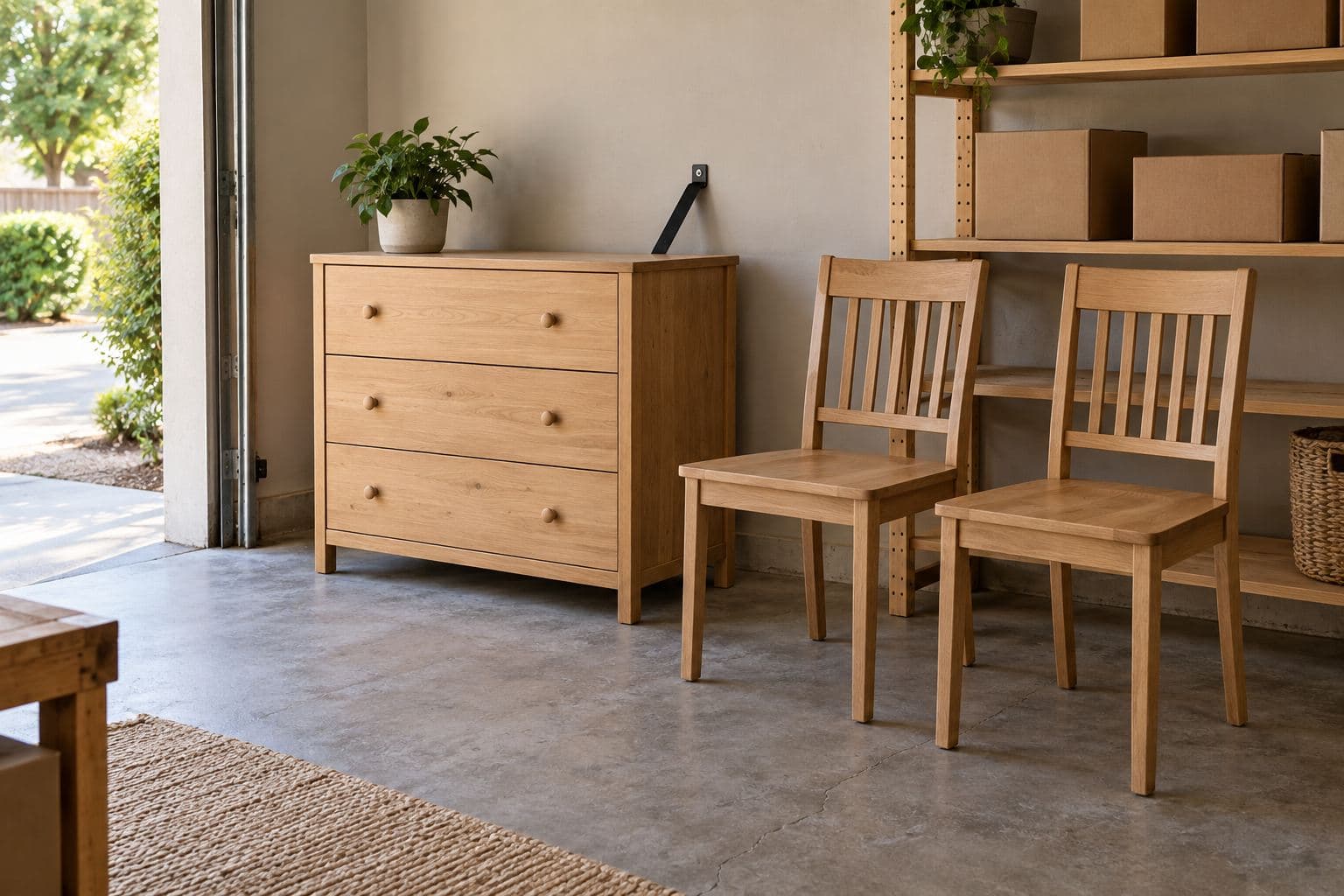
What stacked furniture means
#The supplier page calls an offer “Stacked Furniture” and “Wrapped furniture pallets”, with a Central US origin. It gives no detailed mix, manifest (a list of goods and quantities), assembly status or test record. Its ready-to-resell wording is an ad; inspect the goods.
Other programs use different terms. A separate furniture-and-decor offer lists furniture, rugs and decor but gives conflicting piece counts. Ask what the seller counts; this offer can't fill the gaps in the stacked-furniture description.
Retail returns, excess retail stock and used hotel furniture have different histories. Returns were bought and sent back; excess stock is surplus goods. Get this seller's written condition and mix, plus any checks or processing done. See the manifest and condition guide.
What usually arrives
#No standard stacked-furniture mix was verified. The separate furniture-and-decor ad includes bedroom, living-room, dining, storage and patio goods, plus rugs and accents. These are possibilities from that offer; check your truckload.
Ask for counts of built furniture, flat-pack items (parts packed flat for assembly), multi-carton pieces and loose parts. Check the headline count and packing: tabletop and leg cartons can make one table; one large carton could hold a set. Count complete resale units.
Suggested checks depend on the format:
| Format | Main question on arrival |
|---|---|
| Built case furniture, such as storage pieces | Are the frame, joints, feet, drawer runners and required safety parts intact? |
| Flat-pack furniture | Do panels and hardware match the exact model's instructions? |
| Multi-carton furniture | Has every carton for the same model, finish and version arrived? |
| Upholstered furniture, with padded fabric covers | What use, damage, hygiene and cleaning and treatment rules need checking? |
| Dining or occasional furniture sets | Are all advertised matching pieces present, with each piece checked? |
No complete-piece percentage or assembly-time allowance was verified. Don't budget on every boxed piece needing just a few screws.
Questions to ask before you bid
#Ask for details of this lot, the group of goods for sale, so you can plan receiving:
- Does the count mean complete furniture items, cartons, sets or components?
- Which products need more than one carton, and how are the cartons matched?
- Are hardware, instructions and required safety fittings included?
- Do photos show this shipment or sample stock?
- What condition is recorded, and are faults in the structure or missing parts disclosed?
- What are the pallet size, shipment weight, trailer format and unloading needs?
- Which freight (bulk shipping) services, claim deadlines and extra charges apply?
Get the exact origin to plan distance and receiving. FOB means free on board, a shipping term about handover and freight duties. With FOB-state or region shorthand, ask who arranges freight, when responsibility passes and what the agreement says. Don't infer those answers from the letters.
Match the quote to your address, equipment and carrier access before paying. FedEx's glossary covers freight documents, accessorial charges (extra-service fees) and detention (charges for waiting past allotted time). Check included services and extra-charge triggers; no nationwide freight rate is given.
Read the seller-specific resale limits, return terms and tax paperwork rules. A resale certificate is tax paperwork for goods bought to resell. Sales tax depends on your purchase and state or area. This guide is not legal, tax or financial advice.
What to check on arrival
#Photograph furniture, wrap and cartons before moving them. Save delivery papers; note visible shortages or mismatches. Report qualifying issues by the purchase terms' deadline, even before assembly.
Match multi-carton pieces before opening other stock. Check model IDs, finish, size and carton order against the maker's details, even if color or panels look right. Keep remaining cartons assigned to that piece while resolving a missing carton.
Give each piece an ID for every carton and part record. Keep hardware in a closed bag or box with its parts; don't mix screws, brackets, legs or drawer runners from different products. Keep cartons together or record their locations if size prevents it. Recheck before pickup.
Made-up example: a table has three cartons. You receive the top and leg cartons, but the hardware carton is missing. Record one incomplete table with two cartons received. Hold it until you've confirmed the exact parts and instructions; don't improvise structural hardware.
Photograph built pieces' joints, edges, undersides and damage. Check fabric covers for use, odors, stains and pests before mixing with cleared stock. As of October 2026, Virginia's health department describes sanitation rules for covered used upholstered furniture, governing cleaning and treatment. This is a state example; check your goods' and location's rules. A surface wipe won't show compliance. See furniture checks and state rules for more.
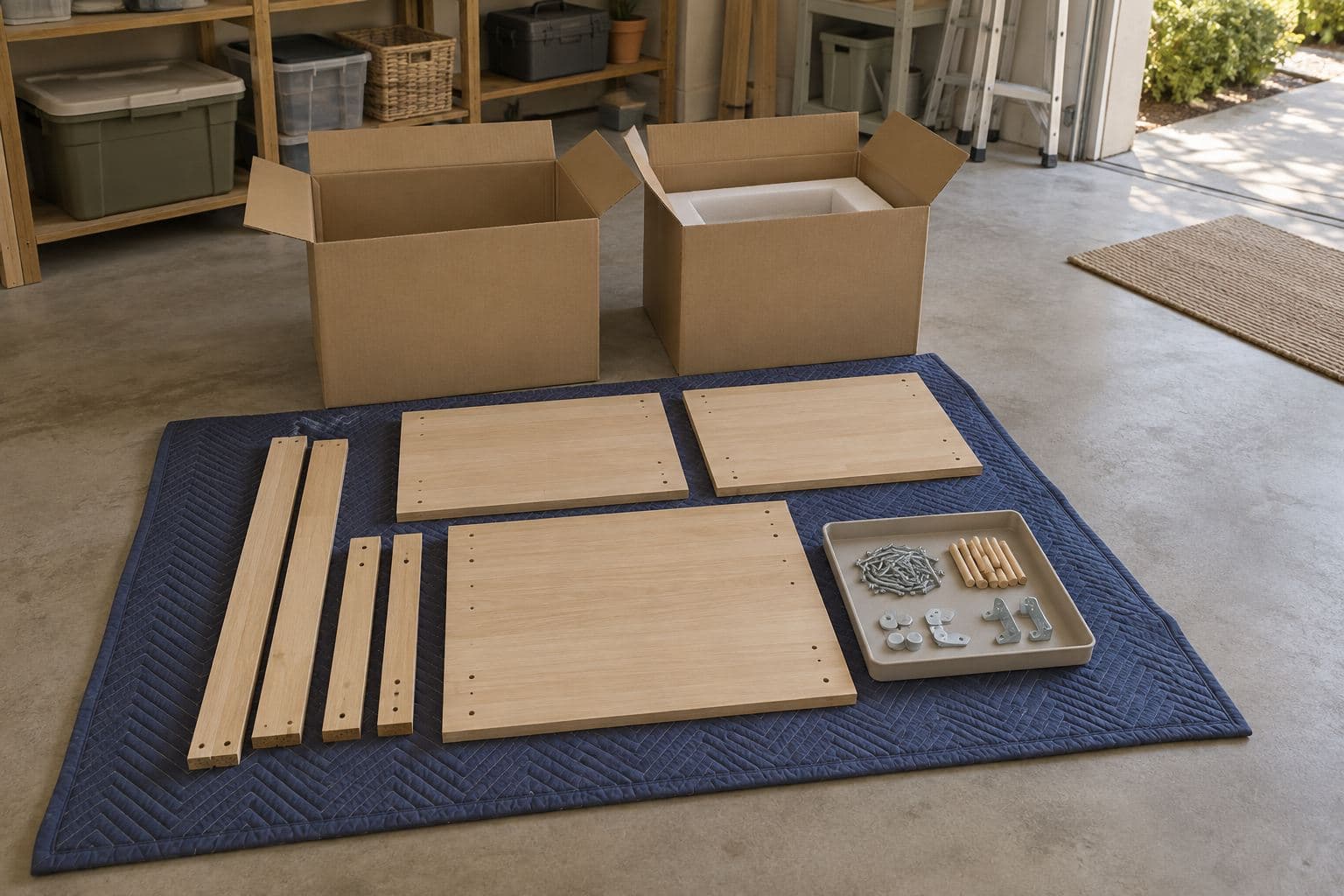
What to test first
#Only test what you can test safely. Find the model, search the CPSC recalls database and read the maker's notices before assembly or use. CPSC is the US Consumer Product Safety Commission. Set recalled furniture aside and follow its recall fix. Don't improvise safety parts; disclosing a defect gives you no permission to sell unsafe goods.
Check all parts and the structure before showing how a piece works. Compare parts with the exact maker's instructions. Stop if a joint is damaged, a required structural fitting is missing or the item is unstable. Don't sit on an uncertain chair or stress-test a damaged frame to find its limit. Build only as instructed and within your skill; get suitable help for unresolved structural work.
Check children's furniture separately. The CPSC reseller guide covers nursery products with missing parts and furniture hazards. Check the safety rules even if a piece looks sound. Follow the maker's setup and anti-tip instructions before checking drawers or other moving parts.
For furniture with motors, cords or batteries, don't test damaged cords, swollen or damaged batteries, gas appliances or anything recalled. Follow the maker's instructions for safe checks and record the exact result. “Powers on; other functions untested” describes a partial check. The inspection and testing guide explains how to keep those limits in the listing.
Space, handling and moving it
#Map the trailer-to-storage route before buying, using actual size and weight, including the largest carton and built pieces. Check doorways, corners and floors; leave room for equipment and people. Keep multi-carton pieces in a grouping area through checks and assembly.
Use suitable moving equipment rated for the weight and trained help for heavy or awkward pieces. Don't lift alone when weight, shape or grip makes it unsafe. Keep hands clear of pinch points, secure parts for moving, and follow equipment and furniture instructions. Check panels on a stable padded surface. These are suggested handling steps drawn from OSHA's warehouse guidance.
OSHA, the Occupational Safety and Health Administration, calls for stable storage and clear aisles, and warns of strain from heavy lifting. Stay within shelf and equipment weight limits and avoid tall makeshift stacks. If wrap supports shifted goods, stop and arrange safe unloading before cutting it. Never pull a supporting carton from beneath heavy furniture. Leave assembly space outside the aisle. See the receiving and storage guide.
For local pickup where allowed, give built size and the sizes of parts the buyer will carry, plus assembly status, faults, included cartons and access needs. Count every carton and hardware bag at handover, beyond the photo of the built piece. See the local selling guide for inspection, payment and pickup records.
How the cost works
#Get a written goods, freight and receiving quote. No standard purchase range or resale outcome was verified.
Made-up example: goods cost $2,000, freight $800, and receiving charges $200. You receive 40 cartons for 20 intended furniture pieces. After matching parts and checking them, you clear 15 complete pieces for sale.
| Calculation | Result |
|---|---|
| Total buying cost | $2,000 + $800 + $200 = $3,000 |
| Buying cost per intended piece | $3,000 ÷ 20 = $150 |
| Buying cost per sellable complete piece | $3,000 ÷ 15 = $200 |
| Extra parts and selling costs | $600 |
| Receipts to cover the stated costs | $3,000 + $600 = $3,600 |
| Average receipts if all 15 complete pieces sell | $3,600 ÷ 15 = $240 |
Dividing by 40 cartons gives $75 per carton, a different measure from cost per complete piece. The $240 average is break-even, covering listed costs if all 15 pieces sell. It excludes labor, ongoing storage, disposal and other unlisted costs. Receipts are money from sales. Use the pallet profit calculator and landed-cost guide with complete resale units and actual charges. Landed cost covers buying and bringing goods in.
Keeping a furniture piece's listing together
#Keep the listing tied to the complete piece once cartons and hardware match. A notebook or spreadsheet works for size, missing parts, photos and asking price. PalletPro lets you add an item with photos and prepare listing text from a template that you copy and post yourself. Keep your own record of every carton and hardware bag; see the app.
How this guide was written
#Compiled from the public sources below. Supplier descriptions show advertised formats; grouping and handling steps are editorial advice, with no measured outcomes claimed. Checked on October 1, 2026. PalletPro doesn't sell pallets and isn't affiliated with any retailer, liquidator or marketplace named.
Sources
#- Stacked Furniture (catalog entry) - GRP Truckloads, undated (checked October 1, 2026).
- Wayfair Furniture & Decor Liquidation Truckloads - Department Store Liquidations, undated (checked October 1, 2026).
- Shipping terms and definitions - FedEx, undated (checked October 1, 2026).
- Bedding and Upholstered Furniture Program - Virginia Department of Health, August 14, 2025 (checked October 1, 2026).
- Recalls and Product Safety Warnings - US Consumer Product Safety Commission, updated continuously (checked October 1, 2026).
- Resellers Guide to Selling Safer Products - US Consumer Product Safety Commission, May 2021 (checked October 1, 2026).
- Warehousing: Hazards and Solutions - Occupational Safety and Health Administration, undated (checked October 1, 2026).
Updated
More guides
- Target general merchandise pallets: raw and processed
Understand Target GM pallets, raw versus processed assortments and changing exclusions before checking condition, missing parts and resale restrictions.
- Target liquidation pallets: contents, contracts and costs
Compare Target liquidation pallets and truckloads by assortment, condition and quantities. Check resale-advertising restrictions, freight and costs.
- Tool liquidation pallets: parts, batteries and checks
Learn how to check tool pallets for missing parts, battery and charger fit, recalls and safe testing before you choose a repair or resale route.
- Walmart liquidation pallets: condition, freight and costs
Read Walmart liquidation pallet and truckload offers by condition, manifest and shipping terms. Plan receiving, safe inspection and costs before bidding.