
Reseller guide
Furniture liquidation pallets and truckloads
Furniture liquidation pallets may contain kits, assembled pieces or upholstered goods, furniture with padding and a fabric or other covering. Check kits for matching parts and assembled pieces for structural safety. Used filled goods may need state-approved treatment and labels. Before buying, check what's offered and what you can legally prepare for resale.
What furniture liquidation means
#Liquidation means selling stock a business is clearing. A pallet groups goods on a handling platform; a truckload uses a dedicated trailer. Check the goods' parts and condition separately from how they're grouped or shipped.
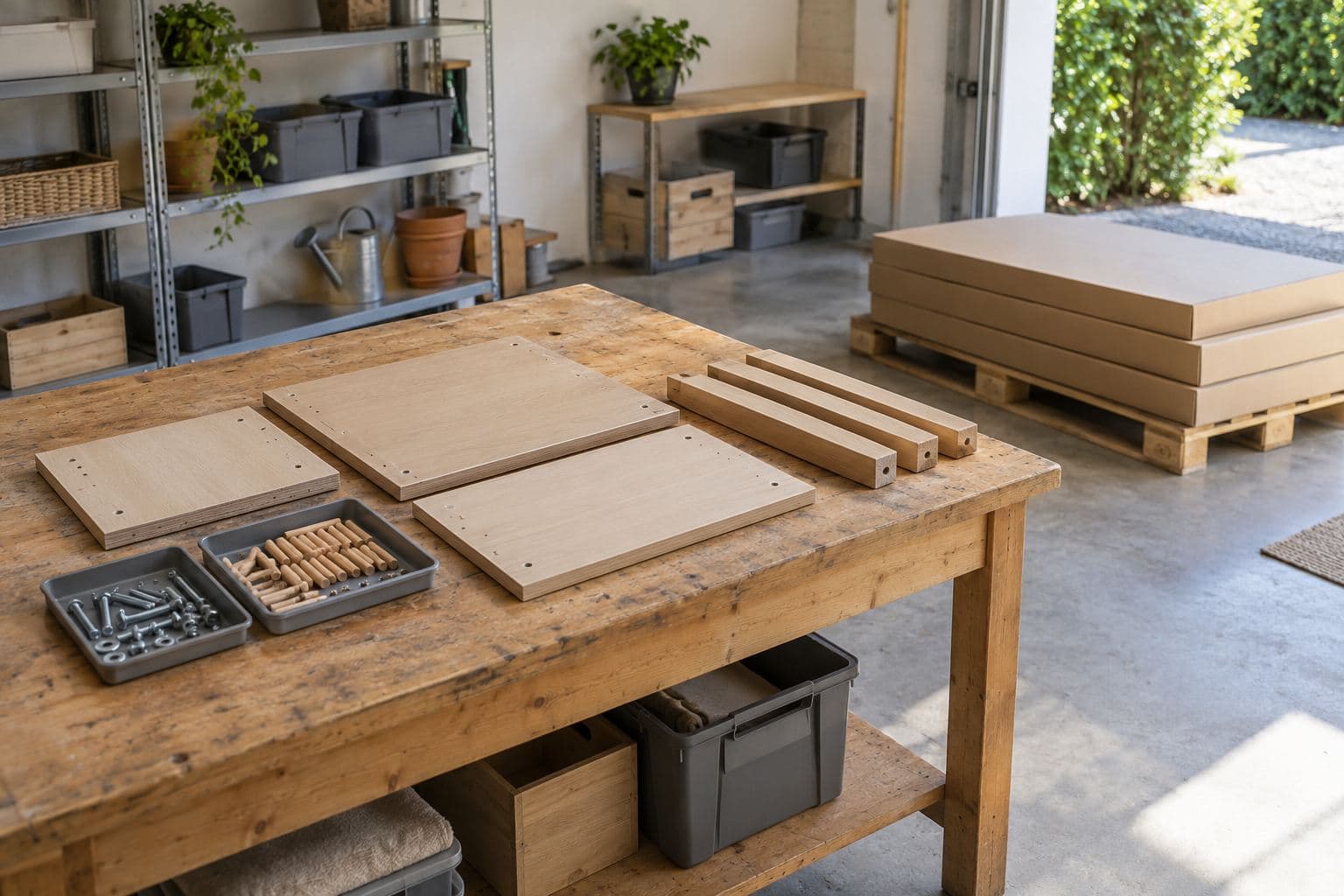
Sauder uses “ready-to-assemble (RTA) furniture,” meaning furniture supplied as parts to put together. This describes its format. A condition grade is the seller's label for condition. Boxed kits can still have damaged panels or missing hardware: screws, bolts and fittings that join the parts. Sauder company information.
As of October 2026, B-Stock's Wayfair guide uses “Used – Fair Condition” for returns, allowing wear, damage or incomplete packaging. Lots, groups offered as one purchase, vary. Customer returns are products retail buyers send back. Read each offer's condition terms and check whether items are complete, assembled and fit for resale. B-Stock's Wayfair returns guide.
Plan separately for hard furniture, pieces without padding, boxed kits, upholstered seats and bedding. Bedding here includes mattresses and box springs, the support bases under some mattresses. Check your state's definition; a bare bed frame isn't automatically treated like a filled mattress. For bedding and soft decor in mixed stock, see home goods. See the glossary for buying terms and the stacked-furniture guide for goods shipped stacked together.
What can arrive in the shipment
#Wayfair's B-Stock guide lists possible sofas, dining tables, chairs, bed frames, dressers and outdoor furniture. Check your offer's mix; pieces may be split across pallets and sets incomplete. Wayfair returns guide.
Start with the manifest, the seller's stock list. Ask whether the count means boxes, furniture items or complete sets. A multi-carton item is one product in several boxes. You'll need all of them to make a complete item for resale.
Sauder's parts service asks whether all boxes arrived and uses the manual or parts list to find replacements. Check availability and eligibility for your model; free parts aren't confirmed for every liquidation purchase. Sauder replacement-parts service.
Questions to ask before you bid
#A bid is your auction offer. Ask:
- How many complete furniture items are listed? How many boxes belong to each?
- Can you get the model number, which names the furniture version, plus finish and production details to match parts?
- Are instructions and the full hardware list included?
- What's assembled, partly assembled or still boxed?
- Are filled items new or used? Which treatment records and labels come with them?
- Which photos show the goods? What damage or missing parts does the seller report?
- What receiving equipment, reporting deadline and resale rules apply?
For filled goods, check the rules where you store, treat and offer them, and where your customer receives them. A law label is a tag required by a regulator, separate from price and shipping labels. Approved sanitization means treatment that meets that regulator's rules. Surface cleaning alone can't confirm this.
Three state examples to check before purchase
These state examples come from primary public sources. Check the rules that cover your purchase; they don't give nationwide permission to resell used furniture.
| State | What the public source says | What to resolve for your purchase |
|---|---|---|
| California | The 2026 law book, sections 19121–19129, requires proper cleaning or replacement of the fabric cover, then sanitization, for filthy or soiled new or used bedding. Used bedding and used articles for sleeping need sanitization before sale. Section 19123 ties that article to people covered by the chapter's licensing rules. | Ask the bureau about your item and business, including licensing, labels and approved treatment. Don't apply one bedding rule to every wooden table or sofa. California law book. |
| Pennsylvania | Covered secondhand dealers, including auctioneers, must register and use approved disinfection and yellow law labels for covered used filled goods. The program addresses businesses selling into Pennsylvania too. | Check which products are covered, registration, treatment proof and records. New-only stores have different rules; check existing labels too. Pennsylvania program. |
| Virginia | 12VAC5-125-100, effective September 1, 2007, requires approved sanitization for covered secondhand bedding and upholstery in commerce, dated yellow labels after treatment and an item log. | Check permits and exactly what the rule covers, including its limited exceptions. Virginia regulation. |
Virginia's retailer exception covers furniture the retailer bought new and used in its own business, with specific disclosure and tag rules. Its donation exception covers gifts without payment to a valid sanitizing-permit holder. Neither exempts a pallet of customer returns. Virginia regulation. See the Virginia program page for permit and agency contacts.
This is not legal, tax or financial advice. Ask the regulator before buying covered goods you can't yet prepare or label properly. Read the seller's purchase contract for rules on resale ads and retailer names too.
What to check on arrival
#Photograph packaging before opening boxes, with the seller's records beside your count. Record box sequences, such as box one of two, and match product IDs. Give each item's boxes and loose parts the same ID in your records.
Check panel edges, corners, joints, feet and safety hardware for cracks, water damage, stripped screw fittings, repairs and missing pieces. Compare kits with their exact instructions. Keep different finishes or versions apart until you've confirmed they fit together. Follow the maker's part-matching process, checking parts as well as boxes. Sauder replacement-parts service.
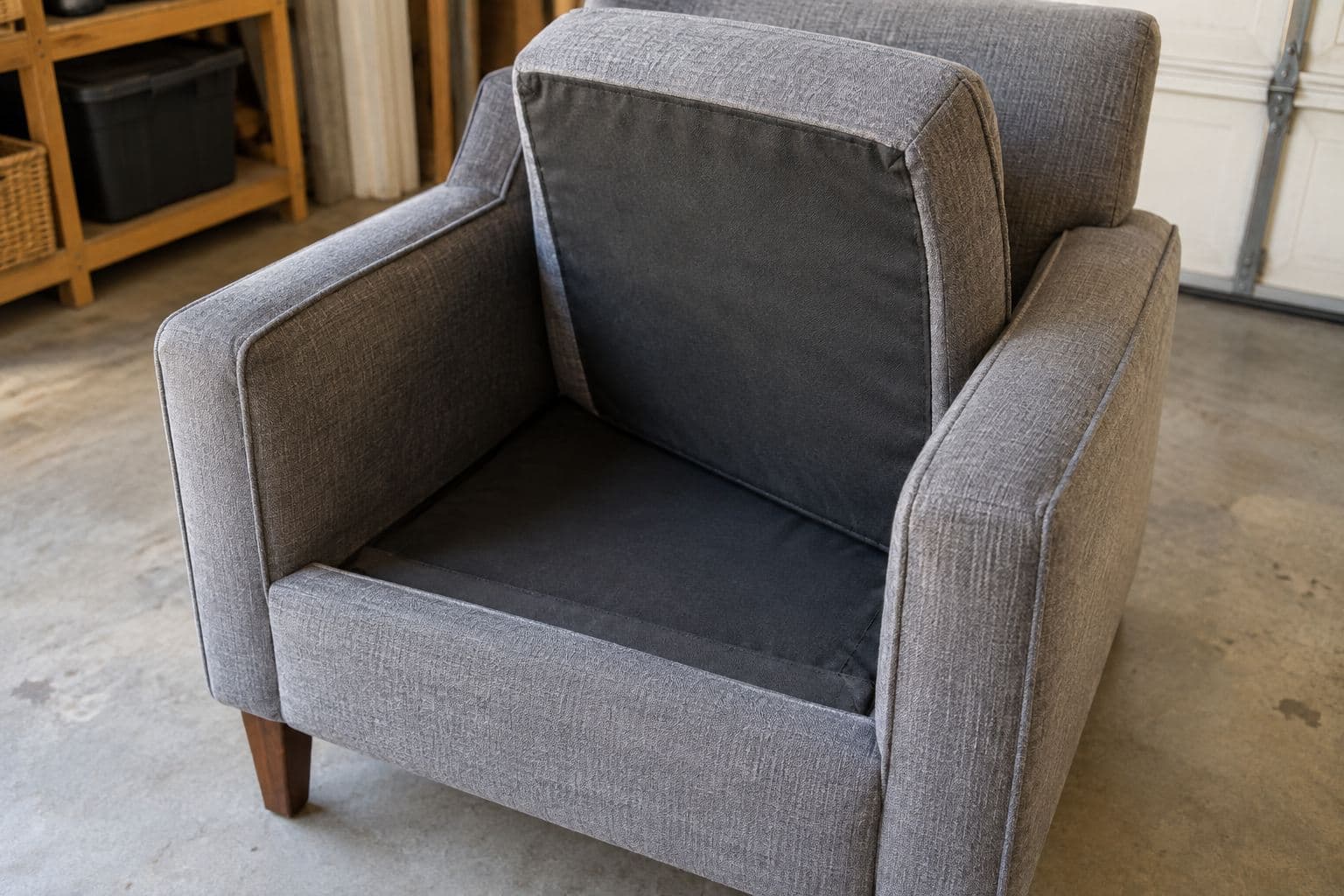
Photograph upholstery seams, cushion areas and reachable undersides. Keep law labels and record smells, stains, tears and signs of pests. Seams and hidden gaps can hide bed bugs. Looking alone can't prove there are no pests; keep suspect goods apart and call a qualified pest management provider. Virginia bed bug guidance.
Keep items with open questions out of finished stock. They may need parts research, structural checks, a regulator's answer or professional treatment. Don't join look-alike parts just to count an item as complete.
What to test first
#Only test what you can test safely. Check the ID, parts, recalls and visible damage before normal use. Search the model in the CPSC recall database and check with the maker. CPSC is the US Consumer Product Safety Commission. Selling recalled goods is banned. Follow the notice's remedy, the required fix, rather than listing with a warning. CPSC seller safety FAQs.
Follow the correct assembly instructions and keep required restraints and other safety parts. CPSC says to secure furniture to the wall as the maker directs to prevent tip-overs. Keep dressers and similar pieces out of normal use until required anchors are in place. CPSC anchoring guidance. Don't make up structural repairs or sit or stand on damaged furniture to test it. If a joint, frame or repair raises a safety question, get a qualified check before offering it.
CPSC's rule under STURDY, the federal clothing-storage stability law, applies to covered units made after September 1, 2023. Its scope includes freestanding clothing-storage furniture at least 27 inches tall, at least 30 pounds in mass and with at least 3.2 cubic feet of enclosed storage. They must meet rules for stability, warning labels and packaged anti-tip devices, which help prevent tipping. Check the maker's date and compliance details. An older piece or anchor kit alone can't prove compliance. These product rules aren't a home stability test. CPSC clothing-storage-unit guidance.
Powered furniture needs an electrical check too. Don't test damaged cords, swollen or damaged batteries, recalled items or gas appliances. Never test gas appliances yourself. Consult the maker and qualified service provider when needed. Manufacturer gas-appliance safety instructions. The inspection and testing guide covers the wider process.
Record what you checked: “Powers on; other functions untested” is partial. Check test results, pest clearance and legally approved sanitization separately from assembly and looks.
Space, handling and moving it
#Leave room for unpacked goods and the work around them. Boxed kits need a surface to check parts; assembled furniture needs space for photos and moving. Keep suspect upholstery apart from prepared stock. Follow OSHA, the workplace safety agency, on stable storage, clear aisles and safe handling when you plan receipt. Warehousing hazards and controls.
Use the stacked-furniture handling guide for heavy and multi-carton goods, and receiving and storing inventory for storage. Measure the room needed to process the contents, rather than just the pallet.
Freight means commercial transport of goods. ABF's ordinary home delivery is currently curbside, near the driveway or street. Moving furniture inside and assembling it need separate plans. ABF residential delivery guidance. Before you offer customer delivery, agree on doorway sizes, stairs, placement, assembly, charges and what happens if access fails. See the freight guide and local selling guide for those handovers.
How the cost works
#Landed cost is the price plus the costs you include to get goods to you. Break-even means sale receipts cover those costs. Parts, assembly, required treatment, storage and rejected-item disposal can add costs after receipt; get quotes.
Made-up example: round numbers show the math, rather than real prices, treatment charges or expected results.
| Calculation | Amount |
|---|---|
| Merchandise purchase | $600 |
| Freight | $200 |
| Sales tax charged | $100 |
| Buying total: $600 + $200 + $100 | $900 |
| Complete sellable furniture items after checks | 6 |
| Buying cost per sellable item: $900 ÷ 6 | $150 |
| Parts and assembly costs | $100 |
| Required treatment and labels | $100 |
| Customer delivery costs paid by you | $100 |
| Receipts needed to cover included costs: $900 + $100 + $100 + $100 | $1,200 |
| Equal receipt per item if all 6 sell: $1,200 ÷ 6 | $200 |
Two boxes for one table count as one item here. With only five complete items, the same $900 buying total comes to $180 each. Add labor, storage, disposal and selling charges left out here. Use the pallet profit calculator for math and the tax-document guide for purchase paperwork.
Keeping complete items separate from incomplete kits
#A notebook or spreadsheet works for linking each furniture item to its boxes, missing-parts list and treatment proof. PalletPro lets each item carry its condition and one of three test labels: “Tested — works”, “Untested” and “Not working”. Keep full assembly and treatment notes separately. See the app
How this guide was written
#This guide was compiled from the public sources listed below. Checked on October 1, 2026. PalletPro doesn't sell pallets and isn't affiliated with any retailer, liquidator or marketplace named here. The state examples show why you need to check local rules. They don't confirm rules for all states or warranty rights for every purchase.
Sources
#- About Sauder - Sauder (checked October 1, 2026)
- Buying Wayfair Return Pallets: What You Need to Know - B-Stock (checked October 1, 2026)
- Order Replacement Parts - Sauder (checked October 1, 2026)
- Home Furnishings and Thermal Insulation Act and Rules and Regulations - California Bureau of Household Goods and Services, 2026 edition (checked October 1, 2026)
- Bedding and upholstery - Pennsylvania Department of Labor and Industry (checked October 1, 2026)
- 12VAC5-125-100: Sanitization of used bedding and upholstered furniture - Virginia Administrative Code, effective September 1, 2007; current text checked October 1, 2026
- Bedding and Upholstered Furniture Program - Virginia Department of Health, updated August 14, 2025 (checked October 1, 2026)
- Bed bugs - Virginia Department of Health, updated April 27, 2026 (checked October 1, 2026)
- Recalls & Product Safety Warnings - US Consumer Product Safety Commission (checked October 1, 2026)
- Online Sellers Safety Guide FAQs - US Consumer Product Safety Commission (checked October 1, 2026)
- Warehousing – Hazards and Solutions - Occupational Safety and Health Administration (checked October 1, 2026)
- Preparing for an ABF Freight delivery at your home - ArcBest / ABF Freight, August 20, 2025 (checked October 1, 2026)
- Installation instructions: 30-inch freestanding and slide-in gas ranges - Whirlpool, document 9761413B (checked October 1, 2026)
- AnchorIt.gov - US Consumer Product Safety Commission (checked October 1, 2026)
- Clothing Storage Units - US Consumer Product Safety Commission (checked October 1, 2026)
Updated
More guides
- Generic merchandise pallets: what the seller means
Understand generic pallet descriptions, identify unfamiliar products, check brand and recall rules, and calculate costs before buying.
- Health and beauty pallets: seals, dates and sale rules
Check health and beauty pallets for product type, seals, dates, labels and resale rules before you list anything or put goods into a bundle.
- Home goods pallets: contents, costs and resale checks
Compare home goods liquidation pallets by contents, condition and freight. Check kitchenware, bedding and appliances before choosing what you can resell.
- Mystery pallets: what you can't check before buying
Learn what an unmanifested pallet leaves unknown, what to ask before buying, how to check sample photos, and why resale needs a contents list.