
Reseller guide
Receiving and storing liquidation inventory
Before buying a liquidation pallet or truckload, arrange delivery, unloading tools and sorting space. Record the shipment before unpacking; keep each item's ID and storage spot together. Allow room for opening cartons, checks and retrieving orders, as well as the pallet.
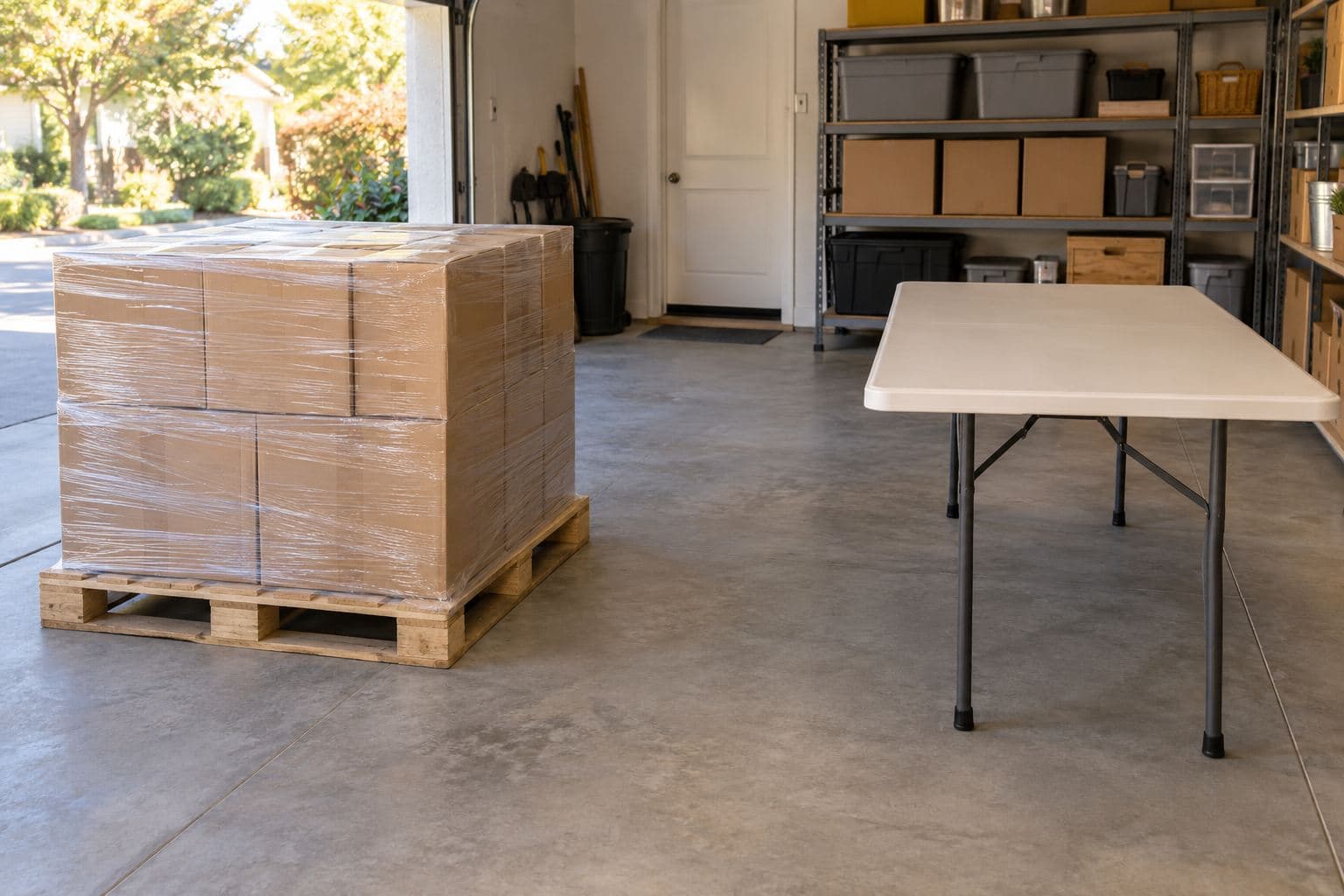
Confirm how the freight will reach you
#Ask for pallet count, size, weight and packing details. Confirm if goods come on pallets or as loose cartons and furniture in the trailer, separately from the supplier's list of goods.
Less-than-truckload, or LTL, freight uses part of a trailer. A full truckload uses a dedicated trailer, as B-Stock's auction explainer describes. Check your purchase terms for unloading help and get a quote for your address.
Tell the carrier about site type, driveway surface and slope, turning space, clearance and appointment needs. Confirm where the truck stops and service ends, including any move into the garage.
These questions belong in the written arrangement:
| Confirm before purchase | Why it affects receiving |
|---|---|
| Pallet dimensions, weight and whether goods are palletized | Equipment and doorways must suit what actually arrives |
| Dock (raised unloading bay), forklift or liftgate (truck lifting platform) arrangement | The shipment needs a supported way to reach ground level |
| Who unloads and moves freight beyond the truck | Driver assistance depends on the service purchased |
| Appointment, permitted unloading time and missed-delivery terms | Staff and equipment must be available when the truck arrives |
| Residential, liftgate and other extra service charges | The base quote may omit services your site needs |
| Buyer pickup or buyer-arranged freight eligibility | A general shipping page may describe options the auction excludes |
The FedEx freight glossary describes how a liftgate moves freight between ground and trailer. Extra services can have fees called accessorial charges. Confirm capacity and service for your shipment; don't assume them from other delivery trucks.
Check program rules before booking equipment
#As of October 2026, the Target marketplace shipping policy and Walmart marketplace shipping policy offer no liftgates for full truckloads. Both require a dock or forklift, make the buyer unload, and allow one hour before possible extra fees. These are those programs' rules; check other carriers' terms.
Both pages say shipping type varies by auction. Buyer pickup must be allowed on the auction details page. Match your quote to the saved auction terms before arranging equipment.
If documents conflict, confirm your auction's terms in writing before committing or booking equipment. The Home Depot marketplace FAQ currently bars buyer pickup; goods ship through its provider.
Arrange suitable equipment and qualified help before delivery. The stacked furniture guide covers keeping parts together; the supplier-checking guide covers written purchase details.
Reserve space for the work between arrival and listing
#Measure goods and your route instead of using fixed space per pallet. Plan spots for unopened pallets, opening cartons and checked items. Leave room for photos, packing and reaching stored goods.
Set out an empty table and walk the delivery route. Check door openings, access around laid-out parts and paths to shelves. Plan with actual sizes.
Furniture needs parts storage and assembly space. Mixed small goods need bins that keep each item's ID; repeated units need counts by condition. The high-piece-count guide covers shipments with many items; the case-pack guide covers repeated units of one item. Measure the goods to plan their space.
Made-up example: two lamps fit on a shelf, but their open cartons cover the work table. Check one with its shade and hardware, keep its record and parts together, then open the second. Plan work space too.
Preserve the delivery evidence
#A bill of lading, or BOL, records transport details and the terms for moving goods. FedEx Freight's shipping-forms guide includes contents, origin, destination and references. Keep it with the manifest, the list of goods. Check item IDs and functions separately from pallet count.
Before changing cartons or wrapping, take wide arrival photos and close-ups of damage or mismatches. Keep shipment references and pallet tags in private records. Where allowed, note actual pallet count and specific exterior observations on the delivery form; keep the signed copy. The Target shipping page asks for arrival photos, a signed BOL with mismatches and a list of manifest items not received. Take photos from a safe position.
Follow seller and carrier reporting steps. A delivery note alone won't prove rights to reimbursement. Check your contract before refusing damaged freight; it may limit rejection. Contact the relevant party if you're unsure of the next step.
Amazon's public documents currently have a deadline mismatch. Section 5.4 of the US purchase contract, updated January 29, 2026, gives five days after delivery. The B-Stock dispute table lists five business days. Ask for written clarity and plan checks around the earlier window until it's resolved.
Link shortages and damaged units to purchase references and photos. Keep claim packaging and report within the deadline.
Store goods without creating another handling problem
#Use sound shelves within their rated capacity, with heavier goods lower down. Keep goods stable and paths clear. OSHA's warehousing guidance covers shelf condition, capacity, stable stacks and room to move. Check your site's stacking height and workplace rules; the page can't settle those for every garage.
Give heavy items a place and removal route that suit their handling needs. Don't block them behind stacks. Stop using damaged shelves until they're properly assessed.
Follow the exact maker's battery storage rules. The DEWALT battery safety manual warns against objects that conduct electricity touching terminals, the battery's metal contacts. Keep packs out of loose hardware bins; follow the actual pack's handling guidance.
Store goods as their instructions direct. Heat, moisture and other storage conditions can affect cosmetics, per FDA's cosmetic shelf-life guidance. Check past storage even for closed cartons. Hold goods with open hygiene or storage questions while seeking maker guidance.
Give unresolved stock a place and a next action
#For goods that stay unsold, see slow-stock exit plans.
These work zones aren't supplier condition grades, the labels sellers use to describe goods. Small businesses can use separate shelves or bins instead of rooms.
| Zone | What belongs there | Record before moving it onward |
|---|---|---|
| Awaiting identification | Item ID or carton match is unclear | Confirmed model, or the open question |
| Inspection and checks | Known items awaiting suitable checks | Parts, recall search and specific check results |
| Missing parts or other hold | A known issue prevents listing prep | Missing part, next step and location |
| Ready for photos | Checks complete enough to prepare a listing | Actual condition and included parts |
| Listed and available | A listing has actually been published | Channel, listing reference and storage location |
| Packed orders | Goods committed to an order | Order reference and transaction status |
| Returned stock | A buyer return awaiting new checks | Return reason and new inspection notes |
Keep suspected unsafe or recalled goods out of sale-ready stock. CPSC's retailer and reverse-logistics guidance applies recall duties to liquidation and reverse logistics, handling returned goods. Use the CPSC recall search and follow notice and maker directions, even for parts stock.
Only test what you can test safely. Never test swollen or damaged batteries, damaged cords, gas appliances or anything recalled. The inspection guide covers parts and test limits. Keep “Powers on; other functions untested” as a partial-check note, never “tested.” Prevent held goods being picked by mistake; still follow hazardous-product handling rules.
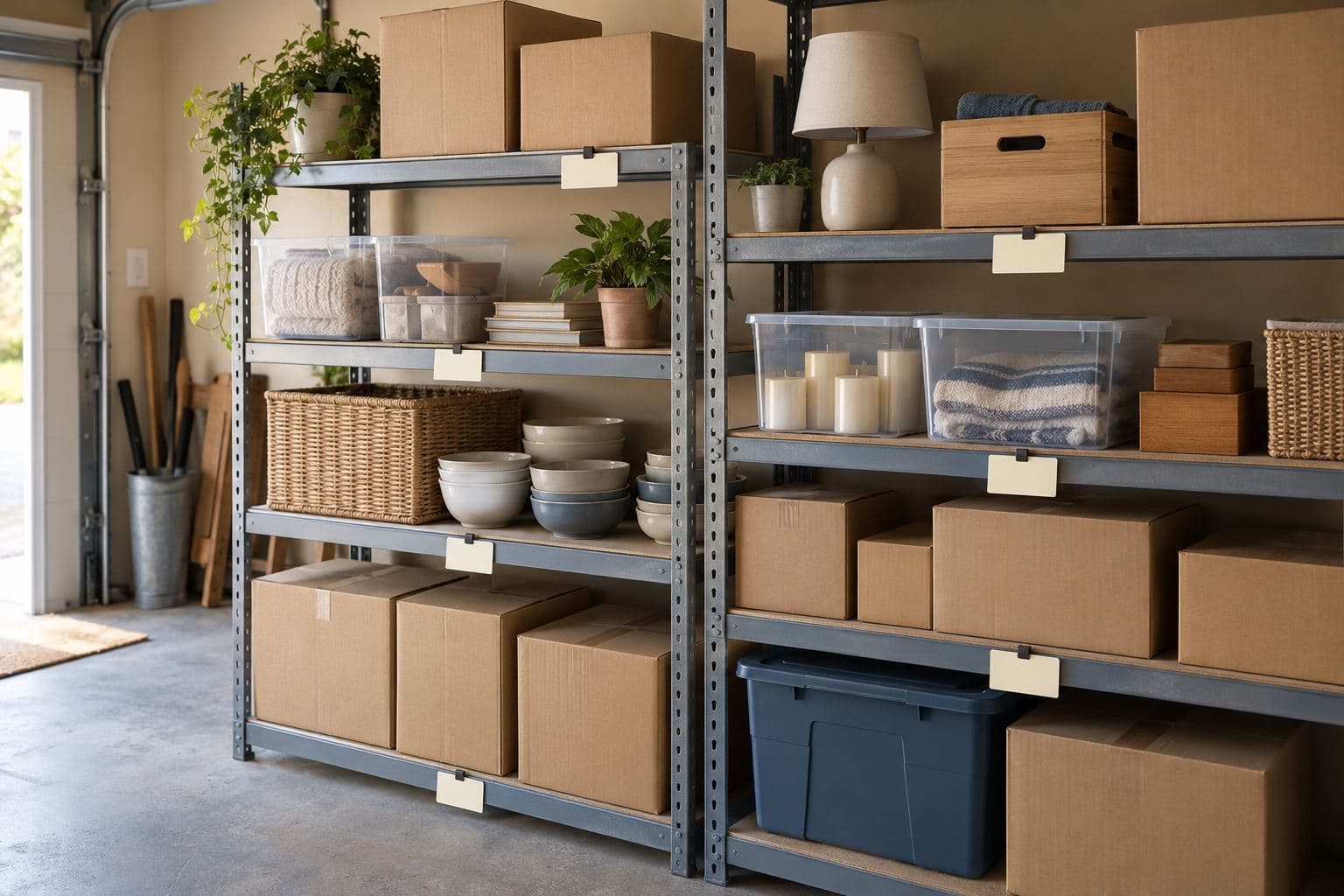
Make the physical item match its record
#Keep each unit's ID with it through photos, storage and handover. Record its shelf or bin; update it when moved. Bag parts under the same ID to keep remotes and hardware with the right unit.
Made-up example: lamps P014-01 and P014-02 sit on Shelf B, in bins 2 and 3. One has a chipped base; the other lacks its shade. Separate IDs link locations to photos and parts.
Matching units can share a count if condition and parts match. Separate damaged units needing different listing facts. After partial sales, count what's left. Record disposal, donation, buyer returns and other moves; don't guess from an empty table.
Keep purchase and sale documents with the stock records
#Keep purchase listings, manifests, invoices (purchase bills), payment proof, freight papers and claim messages. The IRS recordkeeping page calls for organized purchase, sale and expense documents. Keep these and inventory accounts alongside location notes.
Track draft and posted listings separately, and holds apart from completed sales. For local pickup, record completion after payment and handover; the local selling guide covers those steps. Recheck buyer returns before making them available again.
Record actual freight, extra services, equipment and storage costs. The landed-cost guide covers landed cost: buying goods and getting them to you. Check permission to use your space, insurance and local rules. This guide is not legal, tax or financial advice.
Keep repeated units tied to the pallet
#Link remaining counts to the purchase. A notebook or spreadsheet works. PalletPro keeps a case pack as one item with a quantity, so you can record sales of some units and keep the rest in stock. Keep shelf-location notes alongside. See the app
Sources
#- The anatomy of liquidation auctions - B-Stock, date not shown (checked October 1, 2026).
- Freight and shipping glossary - FedEx, date not shown (checked October 1, 2026).
- Target marketplace shipping - Target / B-Stock, date not shown (checked October 1, 2026).
- Walmart marketplace shipping policies - Walmart / B-Stock, date not shown (checked October 1, 2026).
- Home Depot marketplace FAQ - The Home Depot / B-Stock, date not shown (checked October 1, 2026).
- Bills of lading and LTL shipping forms - FedEx Freight, date not shown (checked October 1, 2026).
- Amazon US terms of purchase - Amazon / B-Stock, updated January 29, 2026 (checked October 1, 2026).
- Dispute policy communications - B-Stock, date not shown (checked October 1, 2026).
- Warehousing hazards and solutions - OSHA, date not shown (checked October 1, 2026).
- Li-ion battery pack safety instructions - DEWALT, December 2016 (checked October 1, 2026).
- Cosmetic shelf life and expiration dating - FDA, date not shown in retrieved text (checked October 1, 2026).
- Guidelines for retailers and reverse logistics providers - CPSC, April 12, 2013 (checked October 1, 2026).
- Recalls and product safety warnings - CPSC, updated database (checked October 1, 2026).
- What kind of records should I keep? - IRS, date not shown in retrieved text (checked October 1, 2026).
Updated
More guides
- Looks new, isn't: checking liquidation returns
Check new-looking liquidation returns for swapped items, missing parts, damage and recalls, then describe exactly what you inspected and checked.