
Reseller guide
Case-pack liquidation: counting and selling repeated units
Case-pack liquidation means buying the same product in cases. Count complete resale units, then plan prices and sales. Confirm each product and its condition in writing before grouping units together.
What a case pack means
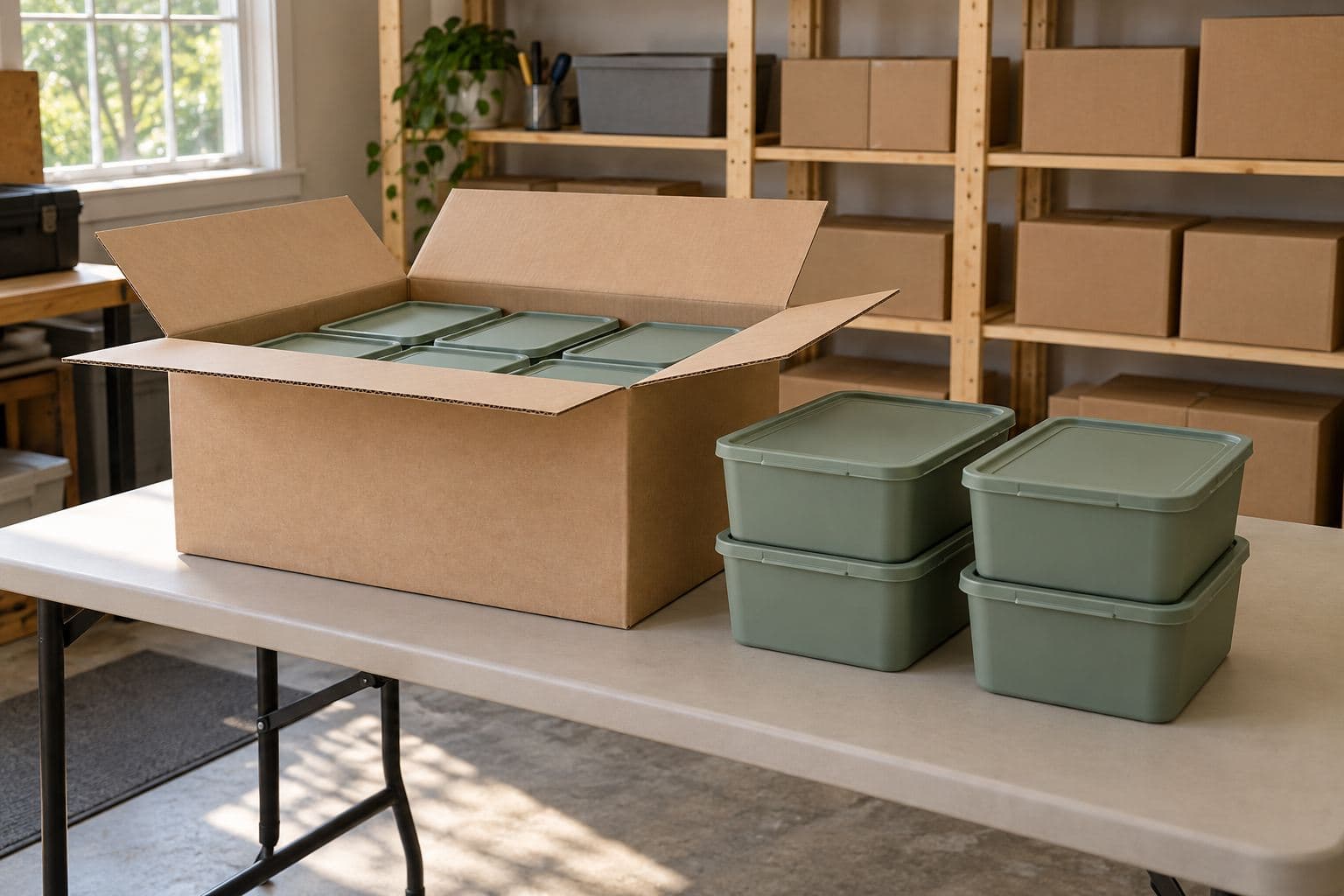
#Amazon's case-pack guide, published February 27, 2025, describes cases of the same product and pallets of cases or single units. Its FAQ calls these “different amounts of the same product.” A master carton is the outer box; an inner pack sits inside it. Count both apart from the product you'll sell. A retail multipack, several units sold as one pack, can be one resale unit.
As of October 2026, one Amazon-origin case-pack ad says “Factory-Sealed Master Cartons” and rules out returns. A Target-origin case-pack ad says “NEW OVERSTOCK” in its summary but includes “customer returns and overstocks” in the breakdown. Overstock means excess stock; customer returns are goods sent back by retail buyers. Ask which condition the seller includes in its case-pack program.
A mixed case-pack truckload can hold several products, with many of each. Ask for counts by product to plan sales of many identical units or fewer of each type.
What the advertised cartons can contain
#The Amazon-origin offer lists housewares, kitchen goods, toys, beauty products, tools, pet goods and seasonal goods. Its summary says 24 pallets; its description says 24–26. The Target-origin offer lists household goods, apparel, bedding and electronics, with about 5,000–8,000 items across 24 pallets. Treat these as seller claims; confirm what your shipment will contain.
Check size, color, model and pack size before planning sales. Storage containers may come in different sizes or sets. Count each type separately.
Count units offered, received and sellable separately. Record empty boxes and incomplete sets too.
Questions to ask before you bid
#Ask the seller:
- Does the piece count mean outer cases, inner packs, retail multipacks or single products?
- How many products are there, and how many resale units of each?
- Are all units in a case the same model, size and condition?
- Does the written condition include returns, opened cases or damaged packing?
- Do the photos show this purchase or samples?
- What do the manifest (the seller's stock list), freight (shipping) quote and rules for reporting count or condition errors cover?
Save answers with the offer; ask the seller to resolve conflicts. The manifest and condition guide explains how to define counted units.
Get a written price by charge and a freight quote for these goods.
Compare completed sales for the same product, size, pack count and condition using pricing pallet items. One sale isn't proof of demand for all your stock. Allow for space and cash tied up in unsold units.
Check resale rules too. Currently, Target's purchase contract limits use of its identity in resale activity. Check the contract before using its name in ads. Before payment, confirm sales-tax rules and any resale-certificate rules with your state authority. A resale certificate is paperwork for purchases that qualify for resale.
What to check when the cases arrive
#Photograph the pallet and damaged cartons before opening, then compare carton counts with shipping papers. Keep freight-damage evidence apart from item notes and meet the seller's reporting deadline. The pallet unload checklist covers receiving.
Open cartons carefully and check the packing. Count units in the form you'll sell; clear up vague seller counts. Keep parts and instructions for complete retail sets.
Made-up counting example: Ten cartons each hold 12 separately packed containers: 10 × 12 = 120 potential resale units. If eight have cracked lids, you have 112 intact units and eight faults to resolve.
Tie intact matching units to one count, purchase and storage spot. Record damaged, opened or incomplete units separately. Use a shared design photo, plus a photo of each fault.
What to test before offering repeated units
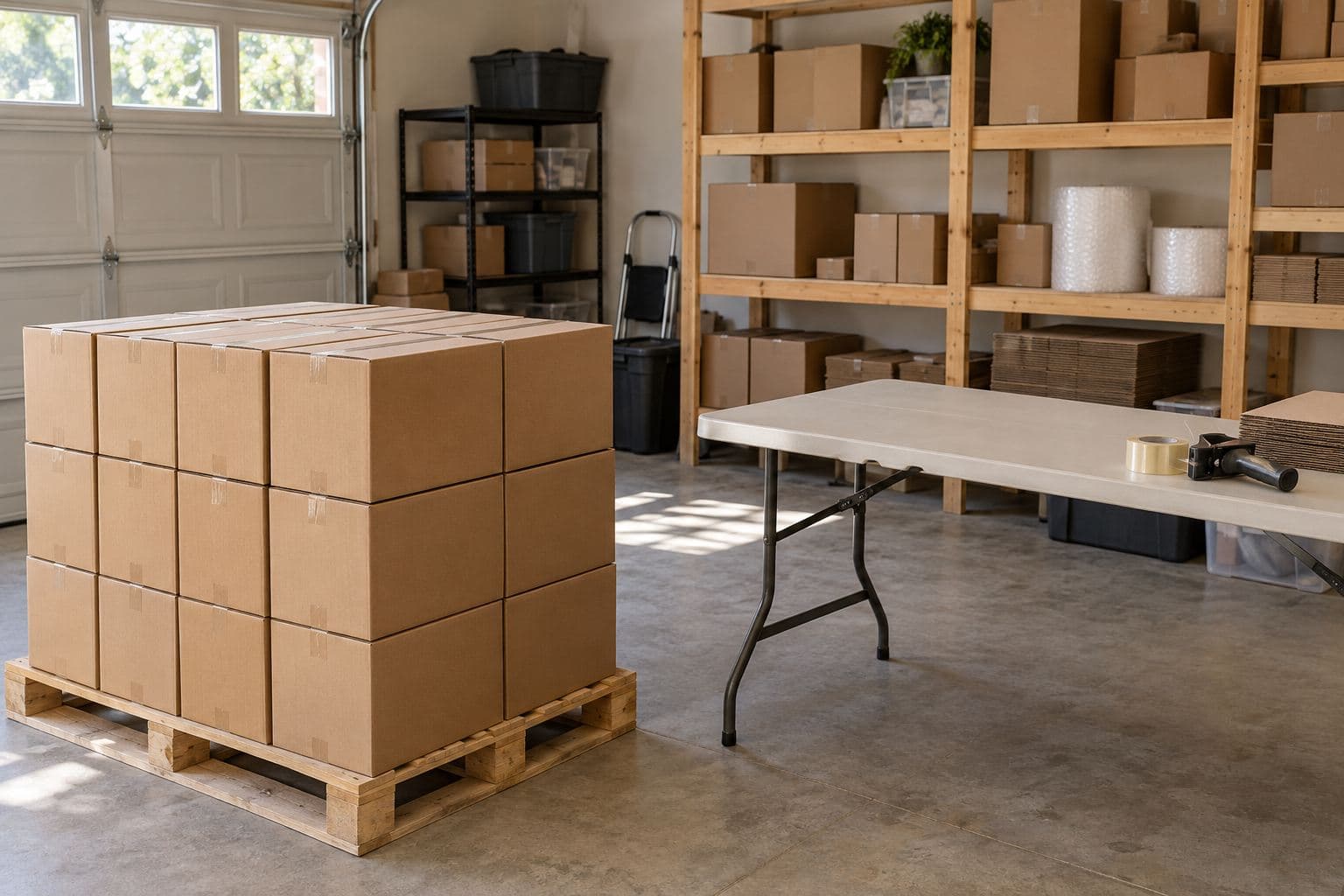
#Only test what you can test safely. Don't test swollen or damaged batteries, damaged cords, gas appliances or anything recalled. Search CPSC recalls for the product and follow the maker's safety instructions. Screen unopened goods too: CPSC online seller guidance tells resellers to inspect goods and check recalls.
Check containers for cracks and lid fit. For powered goods, follow the maker's safe test steps and record what you checked. Use a sample to learn about the product, then check each unit. “Powers on; other functions untested” describes a partial check.
Keep beauty products, children's goods and anything with unresolved safety or hygiene concerns out of the sellable count until you know you can sell them. The inspection and testing guide covers item records.
Space, handling and moving repeated inventory
#Store cases by product and condition, keeping intact cases together where practical. Leave room for open boxes and faults, with access that avoids disturbing other stacks. Plan shelf space for unpacked goods.
Offer single units, same-product bundles (units grouped for one sale) or whole cases. State counts, sizes, parts and condition. Deduct all units in each sale from the same stock count.
Price each pack size using comparable sales and costs. Adjust receipts per unit for case discounts. Track unit sales, bundles and unsold stock apart; record payment and handover before marking local sales complete. The local selling guide covers pickup.
How the cost works
#Example with made-up numbers: You pay $600 for stock, $200 for inbound freight (shipping to you) and $100 in purchase sales tax. After inspection, 100 units can be sold.
| Calculation | Arithmetic |
|---|---|
| Total buying cost | $600 + $200 + $100 = $900 |
| Buying cost split per sellable unit | $900 ÷ 100 = $9 |
| Break-even receipts with $100 of extra costs | $900 + $100 = $1,000 |
| Average receipts needed if all 100 units sell | $1,000 ÷ 100 = $10 |
If only 80 units sell, covering $1,000 takes $1,000 ÷ 80 = $12.50 per sold unit. The other 20 have brought in no money. These sums aren't a forecast or tax accounting method. Break-even means receipts cover costs. Use the pallet profit calculator and track other costs apart. The landed-cost guide covers what you pay to buy goods and get them to your site. This guide is not legal, tax or financial advice.
Keeping repeated units straight
#Track each item, its count and what's left after a sale. A notebook or spreadsheet works. In PalletPro, a case pack can stay one item with a quantity; you can sell some units now and the rest later, recording each sale's price, fees and shipping. See the app
How this guide was written
#This guide was compiled from the public sources listed below. Checked on October 1, 2026. PalletPro doesn't sell pallets and isn't affiliated with any retailer, liquidator or marketplace named.
Sources
#- How to sell more inventory with case packs and pallets - Amazon, February 27, 2025 (checked October 1, 2026)
- Amazon Overstock Case Pack Bin Store Truckload - Department Store Liquidations, no publication date shown (checked October 1, 2026)
- Target Overstock Case Pack Truckload - Truckload Liquidations, no publication date shown (checked October 1, 2026)
- Target terms of purchase - Target / B-Stock, revised November 11, 2025; also displays an older last-updated date (checked October 1, 2026)
- Recalls & Product Safety Warnings - US Consumer Product Safety Commission (checked October 1, 2026)
- Online Sellers Safety Guide FAQs - US Consumer Product Safety Commission (checked October 1, 2026)
Updated
More guides
- Clear wrap premium pallets: what you can verify
Separate clear wrapping from condition and testing, request pallet-specific evidence, and compare the full cost before buying a premium-labelled pallet.
- Electronics liquidation pallets: testing and locks
Check electronics liquidation pallets for missing accessories, account locks, private data and battery hazards before you buy, test or list items.
- Furniture liquidation pallets and truckloads
Compare boxed and assembled furniture, check missing parts and upholstery rules, and plan inspection, storage, delivery and purchase costs.
- Generic merchandise pallets: what the seller means
Understand generic pallet descriptions, identify unfamiliar products, check brand and recall rules, and calculate costs before buying.