
Reseller guide
Looks new, isn't: checking liquidation returns
A sealed or new-looking liquidation return, an item sent back by a buyer, can still be used, swapped, incomplete or damaged. Check it before you list it. Keep separate notes for packaging, parts and function, even if the plastic and tape look new. Describe only what your checks support.
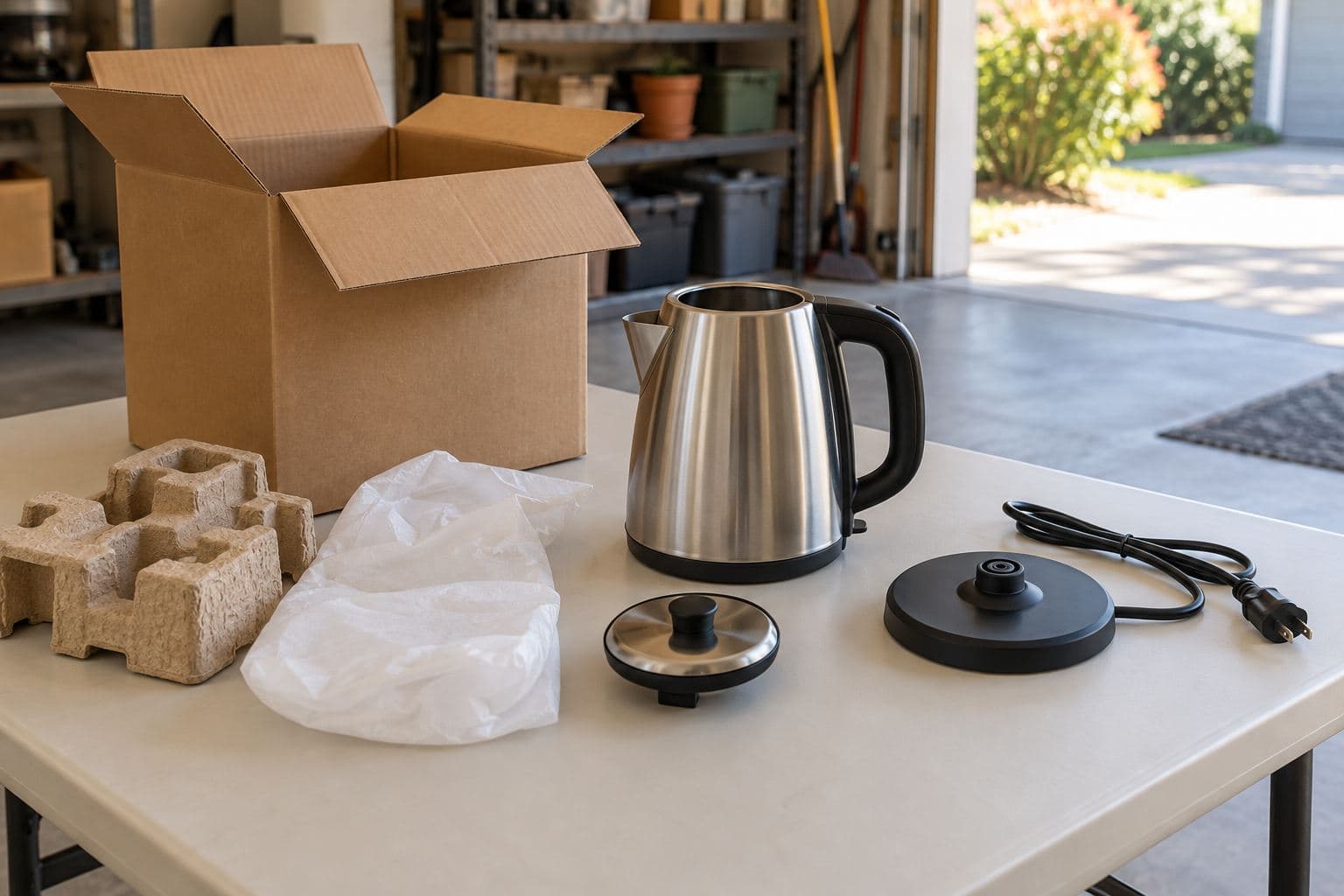
Start with what is inside
#Give each unit, one item, an ID before its parts leave the box. Photograph the packaging as received, then the item and parts. Match the item's model, size and other ID details to the carton and saved listing. Record any mismatch; don't pick the more appealing description.
This liquidator's condition-code explanation lists wrong products among possible untested returns. Condition codes are seller labels for an item's state. The page is dated May 13, 2025 and was checked October 1, 2026. It gives no rate for swaps or faults.
Made-up example: a plain carton describes a rechargeable desk light. Inside is a similar corded light with a different model number and no adapter. Record the light, mismatch and missing power supply. Don't copy the carton's text or use a spare adapter just because its plug fits.
While unpacking, use the test-and-grade step in the pallet unload checklist. Inspect each unit with its parts. Record your notes on the printable inspection worksheet.
Identify it before checking recalls
#A recall calls for action on an unsafe product. Search the CPSC recalls database by the item's maker, model and any production date or serial range. Read possible matches in full: affected units, hazard and remedy, the action needed to fix it. Check the maker's recall details too. Keep search terms, date, matching notice or open question with the unit.
If the ID label is missing, hold the unit and ask the maker to identify it. A look-alike search can't clear it. Write “Model unknown; recall check incomplete,” rather than “No recalls.” Even for known items, keep the dated search record and treat safety as unconfirmed.
As of October 2026, the CPSC's resellers guide bans selling recalled products unless repaired as the recall directs. Follow the notice's exact remedy and the maker's directions. State the completed remedy in the listing; you still need to follow it if you disclose the fault or list the item for parts. Never test anything recalled yourself.
Separate appearance from completeness
#Inspect in good light before cleaning changes what you can record. Look for residue, wear where parts touch, scratches, cracks, crushed corners, corrosion and missing protective pieces. Describe what you see, without guessing its cause. A scuff gives no history of who used the item or for how long.
Use the exact model's manual or parts diagram to count and identify each piece. Check that each charger is right for the model, even if the carton has two. For furniture in several cartons, record cartons and panels before assembly.
Keep a simple comparison:
| Expected from the model's instructions | Present in this unit | What remains unresolved |
|---|---|---|
| Main item and matching power supply | Record actual model and ID details | Whether they work together if either ID is missing |
| Removable attachments or inserts | Record each piece | Missing or damaged pieces |
| Assembly hardware and safety fittings | Record the counted kit | Correct replacements and complete assembly |
Made-up example: a boxed side table has clean panels, but its hardware bag lacks two bolts named in the instructions. Write “Panels inspected; two assembly bolts missing; not assembled.” Wait for the correct parts before you finish building it or claim it's ready to use.
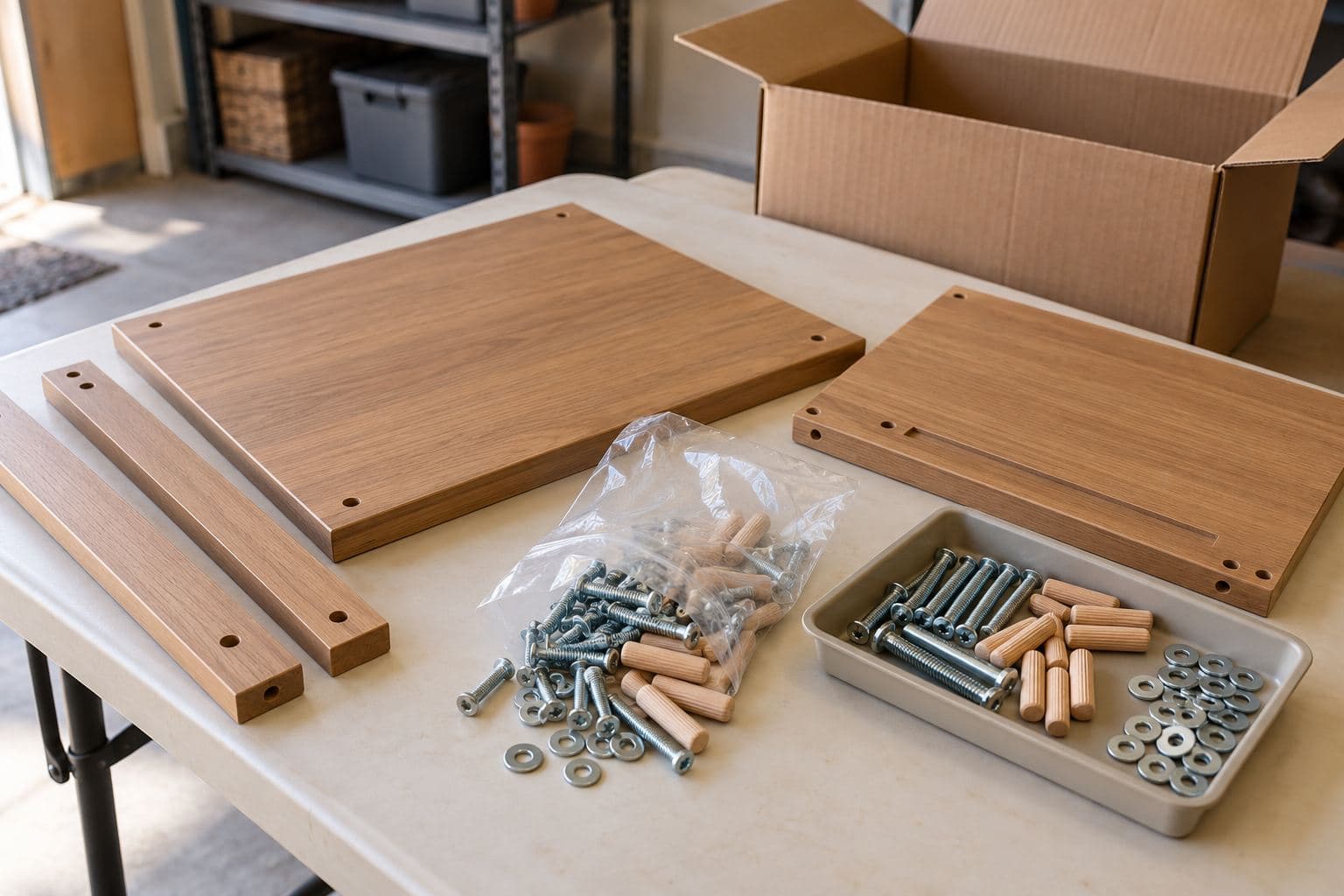
Only test what you can test safely
#Use the actual product's instructions. Never test swollen or damaged batteries, damaged cords, gas appliances or anything recalled. Stop for missing guards, cracked housing, an unknown power supply or any unsafe check. Ask the maker or qualified service staff instead of trying a bench repair.
This kettle use-and-care manual bans use with a damaged cord or plug, or after damage or a fault. It warns against putting electrical parts in water or letting the kettle boil dry. Use your own appliance's manual; these rules cover this product.
The DEWALT battery and charger safety manual bans charging damaged packs or changing a pack to fit the wrong charger. Follow your own model and battery system's rules. A brief run can't prove how much charge a battery holds, how much useful life is left or whether it's safe.
Check safely with the right parts and setup. Record function, method, date and result. Leave checks open if they need special tools, disassembly or skills you lack. The worksheet's category cards help you inspect and know when to stop; they aren't repair instructions.
The CPSC's online seller safety FAQ, checked October 1, 2026, separates resale checks from lab testing and safety certification. A bench check gives no safety certificate. Platforms may ask for more paperwork, and changing a product can raise other questions about meeting the rules.
Write the result at the same level as the check
#Use these three record labels exactly, with supporting notes:
| Result label | When to use it | What the note must explain |
|---|---|---|
| Tested — works | Suitable function checks support the working claim you plan to make | Functions checked, conditions of the check and any limits |
| Untested | Working state is unknown, including after a partial check | Why checks are missing and what, if anything, you saw |
| Not working | A known function failed | The specific failure and any functions left unchecked |
For a partial check, write “Powers on; other functions untested.” Never shorten it to “tested.” Keep Untested unless a known fault supports Not working. Base working claims on function checks, rather than cosmetic inspection or parts counts.
Made-up example: a speaker turns on, but you can't check playback. Record Untested and “Powers on; playback and other functions untested.” Don't change it to “Works” when preparing photos. If a later safe check finds a fault, use Not working and name it.
For ordinary nonpowered goods, describe the inspection and any relevant moving-part check. Explain fabric condition, missing parts or whether the structure is fit for use in words.
Check account access separately
#Check the next owner can set up the phone or tablet, even if its screen lights up. Apple's Activation Lock guidance, dated April 29, 2026 and checked October 1, 2026, says account locks can remain after erasure. Use the maker's valid release process; don't claim a reset removes ownership restrictions.
Hold devices with unresolved accounts or customer data out of listing prep. Don't browse past users' files or show personal details in photos. Record “Setup blocked by account lock” if that's what you see, with other checks untested. Disclose both the working screen and blocked setup.
Record account release and data erasure separately. Follow the exact maker's erasure steps. Apple's pre-resale instructions, dated May 29, 2026, cover iPhone and iPad; use other devices' own instructions. Section 4.5 of the Amazon US contract requires a secure wipe so customer data can't be recovered. It names DOD 5220.22-M for hard disk drives, and product-specific standards or industry practice for other devices. Section 6 of Target's purchase terms, revised November 11, 2025, requires removal of Target and consumer data before reuse or resale, following Target's rules. Record method and completion. If you can't meet the rules that apply, hold the device and seek qualified help. Confirm erasure separately from power-on checks.
Describe results honestly on each channel
#eBay's Item condition by category says options “vary depending on the category you list your item in.” The page has no posted date; it was checked October 1, 2026. For electronics and Home & Garden, open-box items must be in new condition without wear, with original accessories. Check your notes against every rule for your category, beyond open packaging.
Whatnot's Listing conditions and expectations, dated April 10, 2026 and checked October 1, 2026, says: “For detailed information, please refer to the condition guides linked below.” Follow your category's guide. Its electronics definitions, dated February 26, 2026, allow light demo or testing use within open-box criteria, with standards for function and accessories. Disclose known faults in writing and aloud during the item's livestream.
Untested records uncertainty; choose the eBay or Whatnot condition yourself. If you can't support its criteria, finish the missing check or hold the item. For local listings, use the same clear notes and show faults and included parts before handover.
Keep holds out of the listing queue
#Give held units a next step: find the manual, identify the model, get correct parts, seek qualified help or follow a recall remedy. Keep safety concerns separate from missing parts. Never offer recalled or unsafe goods as discounted parts stock.
USPS lithium-battery rules ban damaged, defective or recalled batteries without the stated approval. Get that approval before shipping; ground service alone won't make them mailable. Follow maker and carrier guidance before handling or transport.
Check hygiene separately from function. Don't open or sample sealed health and beauty products to judge usability. Section 7.1 of the Amazon US contract, updated January 29, 2026, requires destruction of specified sensitive products with broken factory seals or signs of opening or use. Check your purchase agreement.
That contract and Target purchase terms, revised November 11, 2025, restrict their names and identifying details in resale ads. Follow those rules; these editorial references give no permission to use retailer branding. This guide is not legal, tax or financial advice.
Carry the inspection notes into the listing
#Carry missing parts and partial checks from bench notes into listings. A notebook or spreadsheet works. PalletPro prepares listing text from a template you can copy and post yourself. Review it against the unit's notes and your channel's condition rules before publishing. See the app
Sources
#- Liquidation condition codes - Liquidation.com, May 13, 2025 (checked October 1, 2026).
- Recalls and product safety warnings - CPSC, updated database (checked October 1, 2026).
- Resellers guide to selling safer products - CPSC, 2021, version 1.0 (checked October 1, 2026).
- Online sellers safety guide FAQs - CPSC, date not shown (checked October 1, 2026).
- Kettle use-and-care instructions - Hamilton Beach Brands / Proctor Silex, date not shown (checked October 1, 2026).
- Li-ion battery pack safety instructions - DEWALT, December 2016 (checked October 1, 2026).
- Activation Lock for iPhone and iPad - Apple, April 29, 2026 (checked October 1, 2026).
- What to do before you sell, give away, or trade in your iPhone or iPad - Apple, May 29, 2026 (checked October 1, 2026).
- Item condition by category - eBay, date not shown (checked October 1, 2026).
- Listing conditions and expectations on Whatnot - Whatnot, April 10, 2026 (checked October 1, 2026).
- Electronics condition definitions - Whatnot, February 26, 2026 (checked October 1, 2026).
- Publication 52, section 349 - USPS, current web edition (checked October 1, 2026).
- Amazon US terms of purchase - Amazon / B-Stock, updated January 29, 2026 (checked October 1, 2026).
- Target terms of purchase - Target / B-Stock, revised November 11, 2025 (checked October 1, 2026).
Updated
More guides
- Receiving and storing liquidation inventory
Plan pallet delivery, unloading equipment and sorting space, document arrival problems, and keep liquidation items connected to their storage records.