
Reseller guide
Apparel liquidation pallets: sizes, tags and sorting
Apparel liquidation pallets are batches of clothes or shoes cleared out in bulk by stores or other sellers. Before listing, check each piece's size, wear, tags and flaws. You'll also need to match shoes and make room for stock that may span several seasons.
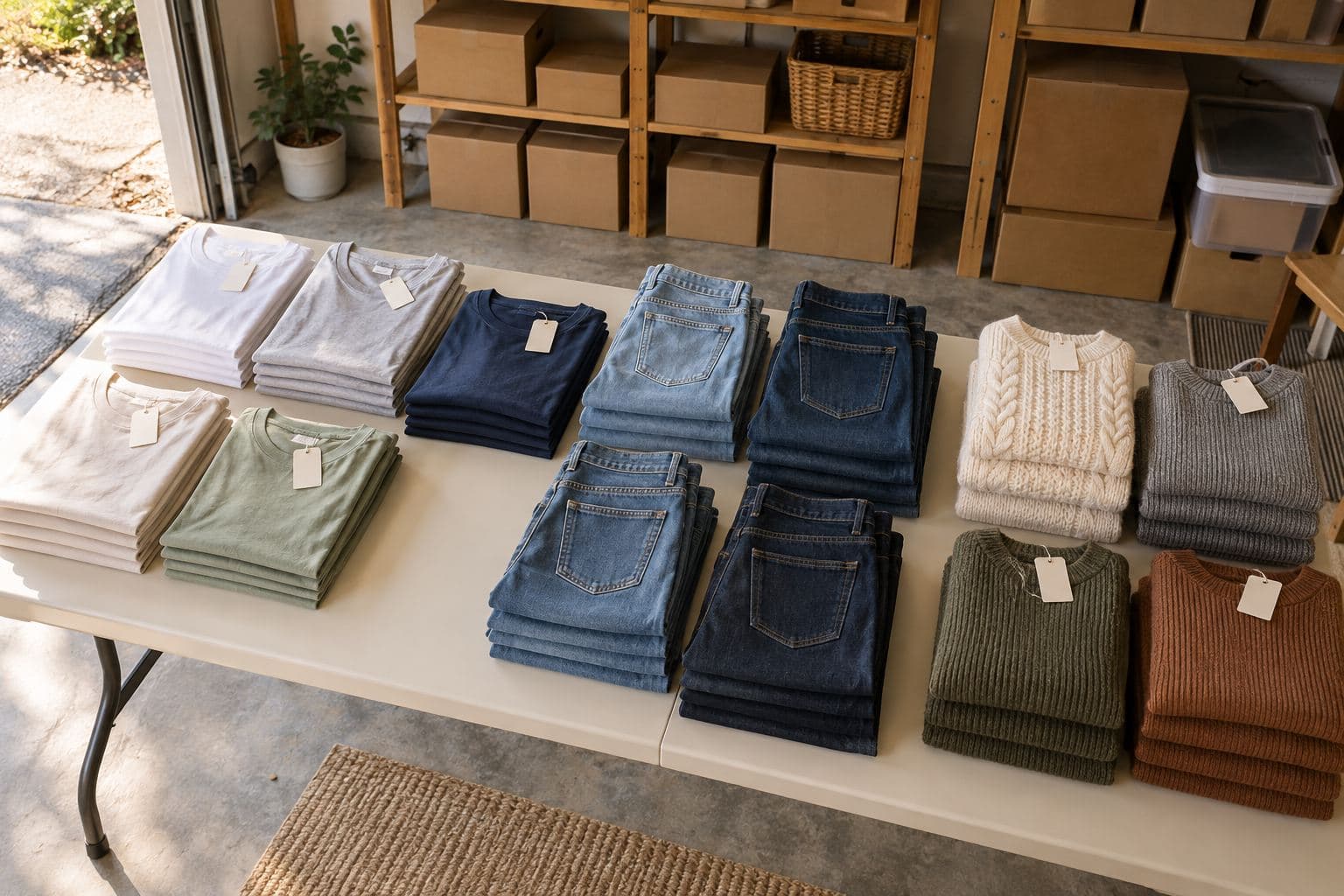
What an apparel pallet is
#A pallet is a platform used to move goods, or the batch packed on it. Apparel means clothing and footwear. It has no shared condition grade, a seller's label for the state of the goods. The glossary explains more buying terms.
As of October 2026, one liquidator, a seller of bulk clearance stock, uses “Irregulars” for generally new goods with flaws from making or handling them. Its “Pre-Worn” category covers goods worn or used before. These are that seller's terms; read the condition guide alongside the exact offer.
Its as-is clothing offer has an irregulars label, but describes returns, shelf pulls and used goods. Customer returns are items buyers sent back. Shelf pulls are goods removed from sale without a consumer purchase. As-is means you accept the stated condition and sale terms, with limits on returns or claims. Ask which description applies.
An unmanifested pallet lacks a manifest, the item-by-item stock list. You may know it contains clothes but lack size or style counts. See manifests and condition grades for help reading those fields.
What usually arrives
#There isn't a standard apparel mix. The cited clothing offer describes mostly women's and men's dress and casual styles, with possible children's items. It names jeans, dresses, jackets and shirts as possible contents. Check each pallet's offer; this page was sold out when checked.
The same liquidator's shoe offer describes mostly women's shoes, with possible men's and children's pairs across seasons. It calls them overstock, meaning excess unsold stock, and says most have original boxes. Photos show past batches. Check each box's contents on arrival.
Ask about clothing and shoe pallets separately. A piece count may mean garments, sets or parts of sets. Get shoe-pair counts in writing. Shoes of different sizes aren't a ready-to-list pair.
Questions to ask before you bid
#Ask for details that shape your sorting work and your sales route:
- What sizes are included, and is there a count for each size?
- How much is adult stock, youth stock or footwear?
- Which seasons are represented? Are those figures tied to this batch?
- How many copies of each style, size and color are there?
- Does the count mean garments, complete sets, shoe pairs or boxes?
- Are retail tags attached? Are any store security tags, devices meant to deter theft, still present?
- What flaws, used goods and excluded categories does the written offer name?
- Do the photos show this pallet, and can you inspect it before paying?
Save answers with the offer and invoice. A lot is the group offered in one sale; make sure photos and size counts belong to yours. Without a full list, use the mystery and unmanifested pallet guide to review the gaps.
Before using a store's name in resale ads, read your purchase contract and keep proof of where the stock came from. Buying goods doesn't grant every right to use the retailer's name. The current Amazon purchase terms and Target purchase terms restrict name use in resale ads. Check your own terms; the Target guide gives more context. Check sales tax and any resale certificate, the state form for a qualifying resale purchase. This guide is not legal, tax or financial advice.
What to check on arrival
#Photograph the pallet and boxes before sorting, count the goods and save packing slips. If the batch differs from your written order, keep evidence and follow the seller's claim deadline.
Inspect each garment in good light: seams, hems, zippers, buttons, lining and pockets. Note stains, smells, wear and repairs. Record the tag size and useful measurements, such as waist width or inseam, the length along the inside leg. If the size tag is missing, say so and give measurements. Don't guess.
A hangtag is the loose retail tag attached by string or plastic. Sewn labels may give size, fabric or care details. Keep these tag types separate, and ask the source how to resolve security tags without harming the garment.
Most textile and wool goods need labels stating fiber content, country of origin and the responsible business. Fiber content means what the fabric is made from, such as cotton or wool. FTC textile label rules. Care labels explain cleaning methods; makers and importers must provide them. Keep labels in place, follow their care steps and use them for fabric claims. Touch alone isn't enough. FTC care label rules.
For shoes, match left and right by style, color, size and width. Check both soles, inner linings and closures. Put a single shoe aside so it doesn't creep into your pair count.
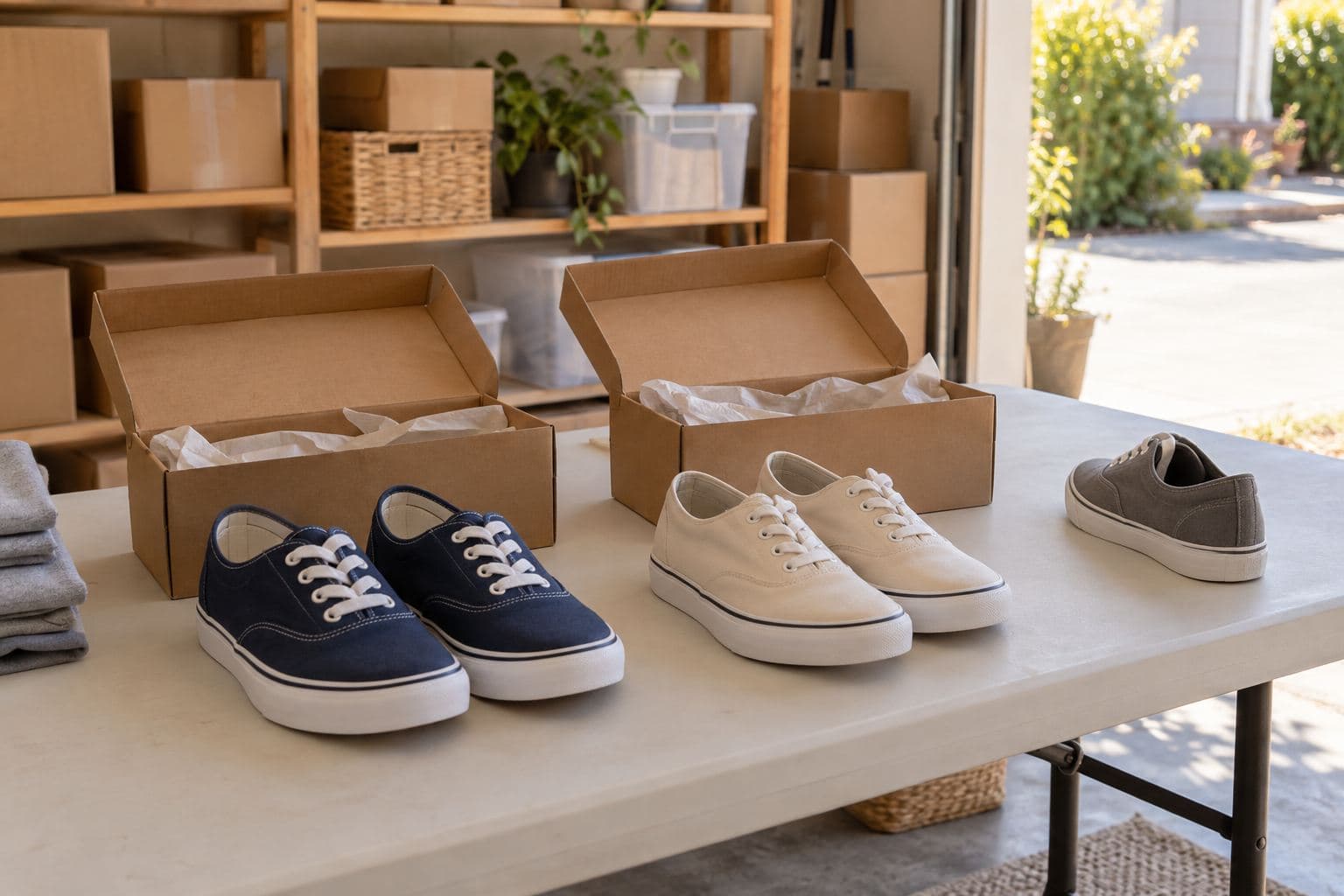
What to test first
#Only test what you can test safely. Start with the checks that decide whether you can list the piece: the right pair, intact seams and working closures. Use the inspection and testing guide for a record of what you checked.
Check the item as well as its tag. eBay's current clothing grade “New with tags” means brand-new, never-worn goods with original tags or packaging. “New with imperfections” covers brand-new, unworn goods with defects; tags may be absent. Choose the grade that fits and disclose flaws. eBay condition guidance.
eBay requires used clothing to be properly cleaned. It bars used underwear and socks even after cleaning, but excludes bras from its underwear definition. Screen these before making a bundle, a group sold together. Used clothing policy.
Check for recalls, notices of a safety risk that needs action, in the CPSC recall search. Search by brand, item and identifying details, including children's garments. Keep recalled stock out of sale and follow CPSC and maker instructions. Seller safety FAQ.
Hold branded items until you can confirm they're genuine; keep invoices and item details as proof. Check beyond the tag. eBay allows listings only when you're certain an item is genuine. Counterfeit policy.
Space, handling and moving it
#Set aside a dry sorting table and room for clean stock, pieces needing work and items held out of sale. Keep clothes off the floor. Don't pack away damp goods after cleaning.
Group by type, size and season, then by repeated style. A bin location in your records makes it easier to find the exact piece a buyer chose. Check each repeated unit for flaws before you use one photo for the group.
Record each garment or matched pair for individual listings. In consumer bundles, group suitable sizes and seasons and describe every piece. For reseller lots, give counts by size and style, plus flaws. Keep rejected stock out. See local selling for pickup and eBay selling for shipped listings.
Confirm delivery access before purchase. Freight means transport of the pallet by a carrier. Ask how it will reach ground level and who must move it from there. The receiving and storage guide covers the space plan.
How the cost works
#Made-up example: You pay $400 for a pallet, $100 for freight and $100 for tax and other buying costs. After checks, you can list 100 garments or matched pairs.
| Step | Arithmetic |
|---|---|
| Total buying cost | $400 + $100 + $100 = $600 |
| Cost per sellable unit | $600 / 100 = $6 |
| If only 75 units can be listed | $600 / 75 = $8 |
| Break-even if selling costs total $200 | $600 + $200 = $800 in buyer payments |
Break-even is when payments cover the costs in your math. Include cleaning, repairs, bags, fees and shipping you pay, plus your time if you give it a dollar cost. Fewer sellable units leave each one with more cost to cover. Use the pallet profit calculator and state what your count includes.
Keeping repeated sizes straight
#A notebook or spreadsheet works for counts and sale records when one style arrives in several copies. PalletPro lets you keep repeated units as one item with a quantity, sell some now and the rest later, and record sale price, fees and shipping. Keep separate records where size or condition differs. See the app
How this guide was written
#This guide was compiled from the public sources listed below. Checked on October 1, 2026. PalletPro doesn't sell pallets and isn't affiliated with any retailer, liquidator or marketplace named here.
Sources
#- Product Conditions - Via Trading (checked October 1, 2026).
- Assorted As-Is Unmanifested Clothing Pallets - Via Trading (checked October 1, 2026).
- Assorted In Box TGT Shoes - Via Trading (checked October 1, 2026).
- Amazon Terms of Purchase - Amazon / B-Stock document host, last updated January 29, 2026 (checked October 1, 2026).
- Target terms of purchase - Target / B-Stock document host, revised November 11, 2025; also marked last updated March 15, 2021 (checked October 1, 2026).
- Threading Your Way Through the Labeling Requirements Under the Textile and Wool Acts - Federal Trade Commission (checked October 1, 2026).
- Clothes Captioning: Complying with the Care Labeling Rule - Federal Trade Commission (checked October 1, 2026).
- Item condition by category - eBay (checked October 1, 2026).
- Used clothing policy - eBay (checked October 1, 2026).
- Recalls & Product Safety Warnings - US Consumer Product Safety Commission (checked October 1, 2026).
- Online Sellers Safety Guide FAQs - US Consumer Product Safety Commission (checked October 1, 2026).
- Counterfeit policy - eBay (checked October 1, 2026).
Updated
More guides
- Appliance liquidation pallets and truckloads
Read appliance condition grades, plan safe inspection and professional testing, check warranty limits, and arrange delivery and lawful disposal.
- Bass Pro liquidation pallets: source and safety checks
Understand third-party Bass Pro pallet claims, check outdoor inventory and resale restrictions, and plan inspection, freight and costs before buying.
- Case-pack liquidation: counting and selling repeated units
Count case-pack liquidation units, check their condition, and plan single-unit or bulk sales while keeping remaining quantities and costs in your records.
- Clear wrap premium pallets: what you can verify
Separate clear wrapping from condition and testing, request pallet-specific evidence, and compare the full cost before buying a premium-labelled pallet.