
Reseller guide
Amazon monster truckloads: contents, space and safe handling
Amazon monster truckloads are sellers' mixes of goods on tall pallets. Confirm condition, item counts, sizes and safe unloading before buying. Check that your equipment and unpacking space can handle the shipment.
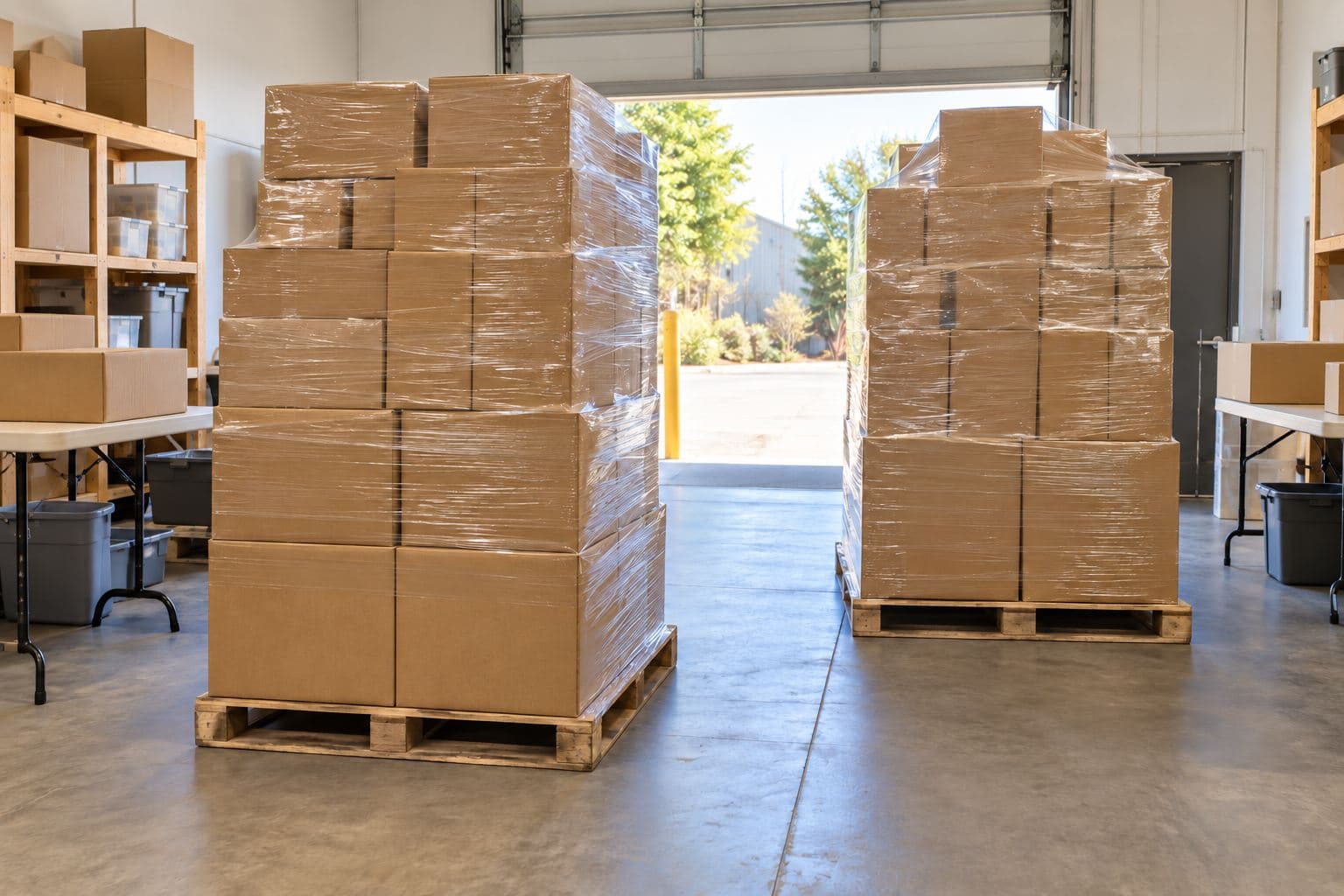
What a monster truckload means
#As of October 2026, one seller ad says “7' Tall Pallets” of mixed medium-size goods. Another monster ad says “24 oversized pallets” at seven to eight feet tall. Sizes vary by seller. Compare height with the counts in high-piece-count truckloads.
Currently, Amazon's US auction FAQ lists sortable (smaller goods), non-sortable (larger or heavier goods) and AMXL (large, heavy or bulky goods) formats. It doesn't list monster as an official grade. If a seller links its program to those formats, get that claim in writing for your purchase.
Tall pallets can mix product types and packing states. Check promised condition and contents before payment, and whether you can handle them.
What the advertisements describe
#The first ad states 24 seven-foot pallets and about 1,500 mixed items: housewares, toys, electronics, sporting goods and small furniture. It includes returns (goods sent back by retail buyers) and overstock (excess stock). The second ad states about 1,200–1,700 mixed items across 24 seven-to-eight-foot pallets, also returns and overstock. Its photos are samples.
These are seller claims, rather than audited counts or a typical mix. Confirm specific devices and contents beyond category lists and sample photos.
Count complete products apart from cartons; some need several cartons or separate parts. Ask how pieces are counted and what the manifest, or stock list, identifies. Read the manifest and condition guide and stacked-furniture guide for substantial furniture mixes.
Questions to ask before you bid
#Start by checking whether you can receive the shipment:
- What's each pallet's footprint (floor space), full height and weight, including packing?
- Can the quoted carrier deliver to your address with the equipment you have?
- What dock, forklift, clearance or other equipment does delivery need?
- Who unloads, how much time is allowed and what extra charges can apply?
- Do current photos show these pallets or earlier examples?
- What written counts, product types, condition and rules for reporting errors apply?
Get a freight (shipping) quote from dispatch to your address, including garage delivery if needed. A liftgate moves freight between trailer and ground; confirm it's available, included and rated for your shipment. Explain access limits before payment; plan your site with the receiving and storage guide.
Confirm availability before paying; get an invoice, the purchase bill, showing all freight and receiving charges.
Check the seller and resale contract with the supplier-vetting guide. Confirm tax and resale-certificate rules with the relevant authority. A resale certificate is paperwork for a qualifying resale purchase. Plan sales beyond the seller's original-retail figures.
What to check on arrival
#Prepare for agreed unloading steps before arrival. Photograph visible condition and damaged wrap or cartons; compare pallet counts with shipping papers. Follow the seller's error-reporting rules; its general returns policy may not cover these purchases.
If a pallet leans, has a broken base or looks unstable, keep clear and get a qualified handler to check it. Don't climb it, stand beneath unsupported goods or pull boxes out to straighten it. Take photos of hazards from a safe spot. Plan for damaged freight so you're ready to handle its weight.
When safe to access, check models and missing parts. Keep parts together as cartons open. Inspect furniture edges, legs and joints before sale storage; keep hardware with its model. Check clean cartons for missing parts or switched products too.
Record storage spots to find goods without moving other stock. The pallet unload checklist keeps delivery evidence apart from item checks.
What to test first
#Only test what you can test safely. Don't test swollen or damaged batteries, damaged cords, gas appliances or anything recalled. Identify the model and search CPSC recalls, then ask the maker about safe handling and any required fix. Currently, CPSC online resale guidance says recalled-product sales are unlawful, with its stated exception for the maker's remedy.
Check whether goods can safely enter your sale area. Resolve structural furniture damage before offering it for use. Electrical tests need suitable equipment and intact required parts. Keep uncertain goods apart from pickup-ready stock.
Record checked functions. “Powers on; other functions untested” states the limit; broad working claims hide it. Inspect retail boxes and open-box goods (opened packing) too. Use the inspection and testing guide for records; leave checks beyond your ability to a suitable professional.
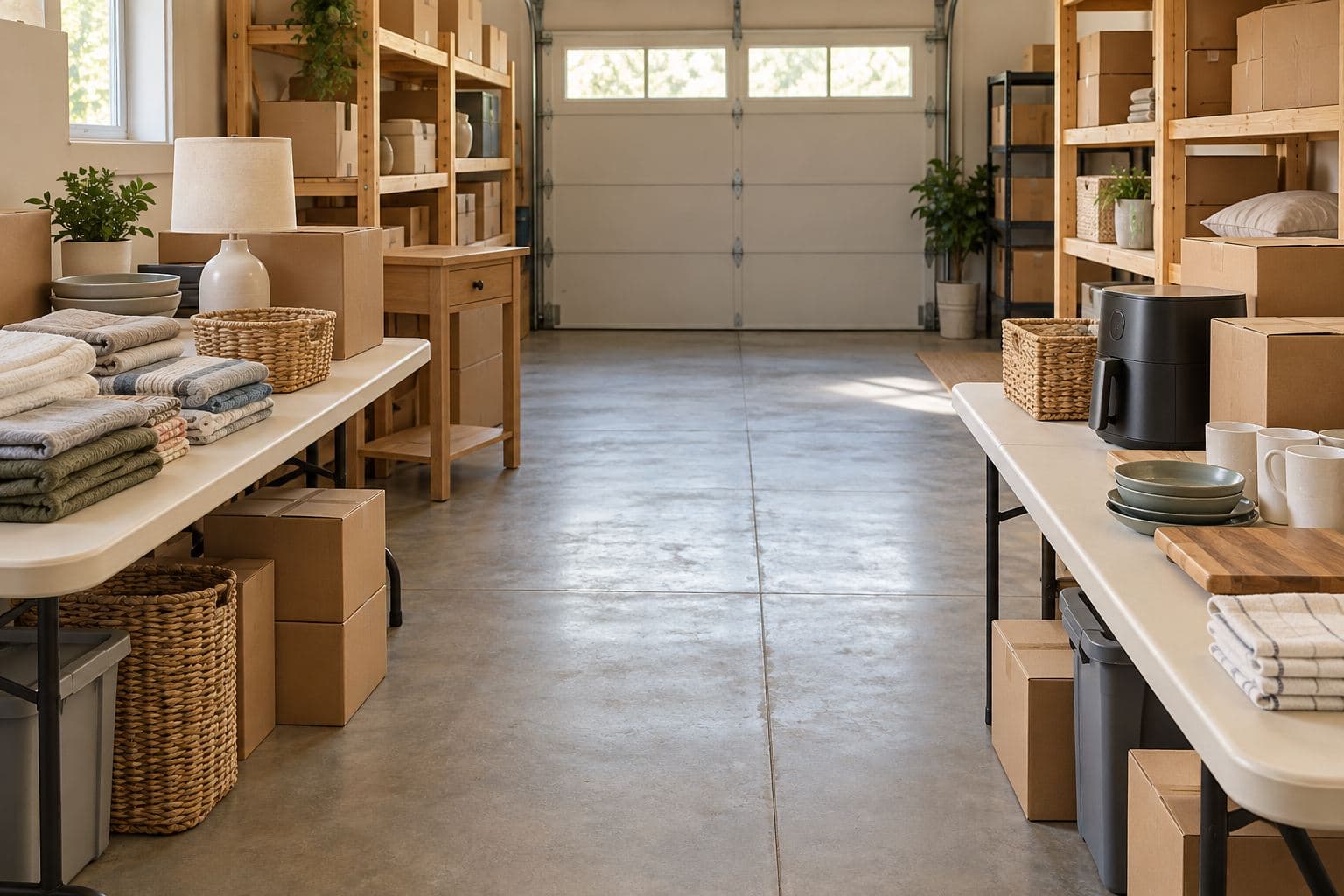
Space, handling and moving bulky goods
#Leave room for unpacking, inspection, photos and goods awaiting parts or buyers. Check doorways and routes through receiving, storage and handover. Unboxed goods may be harder to move.
OSHA's warehousing guidance calls for stable storage, clear aisles, staying within shelf weight limits and putting heavier goods on lower or middle shelves. It doesn't certify tall seller pallets or set a safe height for your equipment. Use actual weights and rated equipment, with qualified help for goods you can't move safely.
Keep pickups clear of unpacking. Use measured sizes and honest condition photos in local ads. Agree what buyers must bring and how handover works before appointments. The local selling guide covers inspection, payment and pickup.
Measure smaller goods' packed sizes; include packing and shipping you pay in costs. Check resale rules and shipping costs for a seller's suggested sales channel.
Currently, Amazon's purchase contract limits retailer references in buyers' resale activity. Check your contract before using Amazon-origin wording in ads. For buying routes and terms, see buying Amazon truckloads.
How the cost works
#Example with made-up numbers: You pay $1,000 for stock, $500 for freight and $100 in purchase sales tax. After inspection, 80 products can be sold. Count a complete product that comes in several boxes once.
| Calculation | Arithmetic |
|---|---|
| Total buying cost | $1,000 + $500 + $100 = $1,600 |
| Buying cost split evenly per sellable product | $1,600 ÷ 80 = $20 |
| Break-even receipts with $400 in extra costs | $1,600 + $400 = $2,000 |
| Average receipts needed if all 80 sell | $2,000 ÷ 80 = $25 |
If only 50 products sell, covering $2,000 takes $2,000 ÷ 50 = $40 on average. Unsold goods haven't paid for storage or freight. Break-even means receipts cover costs. Include handling, repairs and selling costs in the pallet profit calculator. The landed-cost guide separates buying and inbound costs (getting goods to you) from later receipts. This guide is not legal, tax or financial advice.
Keeping the purchase together after unpacking
#Goods from one purchase may move to different storage or selling stages. A notebook or spreadsheet works. PalletPro keeps items attached to their pallet and records actual sale price, fees and shipping when you sell, tying sales to the purchase. See the app
How this guide was written
#This guide was compiled from the public sources listed below. Checked on October 1, 2026. Counts and heights are seller claims. PalletPro doesn't sell pallets and isn't affiliated with any retailer, liquidator or marketplace named.
Sources
#- Amazon 7 FT Monster Mediums Merchandise Truckload - Department Store Liquidations, no publication date shown (checked October 1, 2026)
- Amazon Monsters - Select Liquidation, no publication date shown (checked October 1, 2026)
- Amazon Liquidation Auctions FAQ - Amazon Liquidation Auctions / B-Stock (checked October 1, 2026)
- Recalls & Product Safety Warnings - US Consumer Product Safety Commission (checked October 1, 2026)
- For Buying and Selling Products Online - US Consumer Product Safety Commission (checked October 1, 2026)
- Warehousing: Hazards and Solutions - Occupational Safety and Health Administration (checked October 1, 2026)
- Amazon US terms of purchase - Amazon.com Services, LLC / B-Stock, January 29, 2026 (checked October 1, 2026)
Updated
More guides
- Apparel liquidation pallets: sizes, tags and sorting
Learn what apparel pallets can include, how to check sizes, tags and shoe pairs, and how to count the pieces you can list before you price them.
- Appliance liquidation pallets and truckloads
Read appliance condition grades, plan safe inspection and professional testing, check warranty limits, and arrange delivery and lawful disposal.
- Bass Pro liquidation pallets: source and safety checks
Understand third-party Bass Pro pallet claims, check outdoor inventory and resale restrictions, and plan inspection, freight and costs before buying.
- Case-pack liquidation: counting and selling repeated units
Count case-pack liquidation units, check their condition, and plan single-unit or bulk sales while keeping remaining quantities and costs in your records.