
Reseller guide
Amazon medium truckloads: what the label means
Before buying Amazon medium truckloads, check that seller's use of “mediums”. There's no shared size cutoff, condition grade or piece count. Compare goods and delivery needs before prices. Some offers overlap with monster, so ask how much sorting and storage space you'll need.
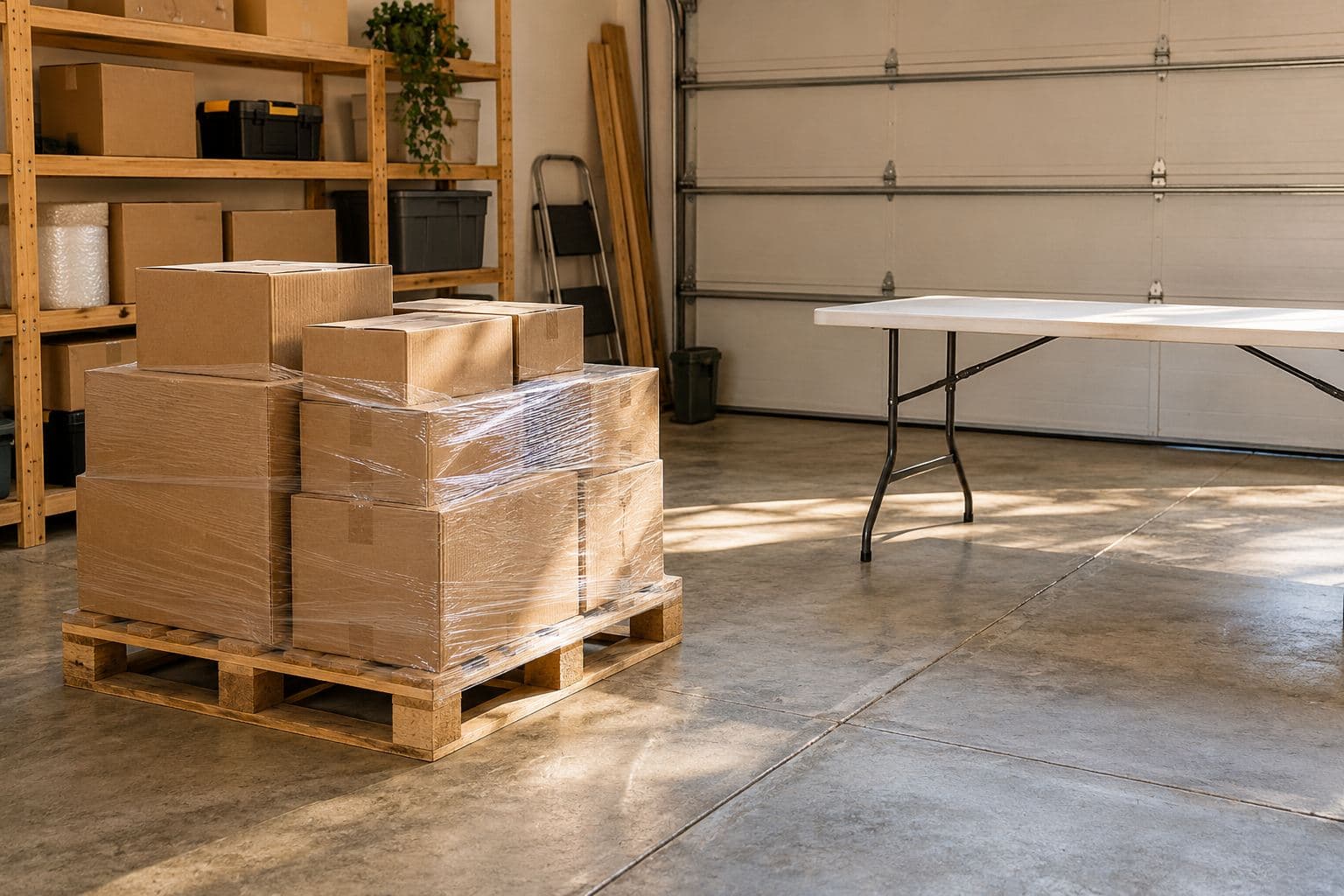
What sellers mean by Amazon mediums
#These three undated pages use the label differently. They're examples, not a full seller list or supplier recommendation.
| Advertised program | Seller's own wording, checked October 1, 2026 | What remains unresolved |
|---|---|---|
| Amazon Mediums | “Grade A returns and overstock items, stacked on 24 pallets” | The condition field says LPN Returns; no Grade A test method or item-size cutoff is given. |
| Amazon Mediums General Merchandise, West Coast | “Clean Open Box Returns / Liquidations” | The page describes 24 Arizona pallets without a piece count or size cutoff. |
| Amazon Monster Mediums | “6ft to 7ft Pallets”; “28 pallet truckloads” | The Ohio program also asks buyers to call about height and pieces. |
Returns are goods buyers sent back; overstock is excess stock. Open box means opened packaging. Grade A is a seller's condition label; LPN is a return's tracking code. See the glossary.
The third offer combines monster and mediums. Ask for measurements instead of assuming fixed size tiers. See the monster guide and high-piece-count guide; high piece count refers to item numbers.
As of October 2026, Amazon's official marketplace lists Sortable for smaller goods, Non-Sortable for larger or heavier goods, and AMXL for large, heavy or bulky goods needing special handling. B-Stock's explanation separates these from .com, Amazon-owned stock, and FBA, Fulfillment by Amazon stock supplied by marketplace sellers. The official pages checked don't map a private seller's mediums label to one type. Get source paperwork; don't swap Non-Sortable for Mediums.
What the advertised assortments include
#The first mediums page advertises about 800–1,000 mixed items across 24 pallets, possibly including household goods, baby items, toys, electronics, sporting goods and small furniture. Photos are samples. These specs cover that seller's offer; counts and product shares aren't expected results for every mediums purchase.
The Arizona offer lists electronics, toys, housewares and sporting goods. Its source claim isn't independently confirmed proof of a retailer contract. This offer and Monster Mediums give no usable-unit forecast.
Use the product mix to plan test tools, but ask for a manifest too: a goods list with counts. The electronics pallet guide covers devices' accounts, stored data and batteries.
Questions to ask before you bid
#Get the exact program on the quote; an Amazon heading can cover several mixes. Keep its definition with separate condition, packaging, product-type and count claims.
- What item sizes are included or excluded? Does the seller measure the item or its carton?
- What are this shipment's actual pallet count, footprint, tallest height and weight? Footprint means the floor space a pallet takes up.
- Is the count exact, rough or unknown? Does it count pieces, sets or cartons?
- Is there a manifest for these goods, or does it show a past shipment?
- What sorting, removal or testing was done, and who did it?
- Which warehouse ships the goods, who bills you and who handles freight, or shipping by truck?
- What paperwork and deadlines apply to shortages, damage in transit and condition disputes?
Amazon's official auction FAQ currently bars checks before bidding and allows stock photos of samples. These are official marketplace rules. Under a middle seller's agreement, ask about inspection and current photos.
Before writing ads, read Amazon's purchase terms: they restrict Amazon references in resale and require removal of retailer marks and customer data. Editorial use is separate from these buyer duties. Ask which duties pass to you.
What to check on arrival
#Photograph before taking the shipment apart, match pallet counts to delivery papers and keep the quote, manifest and shipping records together. Follow the pallet unload checklist.
Use the seller's counting method throughout, keeping sellable units separate. Cartons of repeat products, matched sets and loose parts need different counts. If the manifest counts cartons, keep that tally after counting their contents.
Match model numbers or IDs to the manifest where possible. Note missing chargers, furniture hardware, set parts and clear swaps. Within safe storage limits, keep packaging until required claim photos are done. Records explain mismatches; the contract sets available remedies.
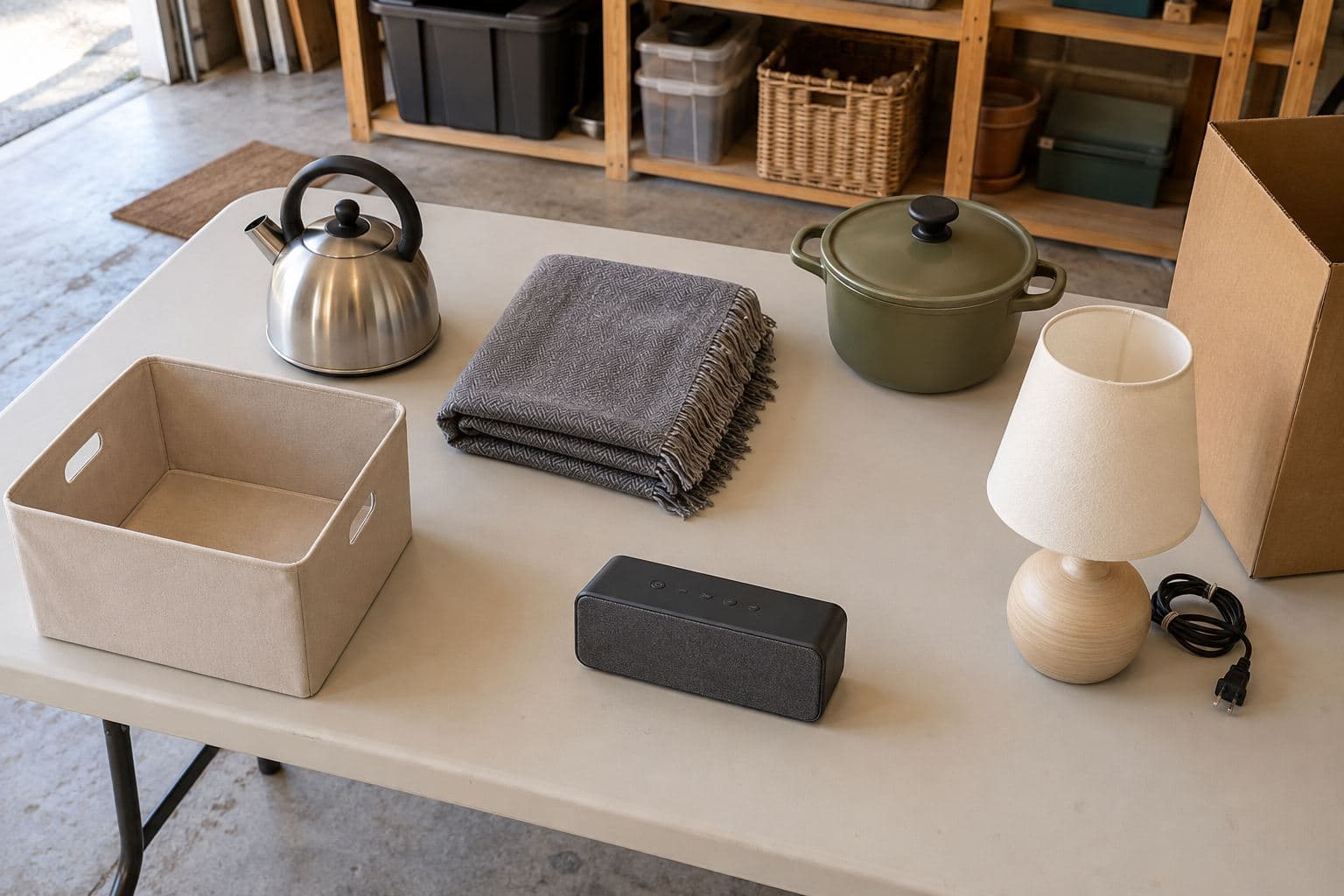
What to test first
#Only test what you can test safely. Search the model in CPSC's recalls database and consult the maker before a function check. Don't test recalled goods, swollen or damaged batteries, damaged cords or gas appliances. CPSC's online-resale guidance bars resale of recalled products until the stated fix is done.
Does the box hold the right product and parts for its intended use? Keep multi-carton goods together while checking the maker's parts list. Check function even for goods sorted by size.
Use the inspection and testing guide for each item. Write down partial checks as such: “Powers on; other functions untested.” Test each repeat unit on its own. For devices, keep account release and data-erasure records separate from function tests.
Space, handling and moving it
#Get measurements before planning unloading. One program's six-to-seven-foot pallets are seller specs, not safe storage heights or a rule for all mediums. Check door clearance, tools' weight limits and the delivery-to-storage path against the shipment.
Leave room to unpack and test, with space for parts, packing and incomplete sets. Measure what fits with exits and paths clear, including work space as well as unopened pallets.
OSHA's warehousing guidance calls for stable storage and clear aisles. Arrange suitable tools and skilled handling for the shipment's height and weight. The receiving and storage guide covers layout in more depth.
Amazon's official auction FAQ currently says buyers can't choose their own carrier or pick up orders themselves. Check the shipping terms for your purchase; a middle seller's freight agreement can differ.
How the cost works
#Made-up example: goods cost $8,000, freight costs $2,000 and checks leave 400 sellable units. These aren't expected mediums results.
| Calculation | Arithmetic | Result |
|---|---|---|
| Buying and freight total | $8,000 + $2,000 | $10,000 |
| Cost assigned to each sellable unit | $10,000 ÷ 400 | $25 |
| Total with $2,000 of other included costs | $10,000 + $2,000 | $12,000 |
| Average money per unit to break even if all 400 sell | $12,000 ÷ 400 | $30 |
Break even means sales cover the costs you've included. At 200 sellable units, that same buying total assigns $50 per unit. Add actual prep, selling and disposal costs to get beyond the first sum. The pallet profit calculator helps with buying costs; track other costs on their own. Check tax due and accepted paperwork for a resale certificate, the tax document used when buying goods for resale. This guide is not legal, tax or financial advice.
Comparing your own mediums purchases
#Similar program names can hide different goods and sale results. A notebook or spreadsheet works for keeping purchases separate. PalletPro Analytics compares your own pallets by the pallet type and supplier you enter, so use a consistent type name for each seller's program. See the app
How this guide was written
#Compiled from the public sources listed below. Checked on October 1, 2026. Ads show how sellers use the labels; they don't prove expected results or source claims. PalletPro doesn't sell pallets and isn't affiliated with any retailer, liquidator or marketplace named.
Sources
#- Amazon Mediums - Select Liquidation, date not shown (checked October 1, 2026).
- Amazon Mediums General Merchandise Truckload, West Coast - Truckload Deals, date not shown (checked October 1, 2026).
- Amazon Monster Mediums - Smart Source Wholesale, date not shown (checked October 1, 2026).
- Amazon business units - B-Stock, date not shown (checked October 1, 2026).
- Amazon liquidation auctions FAQ - Amazon Liquidation Auctions / B-Stock, date not shown (checked October 1, 2026).
- Amazon terms of purchase - Amazon / B-Stock, September 3, 2020 (checked October 1, 2026).
- Recalls and product safety warnings - CPSC (checked October 1, 2026).
- For buying and selling products online - CPSC, date not shown (checked October 1, 2026).
- Warehousing hazards and solutions - OSHA, date not shown (checked October 1, 2026).
Updated
More guides
- Amazon monster truckloads: contents, space and safe handling
Compare Amazon monster truckload descriptions, confirm tall-pallet dimensions and condition, and plan receiving, inspection, storage and resale costs.
- Apparel liquidation pallets: sizes, tags and sorting
Learn what apparel pallets can include, how to check sizes, tags and shoe pairs, and how to count the pieces you can list before you price them.
- Appliance liquidation pallets and truckloads
Read appliance condition grades, plan safe inspection and professional testing, check warranty limits, and arrange delivery and lawful disposal.
- Bass Pro liquidation pallets: source and safety checks
Understand third-party Bass Pro pallet claims, check outdoor inventory and resale restrictions, and plan inspection, freight and costs before buying.