
Reseller guide
Buying at local liquidation auctions and bin stores
Local buying lets you collect goods nearby, with price, inspection, and pickup rules set by each event or shop. A liquidation auction sells stock a business is clearing out through bids; a warehouse may charge a set price per pallet, a flat base used to move goods together. A bin store sells single items from open bins, sometimes at prices that fall through the week. Check the rules before you travel or pay.

Choose the format before planning the trip
#At a live auction, you bid during an event; at a local online auction, you bid on a website and collect afterward. A warehouse may sell pallets at a fixed price without bidding. The word “local” tells you where the goods are. Check how the sale works too.
A pallet is a flat base used to move goods together. A lot is the group sold in one purchase: it might be one pallet, several pallets, or loose items. Read the lot description so you know what one winning bid covers. The glossary explains these and other buying terms.
You can buy fewer goods at once from bins. Prices may fall between refills, as B-Stock's bin-store guide describes. Check the shop's cycle, price exceptions, and opening rules; there's no shared national bin-day price.
Use the single-pallet supplier guide for warehouse purchases and the online marketplace guide for web bidding. If this is your first purchase, the beginner checklist covers the work after you get it home.
Verify the event and its rules
#Open the current catalog, the event's list of lots, for the date, location, and seller contact. For online bids, check the closing time and time zone; for a live sale, ask when registration and viewing start. An old post or closed auction page can help you find the business. Plan your trip from current terms.
Save the rules for the lots you want, including payment method and deadline, pickup window, and any late-removal charge. Ask when staff release goods after payment. If the page gives conflicting dates, get a written answer before bidding.
As of October 2026, the policy details in this guide reflect the linked pages. Walmart's liquidation shipping policy allows buyer pickup only when the auction details say so. A location close to home still needs explicit pickup permission. Check whether your venue accepts your vehicle and whether staff will place the pallet in it.
A buyer's premium is a charge added to a winning bid. Check whether it's a percentage, a flat fee, or both, plus other buyer fees and tax. Use this event's fees rather than those from a past event or another site.
Check the seller and payment recipient through a contact route you find yourself. False invoices and pressure to pay can target small firms, as the FTC's business scam guide explains. Pause if new payment instructions don't match the seller you verified.
Ask what inspection allows
#Ask whether viewing means walking past wrapped pallets, looking inside cartons, or using a test station, and get permission before cutting wrap or opening packaging. If you can only view the outside, say so in your notes.
A manifest is the seller's item list. It can include descriptions, counts, model IDs, or condition details. Compare it with what you can see, and ask what the count means: cartons, loose units, or complete kits. Use the manifest and condition guide for fields that need checking.
Customer returns are goods shoppers sent back; overstock is excess stock. Check each item's state under either label. “As-is” describes a sale under the agreement's terms, so read its rights and limits. A sample photo may show other stock; ask whether the images show your lot.
Note torn wrap, missing carton groups, and visibly absent parts. Viewing outer boxes gives you only a partial check of the contents. If the seller won't clear up a fact that affects your budget or handling plan, allow for that gap when you bid.
Set a ceiling that includes getting the goods home
#Landed cost means your purchase cost plus the costs of bringing the goods to your chosen place. Include buyer charges, any tax due, pickup transport, and paid handling help. Keep later repairs, packing, and selling fees in a separate allowance.
Made-up example: the event charges a 10% premium and $20 flat fee. Your goods-and-pickup limit is $500, with $40 for transport and no purchase tax due here. A $400 bid totals $400 + $40 premium + $20 fee + $40 transport = $500. A $450 bid totals $555 under the same terms.
Use your event's charges in the landed-cost guide or pallet profit calculator before bidding.
Set a limit on how much you'll buy, and track wins and pending bids. Pallets from separate lots must fit in the same vehicle and receiving area. Allow for the first pallet still being there when you bid on another.
Arrange payment and removal together
#Prepare the buyer details, any required ID, the accepted payment method, and resale paperwork before the event. A resale certificate is a document that supports a qualifying purchase for resale under state tax rules. Read the certificate guide if the seller asks for one.
Before pickup, compare the packed size and total weight, including the pallet, with your vehicle or trailer ratings and available space. Ask who provides handling gear, where pickup happens, and whether a second trip is allowed. A pallet jack lifts a pallet slightly to roll it; you'll still need a suitable surface and a safe way to move it into the vehicle.
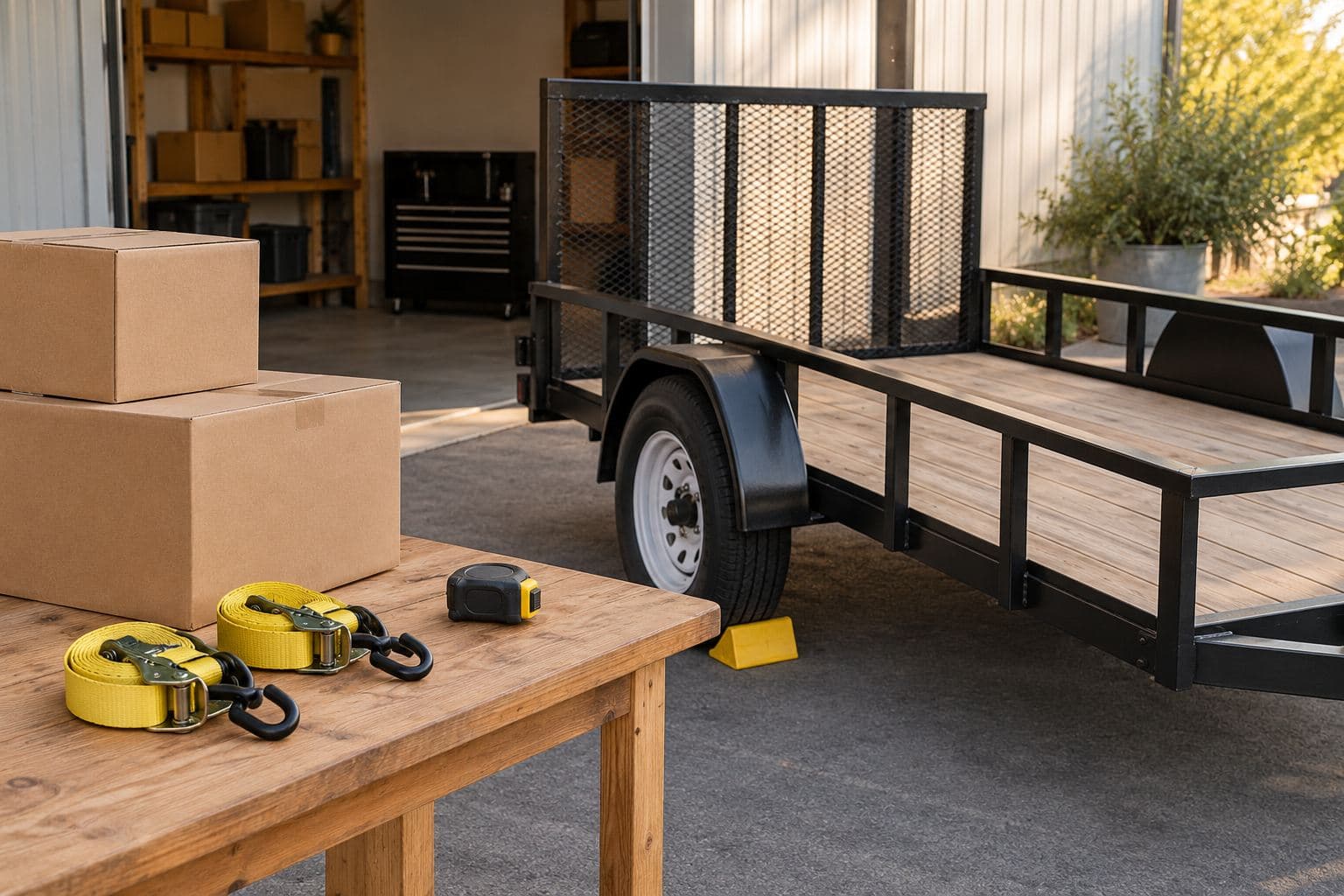
Use rated tie-down gear and a plan to keep goods from shifting in the vehicle. The Federal Motor Carrier Safety Administration, or FMCSA, sets cargo rules for covered commercial transport; check how the rules apply to your activity. Don't choose straps or a vehicle from pallet count alone.
At pickup, match the lot IDs to your invoice and note what you receive. Take permitted photos before you remove the goods. A claim is a request for a refund or other relief for a problem covered by the agreement. Read any terms that limit claims after pickup, and keep the release paperwork. The freight guide covers transport and receipt records in more detail.
Check each bin item on its own
#Ask about today's price, separately priced items, and returns before shopping. Get permission to open boxes and use the shop's test area. If staff won't allow a check you need, decide whether you're prepared to buy without it.
Match the item to its box and check its parts, using a model number where possible. An asking price is advertised; a completed transaction is a past purchase. Use eBay Product research to check past sales against close matches in similar condition, along with the pricing guide.
Check the CPSC recall search and the manufacturer's notices. CPSC is the US Consumer Product Safety Commission; a recall is a safety notice with a stated remedy. CPSC's seller guidance prohibits sales of recalled goods. A shop receipt doesn't clear a product's safety status.
Only test what you can test safely. Never test swollen or damaged batteries, damaged cords, gas appliances, or recalled goods. For items needing expert checks, ask the manufacturer or a qualified professional. Keep a partial result plain: “Powers on; other functions untested.” The inspection guide explains how to record checks without overstating them.
Check seals and product rules for personal-care goods; don't resell opened or used personal-care items. For bedding or fabric-covered furniture, check local rules for cleaning and required health treatments before buying. For branded goods, verify identity rather than guess from appearance; eBay's policy on fakes requires authentic goods.
Consider bins as a selling outlet
#You can offer your own cleared stock through bins too. Plan what goes in, when you'll refill, and what you'll do with goods left at cycle's end. Keep unsafe, recalled, restricted, and unresolved items out of the sale area.
Make the customer rules visible: how prices work, any exceptions, where boxes may be opened, and what returns are allowed under your terms and applicable law. If you offer testing, plan a safe supervised space. Ask your insurer, local authority, or qualified adviser about running retail sales at that site.
Use your own costs and sales to check what's left after rent, staff time, payment fees, cleanup, and disposal. The pricing format alone can't tell you that.
Ask a bin shop whether it will buy your leftover stock and which items, counts, and condition it accepts. Agree on payment and removal; the shop must agree to buy. For direct sales to local shoppers, use the local selling guide.
This guide is not legal, tax or financial advice. It explains buying formats and planning checks; local rules and the agreement govern your transaction.
Keep local purchases separate
#Several purchases from one buying day can blur together when you start listing their items. A notebook or spreadsheet works. PalletPro records each pallet's source and cost, and Analytics compares your own pallets by the supplier and pallet type you enter; see the app.
Sources
#- How to start or grow a bin store - B-Stock (checked October 1, 2026)
- Shipping policies - Walmart Liquidation Auctions / B-Stock (checked October 1, 2026)
- Scams and your small business - FTC, July 2023 guide (checked October 1, 2026)
- Cargo securement rules - FMCSA (checked October 1, 2026)
- Product research - eBay (checked October 1, 2026)
- Recalls and product safety warnings - CPSC (checked October 1, 2026)
- Online sellers safety guide FAQs - CPSC (checked October 1, 2026)
- Counterfeit policy - eBay (checked October 1, 2026)
Updated
More guides
- Buying one liquidation pallet: suppliers and pickup
Learn how to buy one liquidation pallet, check the seller and contents, compare the full cost, and plan inspection, pickup or freight delivery.
- Online liquidation marketplaces: how buying works
Compare online auctions, fixed-price purchases and public surplus sales, then check buyer fees, condition, payment and pickup before buying.
- B-Stock liquidation auctions: bids, fees and terms
Learn how B-Stock bidding, buyer fees, payment and shipping work, and check the seller's condition rules and claim deadline before you commit.
- Buying Amazon liquidation truckloads
Understand Amazon's bulk buying routes, buyer approval, freight rules and resale limits before you commit to a liquidation pallet or truckload.