
Reseller guide
3PL liquidation pallets: ownership and buying checks
3PL means third-party logistics: a firm handles storage and orders for another business. A 3PL liquidation pallet holds goods offered through that relationship. Check the owner, seller's authority and condition. Before paying, match the goods to the owner, seller's invoice (bill) and written warehouse release.
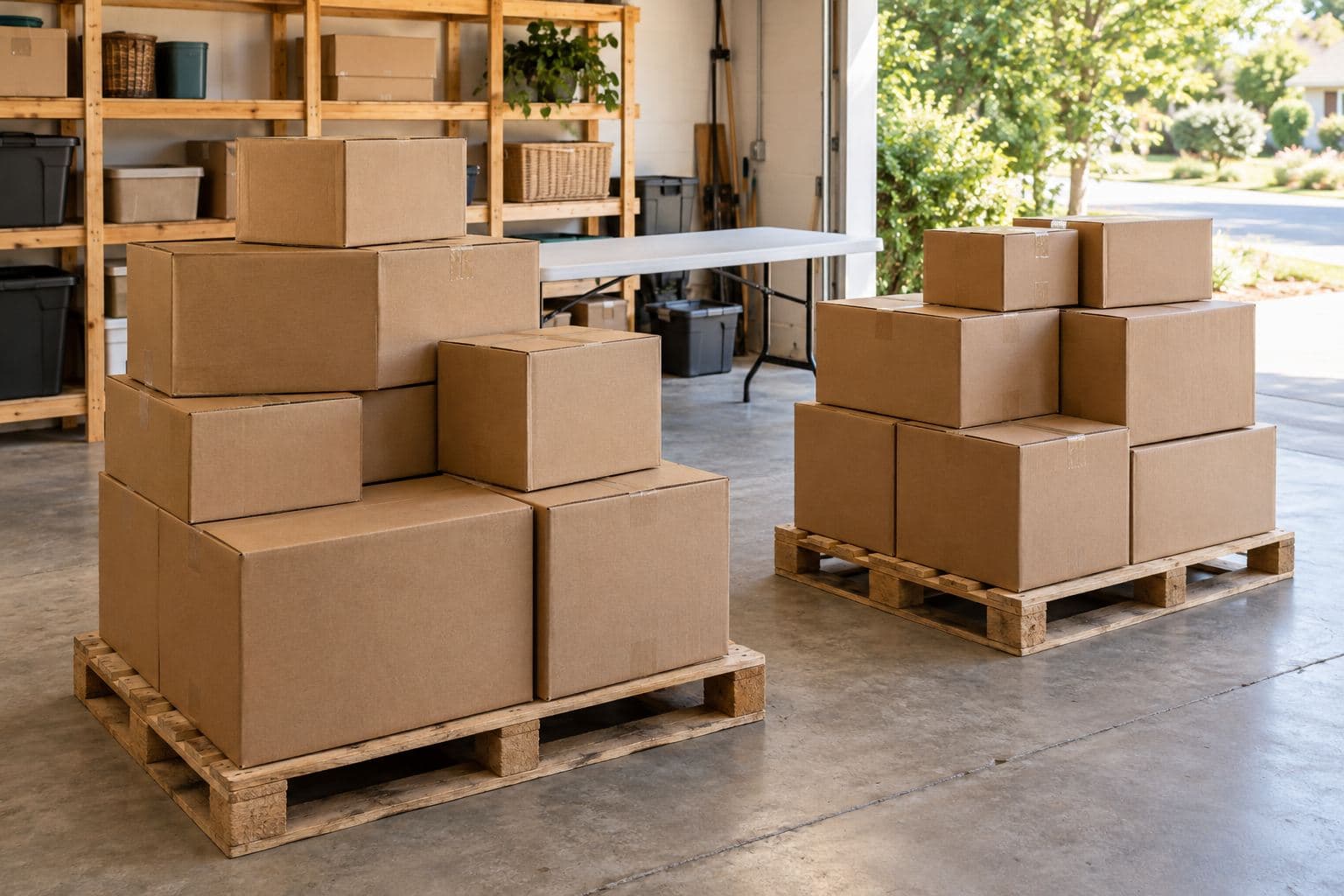
What 3PL means in a liquidation offer
#A warehouse-sale explainer, dated August 21, 2026, calls these sites “third-party logistics warehouses” and explains how the owner, buyer and warehouse work together. It gives sale steps, not a legal ruling that warehouses may sell any goods they hold.
As of October 2026, one 3PL truckload advertisement uses “Online Returns” for claimed Amazon and other retailer stock. A warehouse outlet FAQ lists “overstock, closeout, and liquidation inventory” from clients whose orders it handles. Overstock is excess stock; closeouts are goods being cleared out. 3PL isn't a condition grade, a label for the state of the goods. Surplus stock and mixed returns may share the label but need different checks.
Compare each offer's claimed source, owner, product mix, condition and packaging separately. If the seller calls the goods mediums, its size label, read the Amazon medium truckload guide for that term's limits.
What usually arrives depends on the program
#There's no single usual 3PL mix. The online-return page names several retailers but has no manifest, an item list with counts. Ask whether you can get one. The warehouse outlet FAQ says most goods are new surplus, with exceptions listed for each offer. Both are seller claims; the shipments weren't independently inspected.
The online-return page lists Georgia options of 24 or 26 pallets and a California option of 26, while its main table says 24. Get your purchase's actual pallet count in writing.
Ask whether you're buying one client's goods, stock pooled from several clients, or selected product types. Check what each count means. A carton is a box; an inner pack groups goods within it. Those counts differ from single items. The case-pack guide explains cases of repeated units. Count a resale set's parts together.
Questions to ask before you bid
#Who owns the goods? Who bills you and takes payment? Which warehouse holds the pallets, and who may release them? If a broker, someone arranging the sale, is involved, ask how its sale agreement links to the owner's written release. Claims of abandoned goods or unpaid storage fees need their own legal basis. Don't take the seller's story as permission to sell.
Before you commit, ask for:
- A dated stock file with product IDs, versions, counts and pallet IDs, plus why any fields are missing.
- Photos of the offered pallets linked to that file, rather than stock photos.
- Written condition grades, excluded product types and details of sorting or item removal.
- Release steps, pickup booking rules and who pays each warehouse fee.
- The sale contract's steps, proof and deadline for reporting shortages or other mismatches.
Check the warehouse's contact details through a separate source, then ask it to confirm the release reference and pickup plan. Papers alone don't prove a sale is valid. For payment and ID checks, use vetting liquidation suppliers.
Read both policy pages. The outlet's returns policy, dated March 8, 2026, asks you to report a shipment that differs in a major way within 48 hours. Its terms of service give a 72-hour window for mismatches. Ask which rule applies before buying; don't choose the longer deadline yourself.
Get the rules for later resale, too. Amazon's purchase terms, section 4.4, and Target's purchase terms, section 2.d, restrict ads that identify the retailer when those contracts apply. Ask which terms cover your stock, including duties passed through a middleman. Naming a retailer here gives you no right to use its name in your ads.
Ask how sales tax and a resale certificate, a tax form for goods bought to resell, apply. The warehouse's location alone won't settle that. See the glossary for trade terms. This guide is not legal, tax or financial advice.
What to check on arrival
#Take photos while the packaging and pallet IDs are intact. Check the pallet count and visible condition against the shipping papers before opening boxes. Report mismatches as the carrier and seller require, and keep the papers and packaging needed for a claim. A transport receipt records delivery; a manifest lists items.
Copy the stock file. Add received counts, missing parts and actual condition in new columns for comparison with the seller's figures. The manifest and condition-grade guide explains sparse records.
Match repeated goods to the box's product ID and version. A master carton, the outer box holding packs or units, counts as one product only if you'll resell the whole case. Keep incomplete sets apart until you can match their parts. Leave stock with unresolved issues out of the sellable count.
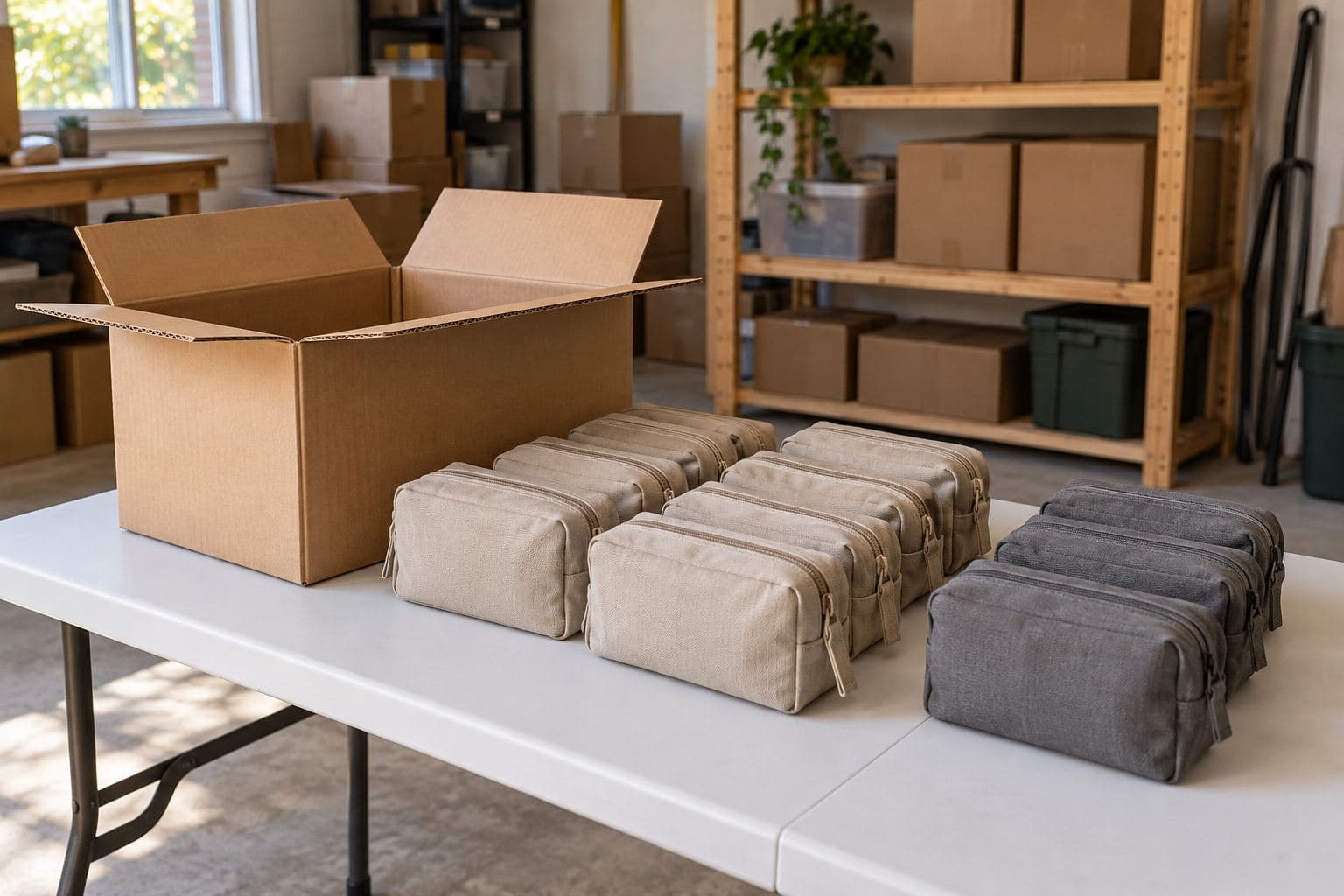
What to test first
#Only test what you can test safely. Identify the item, check the CPSC recalls search and read the maker's instructions before testing. Don't test anything recalled, a swollen or damaged battery, a damaged cord or a gas appliance. Ask the maker or a suitable specialist what to do next.
CPSC's resale guidance says it's unlawful to offer recalled goods, even if you disclose the defect. Hold them apart and follow the recall notice. If the maker confirms that a completed recall remedy, the required fix, permits resale, keep proof and tell the buyer about it.
Deal with unknown items, missing parts and specialist checks before cleaning or listing, even for 3PL stock. Use inspecting and testing liquidation returns to record each test's scope. “Powers on; other functions untested” describes a partial check without claiming full function.
Space, handling and moving it
#Check size, weight, pallet strength and pickup equipment before booking freight, the transport of goods. A dock may lack carrier services. Ask who brings out pallets, puts them on the vehicle and pays to move goods onto new pallets or for missed appointments. Put those duties in the quote.
Leave space for unopened stock, open boxes and goods awaiting a decision. You'll need room to check the shipment. OSHA's warehousing guidance covers stable storage and clear aisles. Use equipment suited to the weight and keep unstable pallets out of routine handling.
See receiving and storing liquidation inventory for storage and delivery plans. Keep the release reference with carrier instructions for later use.
How the cost works
#Get a total for the stock you're buying, with goods, tax, freight and warehouse fees shown apart. Different parties may owe storage through pickup, retrieval and packing fees. Check these beyond the asking price. A current bid isn't a completed purchase.
Made-up example: you pay $800 for goods, $40 in purchase tax, $120 for inbound freight and $40 for warehouse handling. After checking the goods, 50 units are sellable.
| Calculation | Result |
|---|---|
| Buying total: $800 + $40 + $120 + $40 | $1,000 |
| Buying cost per sellable unit: $1,000 ÷ 50 | $20 |
| Extra selling and packing costs, assumed | $250 |
| Receipts needed to cover these costs: $1,000 + $250 | $1,250 |
| Average receipt per unit if all 50 units sell: $1,250 ÷ 50 | $25 |
This break-even, the receipts needed to cover costs, leaves out labor and unstated costs. If fewer units are sellable, divide by that smaller count, not the seller's box count. Use the pallet profit calculator and landed-cost guide for the full cost of getting goods to you.
Keeping warehouse purchases separate
#Keep each warehouse purchase's results with that purchase. A notebook or spreadsheet works. PalletPro's Analytics compares your own pallets by the supplier and pallet type you enter. These entries describe your records; they don't verify the source or its right to sell. See the app
How this guide was written
#This guide draws on the public sources below. Checked on October 1, 2026. Seller descriptions show how they use the terms; a shipment's contents and owner still need checks. PalletPro doesn't sell pallets and isn't affiliated with any retailer, liquidator or marketplace named here.
Sources
#- How to sell inventory from a 3PL warehouse - Supplier education publisher, August 21, 2026 (checked October 1, 2026).
- 3PL truckload offer - Third-party wholesale supplier (checked October 1, 2026).
- Warehouse outlet FAQ - Warehouse operator outlet (checked October 1, 2026).
- Returns and refunds - Warehouse operator outlet, March 8, 2026 (checked October 1, 2026).
- Terms of service - Warehouse operator outlet (checked October 1, 2026).
- Amazon US terms of purchase - Amazon.com Services, LLC / B-Stock, January 29, 2026 (checked October 1, 2026).
- Target terms of purchase - Target / B-Stock, revised November 11, 2025 (checked October 1, 2026).
- Recalls and product safety warnings - US CPSC (checked October 1, 2026).
- Stopping the online sale of recalled products - US CPSC (checked October 1, 2026).
- Resellers guide to selling safer products - US CPSC Small Business Ombudsman, May 2021 (checked October 1, 2026).
- Warehousing hazards and solutions - US OSHA (checked October 1, 2026).
Updated
More guides
- Amazon high-piece-count truckloads: counting and sorting
Understand Amazon high-piece-count descriptions, verify resale-unit counts, screen small products, and plan sorting, storage and selling expenses.
- Amazon LPN pallets: what to check before buying and selling
Read Amazon LPN pallet descriptions, inspect each item, keep accessories separate, and check buyer-contract restrictions before preparing your resale ads.
- Amazon medium truckloads: what the label means
Compare Amazon medium truckloads by the seller's definition, condition, count and freight terms, then plan space for receiving and testing the goods.
- Amazon monster truckloads: contents, space and safe handling
Compare Amazon monster truckload descriptions, confirm tall-pallet dimensions and condition, and plan receiving, inspection, storage and resale costs.